How Does Goal Difference Work in Football? Tiebreaker Rules

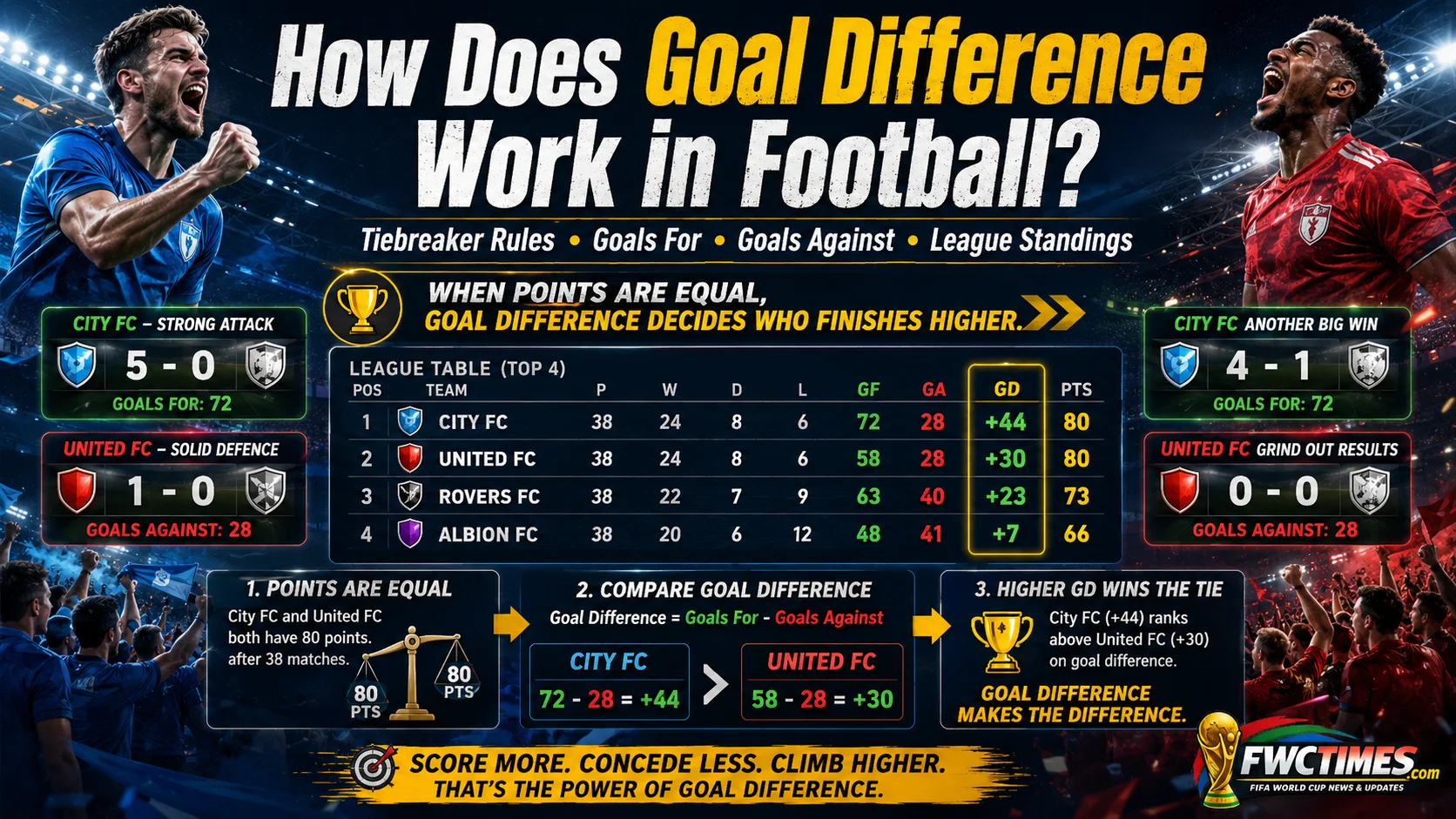
Goal difference in football standings subtract a team’s conceded strikes from its scored strikes. A team with ten strikes scored and six allowed has a standing differential of plus four.
Competitions often use the figure to separate teams level on points. The exact tie-breaker order depends on the competition regulations.
How Does Goal Difference Work in Football?
The calculation equals strikes scored minus strikes conceded. Positive numbers show a team scored more than it allowed, while negative numbers show the opposite.
A 3-1 win improves the standings margin by two. A 0-2 defeat reduces it by two.
Goal Difference Football Formula and Examples
The formula uses every counted strike from the relevant competition stage. Add all scored strikes, then subtract all conceded strikes. The result can be positive, zero, or negative.
A team with eight strikes scored and five conceded holds plus three. Another team with five strikes scored and eight conceded holds minus three. The plus sign often appears for clarity.
Each match changes the running figure. A 2-0 win adds two, while a 2-2 draw adds zero. A 1-4 loss reduces the total by three.
Competition tables show the standing differential beside wins, draws, losses, strikes scored, and strikes conceded. It summarises scoring balance without explaining match quality. Teams still earn standings points through results.
How Goal Difference in Football Separates Teams
Competitions publish a tie-breaker order before play begins. Goal difference may appear early or after head-to-head criteria. Organisers apply that order when teams finish level on points.
Overall standing differential uses every match in the defined stage. Head-to-head standing differential uses only matches between the tied teams. Those calculations can produce different rankings.
Scored strikes often follows the standing differential when teams remain level. Fair play, conduct score, ranking, or another method can follow later. The competition regulations decide every step.
FWCTimes explains the tournament sequence in its World Cup 2026 tiebreaker guide. Fans should check that order instead of assuming overall standing differential comes first.
Why Standing Differential Changes Match Strategy
Teams may chase another strike when a group remains close. A larger winning margin can improve the final ranking. Coaches still balance that reward against counterattack risk.
Protecting a narrow loss can also matter when qualification comparisons remain tight. Conceding several late strikes damages the calculation. Tournament awareness influences substitutions and defensive choices.
A clean sheet strengthens the differential because the conceded side remains zero. Scoring twice in a 2-0 win adds two. The same two strikes in a 2-2 draw add nothing.
The standing differential should not replace the immediate objective of earning points. An exposed team can lose control while chasing a larger margin. Strong game management considers both needs.
Standings Differential Calculation Examples
| Result | Scored Strikes Change | Conceded Strikes Change | Standing Differential Change |
|---|---|---|---|
| 3-0 win | +3 | +0 | +3 |
| 2-1 win | +2 | +1 | +1 |
| 1-1 draw | +1 | +1 | 0 |
| 0-1 loss | +0 | +1 | -1 |
| 1-4 loss | +1 | +4 | -3 |
World Cup 2026 Tie-Breaker Order
FIFA’s published World Cup 2026 group process starts with points earned between the tied teams. It then uses head-to-head standings margin and head-to-head scored strikes. Those criteria apply before overall standing differential.
If the tie remains, FIFA applies overall group goal difference and then overall goals scored. Team conduct score follows. The latest published FIFA men’s world ranking can settle a remaining tie.
The eight best third-placed teams use a different comparison. Their order starts with points from all group matches, followed by overall standing differential and scored strikes. Conduct score and FIFA ranking follow.
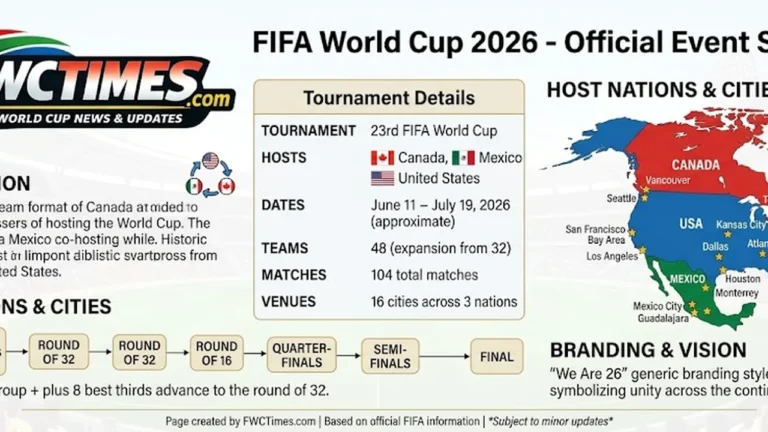
The expanded tournament has twelve groups of four and a Round of 32. Accurate standings matter across more qualification positions. FWCTimes tracks World Cup group-stage results as those calculations develop.
How Fans Can Track Standings Differentials
Start with the team’s scored and conceded strikes columns. Subtract the second number from the first. Repeat after every match to update the figure.
Then check points and the official tie-breaker order. A better standing differential may not decide the ranking when head-to-head criteria come first. Competition rules prevent incorrect assumptions.
Live tables can change with every strike across simultaneous group matches. One score can move several teams between qualification positions. Fans should follow every relevant fixture near the final whistle.
Historical comparisons also require a defined stage and tournament. The World Cup stats and records section helps separate broader records from one group table. Clear scope protects accurate analysis.
Common Standings Margin Tracking Mistakes
Fans sometimes add winning margins without tracking losses. Goal difference uses every counted goal scored and conceded in the defined stage. A heavy defeat can erase several narrow wins.
Another mistake comes from applying overall standing differential before the competition’s earlier criteria. World Cup 2026 uses head-to-head steps first within a tied group. Overall figures enter later when needed.
Live tables can also change across simultaneous matches. A late strike in another stadium may alter the required margin. Official standings remain decisive after every relevant fixture finishes.
Cross-group comparisons require the stated rules for those positions. World Cup 2026 ranks the best third-placed teams through points, overall standing differential, scored strikes, conduct, and ranking. Head-to-head cannot apply across separate groups.
Awarded administrative results can also change the calculation. A competition may replace an on-field score with a forfeit score after a disciplinary decision. The official table must use the final regulated result.
Connection to FIFA World Cup 2026
At the FIFA World Cup 2026, the standing differential can help separate tied teams after the head-to-head step. It also directly helps rank the eight best third-placed sides.
Teams may need to manage winning margins and late defensive risk during the final group matches. One added or conceded strike can change the Round of 32 qualifiers.
Fans should use FIFA’s published order rather than older tournament assumptions. The 2026 process gives head-to-head results an early role.
Frequently Asked Questions
How does goal difference in football calculation work?
The standings margin calculation subtracts conceded strikes from scored strikes. Ten strikes scored and six conceded produces plus four.
Why do teams care about the standings margin?
The standing differential can separate teams level on points and rank third-placed teams. It can turn one extra strike into a qualification advantage.
Can the standings margin be negative?
Yes, the standings margin becomes negative when a team concedes more strikes than it scores. Five strikes scored and eight conceded produces minus three.
What is the difference between standings margin and scored strikes?
The standing differential measures scored strikes minus conceded strikes. Scored strikes counts only the strikes a team puts into opponents’ nets.
How will the standings margin work at World Cup 2026?
World Cup 2026 first uses head-to-head criteria for teams tied within a group. Overall standing differential follows and also helps rank the best third-placed teams.
Conclusion
The standings margin gives teams a clear scoring balance when they finish level on points. Fans must still apply the competition’s exact tie-breaker order.
World Cup 2026 will make every scored and conceded group strike important across qualification comparisons. Stay tuned to FWCTimes.com for the latest FIFA World Cup 2026 updates.
Read Also: What Is a Clean Sheet in Football?