Best Goalkeeper Gloves Beginners Explained for Fans

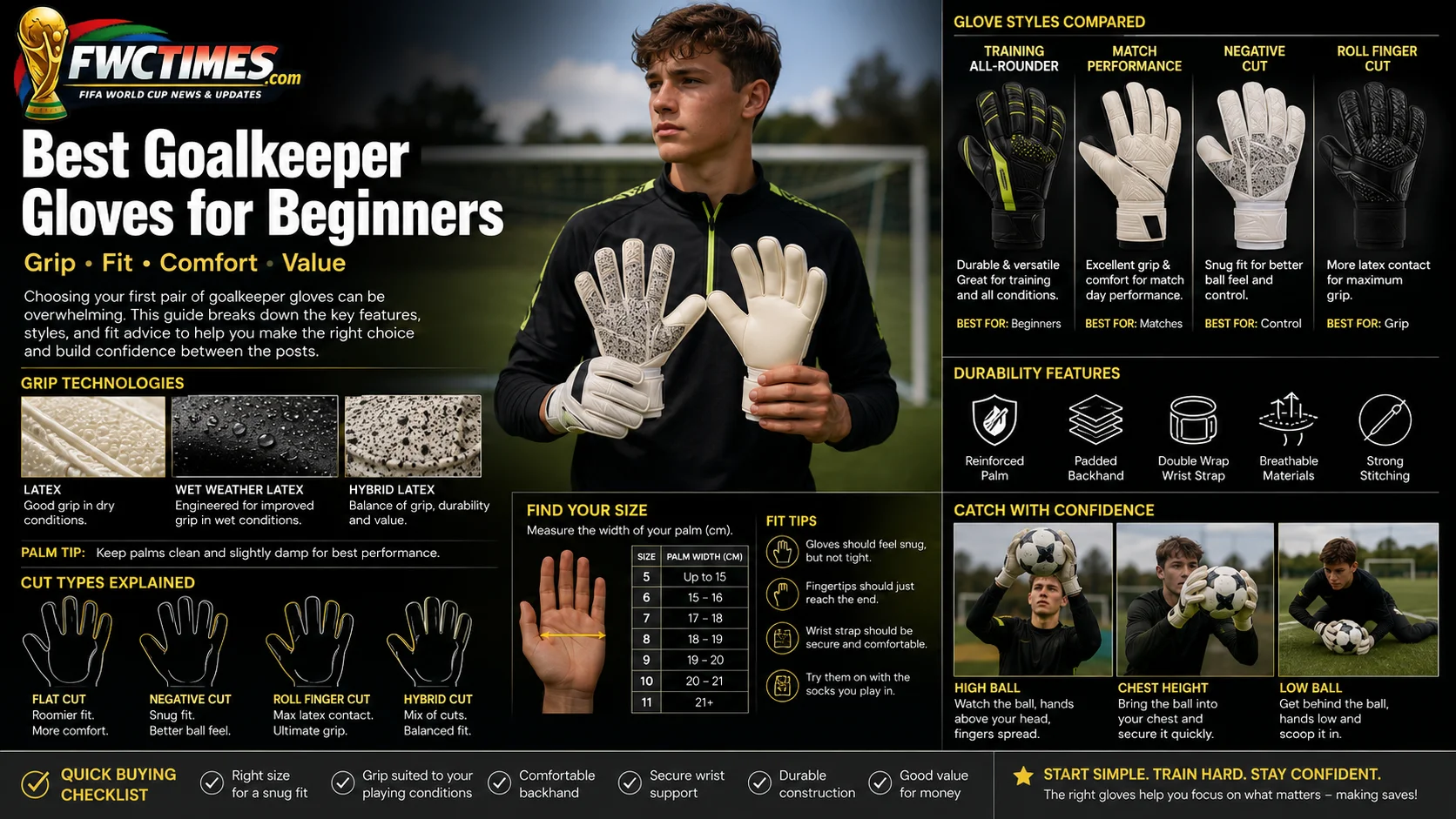
Choosing the best goalkeeper gloves for beginners can feel overwhelming. When shelves are stacked with professional models from major brands. The good news is that beginners do not need elite match-day gloves. This Use soft latex that wears out too under regular training conditions.
Beginner keepers spend most of their time on training pitches where turf and soil grind against the palm surface. As a result. A glove designed for durability will outlast a professional match glove by several months under the same conditions. Major brands including Adidas, Nike, Reusch, Uhlsport.
Best Goalkeeper Gloves Beginners Guide
Training latex is the most important material difference between beginner and professional gloves. This denser latex blend resists abrasion from turf, soil. And Hard synthetic surfaces that would tear soft match latex within a few sessions and in fact. An elite professional match glove placed in regular training conditions would lose its grip surface in under a week.
Beginners should also look for a reliable wrist closure system. As wrist stability directly affects how confidently a keeper dives and punches crosses. Most training gloves use either a bandage-style wrap strap or a simple velcro band. Both of which provide enough support for early-level play.
Tactical Role of Best Goalkeeper Gloves Beginners
Glove cut refers to the way the palm and fingers are stitched together. And It significantly changes how the glove feels on the hand. The flat cut is the most recommended option for beginners because it features outer seams that create a roomier. More relaxed fit across the fingers.
The negative cut places seams on the inside of the glove. Producing a snug fit that wraps tightly around each individual finger. While this design gives more experienced keepers a direct feel for the ball. It can feel uncomfortably restrictive for beginners who are still developing hand strength.
Sizing, Fit, and Finger Protection
Getting the sizing right is just as important as choosing the correct palm material. You should measure the width of your dominant hand across the knuckles. And use the manufacturer’s size chart to identify your numerical glove size. Most charts recommend leaving about half an inch of space at.
Gloves that are too tight present a different problem. As the seams can split prematurely during dives and one-handed stops. A properly fitting glove should feel snug across the palm without pressing uncomfortably on the side of each finger. Since goalkeeper gloves do not stretch significantly over time unlike outfield boots.
Finger protection spines, often called fingersaves, are plastic inserts built into the back panel of each finger. These inserts prevent hyperextension when a keeper blocks a hard, close-range shot that bends the fingers backward. Many beginner keepers benefit from this protection while their hand muscles are still developing. As the spines reduce injury risk during high-volume training and yet some coaches feel that fingersaves limit.
| Glove Type | Best Use | Beginner Benefit | Main Tradeoff |
|---|---|---|---|
| Training glove (flat cut) | Regular practice | Durable, roomy fit | Less elite grip |
| Match glove | Competitive games | Stronger palm grip | Wears fast in training |
| Finger-protection glove | Injury prevention | Prevents hyperextension | Stiffer catching feel |
| Negative cut glove | Close ball contact | Tight, direct feel | Can feel restrictive |
| Roll finger glove | Maximum grip surface | Wide latex contact area | Bulkier finger feel |
Budget and Brand Guidance for Beginner Keepers
Beginners do not need to spend more than £60 or $80 USD on their first pair of goalkeeper gloves. Reputable brands including Reusch, Uhlsport, Adidas, and T1TAN all offer quality training models in the £30 to £60 range. These mid-range training gloves deliver reliable latex grip, finger protection options. And Strong stitching that holds up through months of regular use.
Reusch and Uhlsport are particularly well regarded among coaches for their consistent fit and latex quality across training lines. T1TAN has also built a strong reputation for fingersave technology in their entry-level models. Making them a smart choice for younger keepers and adidas training gloves benefit from wide retail availability. So Sizing exchanges are easier if the first pair does not fit correctly.
How to Care for Goalkeeper Gloves
Proper glove care extends the life of the latex and keeps the grip surface sticky session after session. Always rinse your gloves with lukewarm water before the first. Use to remove factory chemicals and activate the latex correctly. After every training session or match, rinse the palms again to remove dirt, sweat.
Never dry goalkeeper gloves in direct sunlight. Near a heater, or inside a tumble dryer, as heat causes the latex to crack and harden irreversibly. Air drying in a cool. Shaded room is the safest method and takes a few hours after a thorough rinse.
Frequently Asked Questions
What are the best goalkeeper gloves for beginners to buy first?
Beginners should start with a flat-cut training glove featuring durable latex palms from a reputable brand like Reusch. Uhlsport, or Adidas and these training models handle the friction of turf and grass far better than professional. This Wear out under heavy use and a budget of £30 to £60 or $40 to $80. USD is enough to find a quality first pair without overspending.
Do beginner keepers need finger protection spines in their gloves?
Finger protection spines, also called fingersaves, prevent hyperextension injuries when blocking hard shots that bend fingers backward. Many beginner and youth keepers benefit from this protection while their hand muscles and catching confidence are still developing. Yet some coaches feel that these spines slow down natural hand strength development. So The decision depends on the individual keeper’s age, training intensity and and Injury history.
How should goalkeeper gloves fit on a beginner’s hand?
Goalkeeper gloves should feel snug across the palm without pressing uncomfortably against the sides of the fingers. Measure the width of your hand across the knuckles and. Use the brand’s sizing chart to find your correct numerical size. Leave roughly half an inch of space at the fingertips to allow natural hand movement during dives and punches.
How often should beginners wash their goalkeeper gloves?
Beginners should rinse their gloves with clean lukewarm water after. Every training session or match to remove dirt and sweat. Letting soil and grass residue dry on the latex surface. Permanently damages the grip texture and reduces stickiness in wet conditions and always air dry gloves in a cool.
Can beginners use professional match gloves for training?
Professional match gloves use a soft latex compound designed for maximum grip in one-off match conditions. Not for repeated training sessions on hard or abrasive surfaces. Using match gloves for regular training will destroy the palm. In a few sessions and wastes a significant amount of money.
Conclusion
Selecting the best goalkeeper gloves for beginners comes down to three clear priorities: durable training latex. A comfortable flat-cut fit and and Reliable wrist support. Spending between £30 and £60 from a trusted brand like Reusch. Read our guides on World Cup 2026 groups and the World Cup 2026 schedule PDF.