Dallas Stadium Sponsor Reset Speeds Up Before First Match

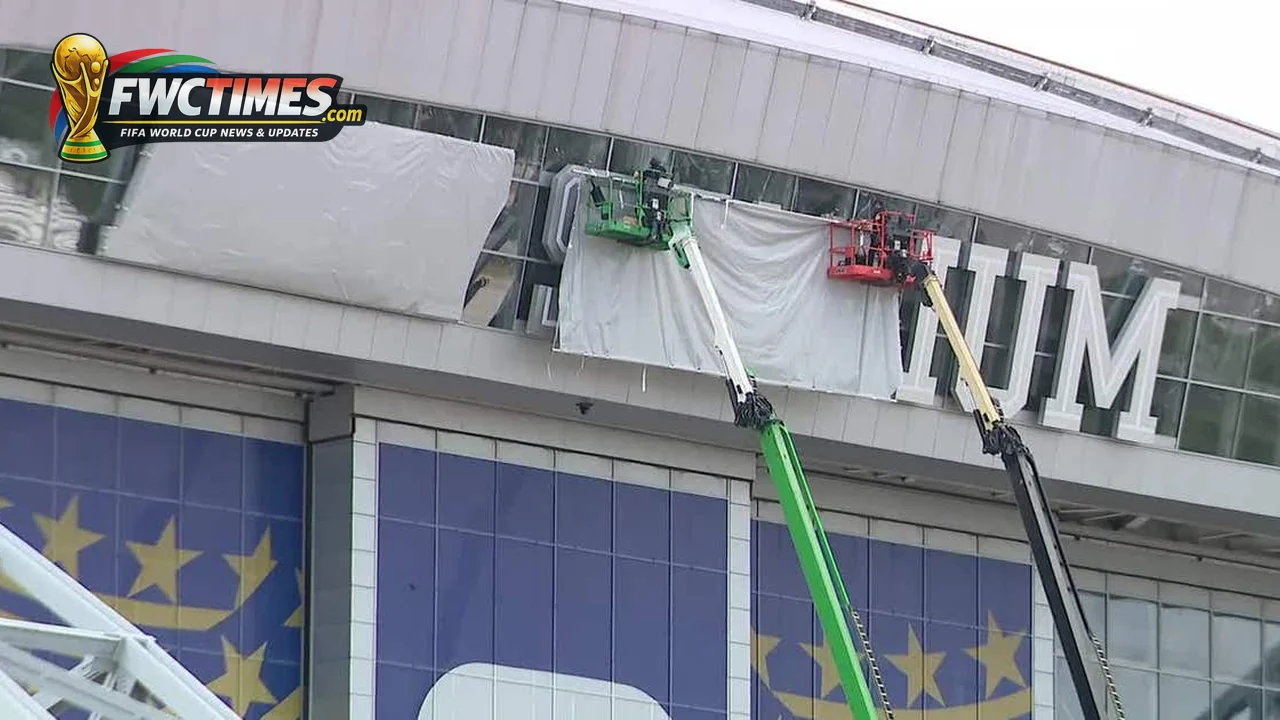
Dallas Stadium sponsor rebrand work is now impossible to miss. Tarps are covering AT&T signs, Coca-Cola is replacing Pepsi inside key areas and Cowboys merchandise has been pulled from some retail points. The change shows how hard FIFA’s clean-venue rules can hit when a host stadium carries deep local branding. It also turns venue prep into one of the clearest pre-tournament stories around World Cup 2026.
This is not cosmetic housekeeping. FIFA wants a venue that matches its sponsor map, not the NFL sponsor map that lives there the rest of the year. Dallas is a clean example because the Cowboys, AT&T and Pepsi are all deeply tied to the building. Once the tournament steps in, that local identity has to shrink for a few weeks.
What Is Changing Around The Stadium And Why
The main visual shift started outside. Workers began covering the large AT&T branding on the stadium shell so the venue can operate simply as Dallas Stadium during the tournament. That is standard FIFA policy, yet it lands differently at a site where the commercial name is part of the global identity of the building. What looks normal in a rule book looks dramatic in Arlington.
The internal changes are just as revealing. Fresh reporting says Coke coolers are replacing Pepsi ones for the World Cup run, while Cowboys products have been removed from at least part of the retail environment. That tells you the sponsor reset is not limited to façade shots. It reaches the matchday experience inside the building as well.
The local stakes are high because fans have already been planning travel through the wider North Texas transport guide and accommodation market. Venue identity is part of that planning. A tournament visitor may know the NFL name, yet their tickets, maps and official material now point to Dallas Stadium only. That sounds small until thousands of international fans start moving at once.
The money pressure sits nearby too. North Texas has already seen booking and short-stay stress in the Dallas rental price story build-up. A full sponsor cleanse adds another layer of staging cost and operational complexity to a host region already absorbing heavy demand. Clean-venue policy is not free theatre.
Why Dallas Shows The Real Weight Of FIFA’s Brand Protection Rules
FIFA’s logic is simple. Official sponsors pay for exclusivity, so stadiums and event zones must not keep rival brands in prime sight. That principle applies across North America, yet Dallas makes the rule feel bigger because the venue is so heavily tied to local commercial identity. When you cover AT&T there, you are covering part of the building’s public character.
The same pattern has appeared in other venues, including the New York New Jersey Stadium setup, where tournament branding has also replaced local commercial presence. Dallas still stands out because it is one of the busiest 2026 sites and because the venue hosts nine matches. More games mean more time living inside FIFA’s version of the building.
The football date that matters first is June 14, when the Netherlands face Japan in the stadium’s opening World Cup match. That fixture will provide the first full television reveal of the cleaned venue in action. By then, all half-finished visual transitions need to be gone. The venue has to look complete on camera from the first whistle.
There is also a short American sports calendar behind the glamour. The Cowboys will want the building ready again for the NFL season soon after the tournament ends. So Dallas is not only covering signs. It is running through a temporary identity change with a fast turn back built into the calendar.
| Venue Change | Current Position |
|---|---|
| Exterior branding | AT&T signs are being covered for FIFA use |
| Internal sponsor shift | Coca-Cola is replacing Pepsi in visible tournament areas |
| Retail environment | Cowboys merchandise has been removed from key points |
| First World Cup match | Netherlands vs Japan on June 14 |
The table makes the rebrand sound tidy, but the point is bigger than branding. This is what a global sponsor regime looks like when it lands inside a famous American sports venue. The World Cup is not renting a stadium. It is briefly remaking it.
Dallas should still benefit from the exposure, and the venue will still look impressive once the match feed starts. Yet the prep work shows how much control FIFA expects over presentation. Host cities agree to more than match dates when they win these events.
That is why Dallas matters as a case study. The tournament is forcing local sport, local brands and global sponsorship rules into the same room. FIFA usually wins that conversation.
Frequently Asked Questions
Dallas is giving the clearest early look at FIFA’s clean-venue model. The football will arrive soon, but the branding reset has already started the show.
Stay tuned to FWCTimes.com for the latest FIFA World Cup 2026 updates.
Read Also: Canada Soccer Boom Runs Into A Field And Coach Squeeze