Okocha Warning Splits Africa World Cup Title Debate

Jay-Jay Okocha has cooled expectations around Africa’s World Cup title chances, while El Hadji Diouf and CAF leadership argue the continent can win in 2026. The debate lands after Morocco’s 2022 semifinal run changed the ceiling for African teams. Ten African qualifiers now enter the expanded tournament with more places, deeper squads, and sharper pressure.
Okocha’s concern does not dismiss African talent. It asks whether the continent can match Europe, South America, North America, and Asia across seven tournament games. His caution gives the debate weight because he played for Nigeria’s golden generation on the World Cup stage.
Diouf takes the opposite line and points to Senegal’s elite names as proof. CAF president Patrick Motsepe also argues that Morocco’s Qatar run changed belief across the continent. The disagreement creates one of the strongest pre-tournament questions in FIFA World Cup news this week.
Africa’s 2026 field is larger and more varied than past tournaments. The expanded format gives the continent ten teams, including established contenders and first-time storylines. That wider field raises the chance of a deep run, but it also spreads expectations across very different squad profiles.
Okocha’s Warning Meets A New African Belief
Okocha’s view centers on the scale of global improvement. North American teams will play near home conditions, Asian sides have developed stronger systems, and European depth remains severe. Africa’s best teams must beat that field across travel, pressure, and knockout margins.
Diouf’s belief rests on player quality and recent proof. Senegal still carry stars with top-level club experience, while Morocco have already beaten European heavyweights in tournament football. Those examples make a title claim sound ambitious rather than empty.
Motsepe’s position adds institutional confidence. He frames Morocco’s 2022 semifinal as a mindset shift for the continent. That claim matters because African teams have often reached quarterfinal or semifinal edges without turning them into a final appearance.
The best reading sits between both views. Africa has more credible contenders than before, yet a World Cup title requires defensive control, set-piece reliability, squad depth, and calm penalties. One poor half can still erase a month of progress.
| Figure | Position In Debate | Main Point | Tournament Relevance |
|---|---|---|---|
| Jay-Jay Okocha | Cautious | Concerned about Africa going all the way | Warns that rivals outside Europe and South America are improving |
| El Hadji Diouf | Optimistic | Backs an African captain to lift the trophy | Uses Senegal’s player quality as evidence |
| Patrick Motsepe | Optimistic | Believes African belief has changed | Connects Morocco 2022 to 2026 expectations |
| Morocco 2022 Team | Proof Point | Reached the semifinal | Raised the continent’s benchmark |
Morocco And Senegal Carry The Heaviest Expectations
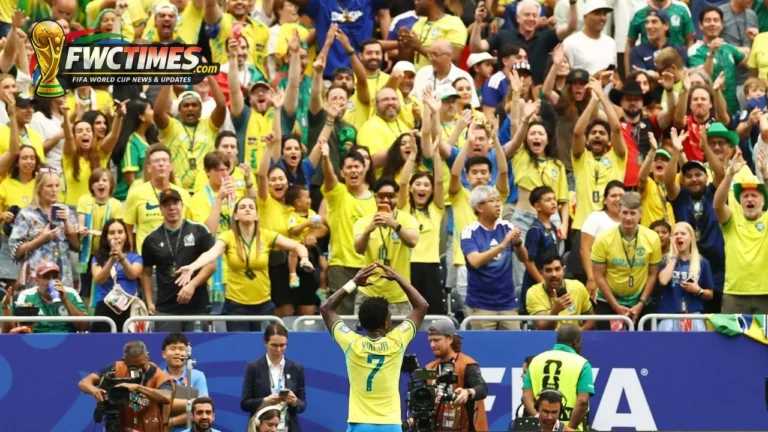
Morocco remain the reference point because their 2022 run included wins over Spain and Portugal. Achraf Hakimi’s team now faces another high-profile test in Group C. A group containing Brazil, Scotland, and Haiti leaves little room for a slow start.
Senegal also carry major weight because their squad blends physical power, tournament experience, and star names. Their Group I path includes France, Norway, and Iraq. That route gives Senegal an early chance to prove whether Diouf’s confidence has substance.
Ghana, Egypt, Algeria, Tunisia, South Africa, Ivory Coast, Cape Verde, and DR Congo add different types of threat. Some bring World Cup history, while others bring the freedom of a lower expectation. The expanded field can reward both approaches if teams manage group pressure cleanly.
Still, the bracket will decide how realistic the title debate becomes. Africa needs multiple teams to reach the Round of 32 and at least one to avoid an early heavyweight trap. A title path usually requires one upset, then a repeat performance under stronger scrutiny.
What The 2026 Format Changes For Africa
The 48-team structure gives Africa more representation than any previous World Cup. Ten teams can now build tournament momentum instead of relying on a small group of qualifiers. That improves the odds of one team finding the right draw and rhythm.
The new format also adds a Round of 32. That extra knockout stage makes consistency more valuable because title contenders must manage one more elimination game. African teams with deep benches will handle that demand better than teams reliant on a small core.
Morocco’s semifinal run remains the clearest modern benchmark. It showed that compact defending, quick counters, strong goalkeeping, and emotional control can carry an African side deep. The 2026 question is whether another team can repeat that structure against a wider field.
The debate also matters for the FIFA World Cup 2026 audience because Africa brings some of the tournament’s most followed players. Fans will track whether those players can transfer club form into national-team control. Okocha’s warning keeps the conversation grounded before the hype outruns the evidence.
Frequently Asked Questions
Africa enters 2026 with more teams and stronger belief, yet Okocha’s caution keeps the title debate tied to tournament proof.
Stay tuned to FWCTimes.com for the latest FIFA World Cup 2026 updates.
Read Also: Sarpreet Singh Gives Indian-Origin Fans A World Cup Link