World Cup 2026 Substitutes: Matchday Rules Explained

The next global football tournament will feature strict regulations regarding in-game squad management. Under the current rules, the FIFA World Cup 2026 substitutes policy permits five changes per match. In fact, managers must plan their replacements within three specific windows during regular play. This setup helps maintain the flow of matches while protecting player health.
The rule changes also include provisions for concussion cases and extra time play. Coaches must balance tactical needs with player fatigue across a longer tournament. In fact, the new guidelines also introduce strict time limits for players leaving the pitch. Fans will see a faster pace of play as a result of these updates.
How many substitutes are allowed at World Cup 2026?
World Cup 2026 Substitutes Details
Understanding the World Cup 2026 substitutes details is essential for analyzing the tactical setup of modern teams. Coaches build their structures to exploit these specific movements during competitive matches. Fans can follow these details closely throughout the tournament stages.
Each team can use up to five substitutes during a normal ninety-minute match. Managers must complete these changes within three designated substitution opportunities. So, making multiple changes at the same stoppage is a smart tactical choice. Half-time substitutions do not count as one of these used opportunities.
| Situation | Rule | Fan Meaning |
|---|---|---|
| Regular time | Five substitutes maximum | Coaches can change half the outfield team |
| Substitution opportunities | Three normal windows | Stops repeated match interruptions |
| Half-time | Does not count as a window | Coaches can reset without losing a slot |
| Concussion case | One additional permanent concussion substitute | Player safety rule |
| Extra time | One additional substitute and one extra window | Knockout matches allow more changes |
The introduction of five substitutes has changed the modern game of football. In fact, teams can now refresh half of their outfield players during play. So, managers can maintain a high-pressing style throughout the ninety minutes. This depth becomes crucial during hot afternoon matches in North America.
World Cup 2026 Substitutes Overview
The five-substitute rule was first introduced during the global health crisis to protect player safety. FIFA has now made this rule a permanent feature for the tournament. In fact, the expanded format makes squad rotation more critical than ever. The teams will play eighty-four matches before the quarterfinals begin.
Coaches must plan their matchday rosters to utilize their bench strength. Yet, they must also save some options for late-game injuries or tactical resets. The rule helps teams remain competitive against fresh opponents in the second half. Good depth will separate the tournament contenders from the early exits.
New Time-Wasting Rule: The 10-Second Exit Limit
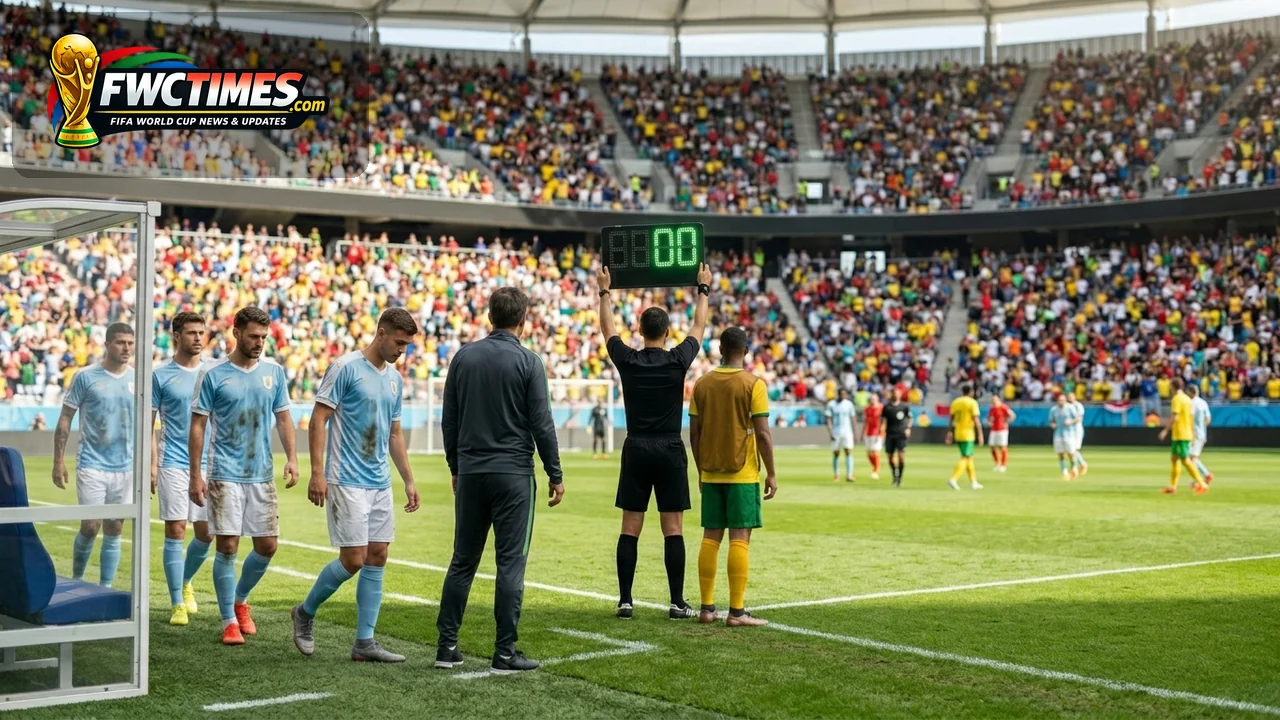
The organizers have introduced a strict rule to stop player time-wasting during substitutions. A substituted player must leave the pitch within ten seconds of the board showing. In fact, the player must exit the field at the nearest boundary line point. This rule keeps the matches flowing and prevents late-game stalling tactics.
If a player fails to leave within ten seconds, their team faces a penalty. The incoming substitute cannot enter the pitch until the next stoppage after one minute. As a result, the team must play with ten players during that period. This strict rule forces players to walk off the field quickly.
Concussion Substitution Policy
FIFA will permit one additional permanent concussion substitution per team in each match. This change can occur regardless of the number of normal substitutes already used. So, a team will not suffer tactically for prioritizing player safety on the pitch. The medical team will make the final decision on head injuries.
If a team uses a concussion substitute, the opposing team receives an advantage. The opponents will get an additional regular substitution opportunity to balance the teams. Still, the primary focus remains on protecting players from secondary impact risks. This safety policy has received strong support from team doctors.
Extra-Time Substitution Rules
Knockout matches will feature additional substitution allowances if games go to extra time. Teams will receive one extra substitute and one more substitution window. So, coaches can make up to six changes in these crucial matches. Unused regular time substitutes will also carry over into the extra periods.
Changes made before extra time begins do not count as used opportunities. The same exemption applies to changes made during the extra-time half-time break. Since these stoppages do not count, coaches can manage their windows with less pressure. This ruleset allows teams to refresh their lineups before penalty shootouts.
How Substitutes Change Tactics and Depth
Fresh attackers can expose tired defenders in the final thirty minutes of matches. Coaches will use their bench to exploit spaces left by exhausted opponents. Yet, defensive teams can also add extra body count to protect narrow leads. Tactics will shift dynamically as fresh players enter the field.
Powerhouses like Portugal will benefit from their deep player reserves during the tournament. Similarly, the Netherlands can rotate their midfield to maintain high-energy pressing. After all, smaller nations will struggle to match this depth over a month-long competition. The bench will play a decisive role in the knockout rounds.
Frequently Asked Questions
How many substitutes can each team use?
Each team can use up to five normal substitutes in a match. These changes must be completed within three substitution windows. Half-time substitutions do not count against these three opportunities.
What is the ten-second exit rule?
A player being substituted must leave the field within ten seconds of the board displaying. They must exit at the nearest boundary line point to prevent time-wasting. If they delay, their team must play with ten men for a short period.
How do concussion substitutions work?
Each team can use one additional permanent concussion substitute for suspected head injuries. This change does not affect the team’s normal substitution count. The opposing team then receives an extra normal substitute to maintain balance.
Do teams get an extra substitute in extra time?
Yes, teams receive one additional substitute when a knockout match goes to extra time. They also get one extra substitution opportunity during this period. Unused changes from regular time can also be used.
Can a coach make multiple substitutions at once?
Yes, a coach can make several player changes during a single substitution stoppage. This strategy helps managers save their remaining opportunities for later in the match. The referee will coordinate the entrance of the players.
Conclusion
The tournament substitutes rules give coaches the flexibility to manage squad fitness and tactical shifts. The five-sub limit, combined with concussion protections and extra time rules, shapes modern match management. In fact, these guidelines ensure player welfare remains a top priority during the tournament. Fans can expect fast-paced action throughout the summer competition.
Understanding these regulations helps supporters appreciate the tactical decisions made by team managers. You can follow team preparations and squad updates on our tournament hub. After all, a team’s bench strength will decide who lifts the trophy. Proper squad management will lead to success on the pitch.