
Brazil vs Japan Stats, Match Statistics, xG & Player Data

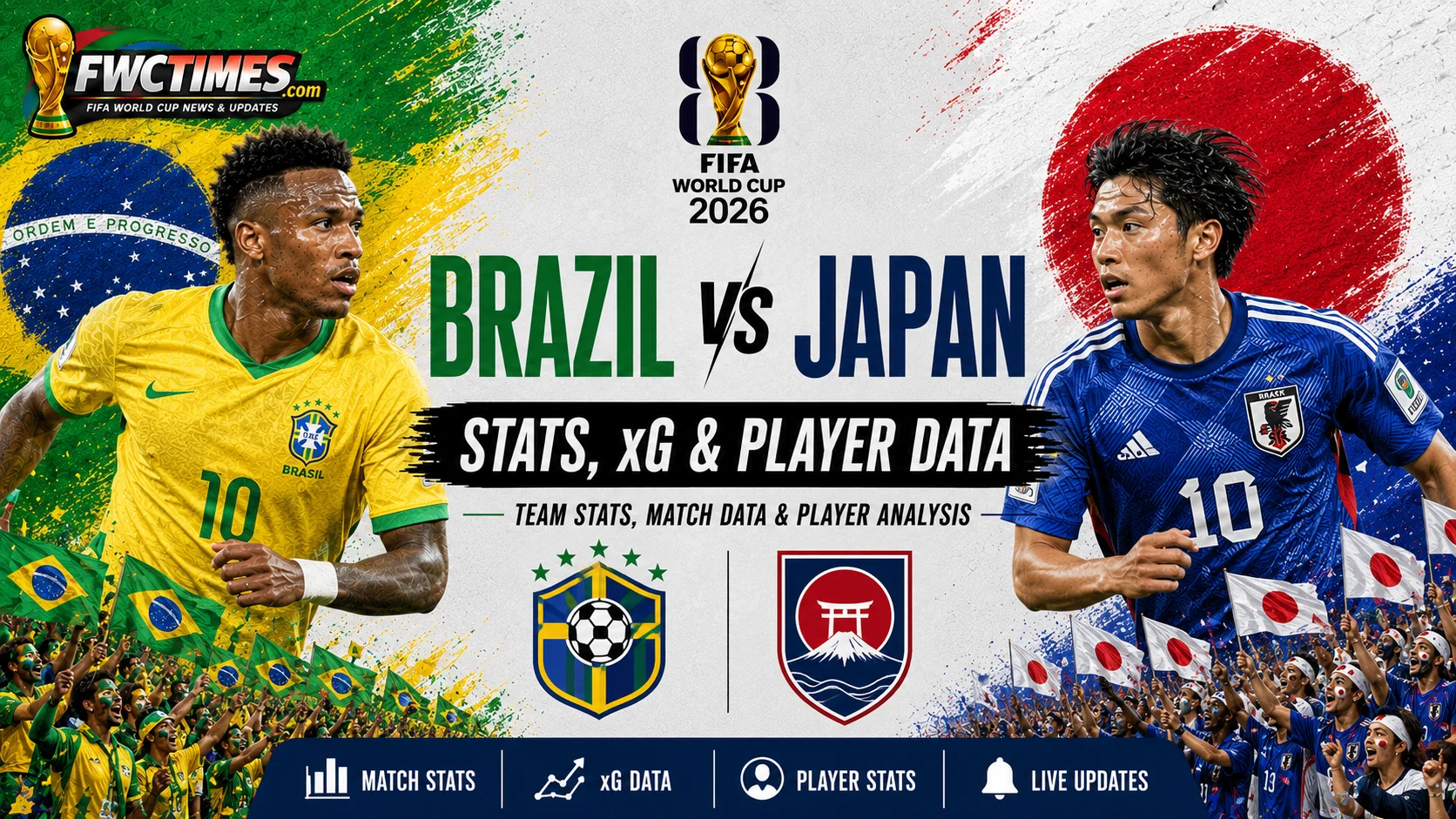
Brazil vs Japan stats start with a Round of 32 match at Houston Stadium, where the Brazil national football team face the Japan national football team on 29 June 2026. FOX lists both teams at 2.3 goals per game, but Brazil carry the higher xG, stronger defensive record, and bigger individual scoring line through Vinicius Junior. Japan’s route depends on turning efficient finishing and compact midfield pressure into fewer Brazil shots around the box.
Brazil World Cup 2026 squad and fixtures show a group-stage run built on seven goals and only one goal conceded. Japan World Cup 2026 squad and fixtures show an unbeaten recent stretch that includes a 4-0 win over Tunisia and a draw with Netherlands. The World Cup 2026 Round of 32 bracket now turns that form into a direct knockout test.
FIFA and FotMob list the match for 17:00 UTC at Houston Stadium, with Maurizio Mariani listed as referee by FotMob. The matchup also belongs in the World Cup 2026 stats and records tracker because Brazil and Japan both averaged 2.3 goals during the public group-stage data. Full match stats should replace these pre-match numbers after the official feed closes.
Brazil vs Japan Stats – Match Statistics Overview
Brazil enter with the better underlying numbers despite the equal goals-per-game line. FOX lists Brazil at 2.3 goals, 1.8 xG, 12.7 shots, and 61% average possession per game. Their 0.3 goals-against average gives the attack a stronger platform than most knockout teams.
Japan match Brazil’s goal average, yet their xG and shot volume sit lower. FOX lists Japan at 2.3 goals, 1.1 xG, 8.7 shots, and 55% average possession per game. That gap points to strong finishing, but it also makes shot prevention vital against Brazil.
Brazil vs Japan Stats Snapshot
The snapshot uses verified public pre-match data because the official live-event feed has not opened yet. Brazil lead in FIFA ranking, xG, shots, possession, goals against, and clean sheets. Japan stay dangerous because their conversion rate is higher and Daichi Kamada has been efficient with limited shots.
| Stat | Brazil | Japan |
|---|---|---|
| FIFA Ranking | 6 | 18 |
| Goals Per Match | 2.3 | 2.3 |
| xG Per Match | 1.8 | 1.1 |
| Goals Against Per Match | 0.3 | 1.0 |
| Shots Per Match | 12.7 | 8.7 |
| Average Possession | 61% | 55% |
| Chances Created Avg | 8.7 | 8.0 |
Attacking Stats Comparison
Brazil’s attack runs through Vinicius Junior in the public leader data. FOX lists him with four goals, eight shots on goal, 2.3 xG, and a 7.6 rating marker. Bruno Guimaraes adds three assists, giving Brazil a midfield creator behind the main wide threat.
Japan’s attack looks more efficient than high-volume. Daichi Kamada leads Japan with two goals, two shots on goal, and 0.9 xG. Ritsu Doan has one assist, while Japan’s team conversion rate sits above Brazil’s because fewer shots have produced the same goal average.
| Attack Stat | Brazil | Japan |
|---|---|---|
| Goals Per Match | 2.3 | 2.3 |
| Expected Goals Avg | 1.8 | 1.1 |
| Shots Per Match | 12.7 | 8.7 |
| Chances Created Avg | 8.7 | 8.0 |
| Shot Conversion | 18% | 26% |
| Leading Scorer | Vinicius Junior, 4 | Daichi Kamada, 2 |
Defensive Stats Comparison
Brazil have the cleaner defensive record before kickoff. FOX lists Brazil at 0.3 goals against per game, and Alisson has two clean sheets listed in the public leaders. That defensive base allows Brazil to play with patience even if Japan press early.
Japan have conceded more often, but Zion Suzuki’s keeper marker shows he has been active. FOX lists Japan at 1.0 goals against per game, with Suzuki at a 38 keeper save marker and one clean sheet. Japan need that goalkeeper line to hold if Brazil stretch the field through Vinicius Junior.
| Defensive Stat | Brazil | Japan |
|---|---|---|
| Goals Against Per Match | 0.3 | 1.0 |
| Team Clean Sheets | 2 | 1 |
| Keeper Save Marker | 31 | 38 |
| Full Tackles Data | yet to be confirmed | yet to be confirmed |
| Full Interceptions Data | yet to be confirmed | yet to be confirmed |
| Full Clearances Data | yet to be confirmed | yet to be confirmed |
Passing and Possession Analysis
Brazil lead the possession comparison, but Japan are close enough to make midfield control contested. FOX lists Brazil at 61% average possession and Japan at 55%. Since those values come from separate matches, the card normalizes them into a 53-47 matchup view.
The chance-creation line also leans Brazil, though only slightly. Brazil average 8.7 chances created, while Japan average 8.0. The larger difference comes from xG, where Brazil’s chances have carried more value and more repeat threat.
| Passing Stat | Brazil | Japan |
|---|---|---|
| Average Possession | 61% | 55% |
| Card Possession Share | 53% | 47% |
| Chances Created Avg | 8.7 | 8.0 |
| Passes Per Match | yet to be confirmed | yet to be confirmed |
| Pass Accuracy | yet to be confirmed | yet to be confirmed |
| Crosses Avg | yet to be confirmed | yet to be confirmed |
Key Player Statistics
Vinicius Junior is the standout player in the match data. His four goals, eight shots on goal, and 2.3 xG give Brazil the most dangerous individual attacking profile. Bruno Guimaraes matters because his three assists show Brazil can create from central zones as well as wide areas.
Kamada gives Japan their clearest scoring reference. FOX lists him with two goals and 0.9 xG, while Ao Tanaka carries Japan’s top rating marker at 7.4. Suzuki may also decide the match if Brazil turn their possession edge into steady shots.
| Player | Team | Key Data |
|---|---|---|
| Vinicius Junior | Brazil | 4 goals, 8 shots on goal, 2.3 xG |
| Bruno Guimaraes | Brazil | 3 assists in FOX leaders |
| Alisson | Brazil | 31 keeper save marker, 2 clean sheets |
| Daichi Kamada | Japan | 2 goals, 2 shots on goal, 0.9 xG |
| Ritsu Doan | Japan | 1 assist in FOX leaders |
| Zion Suzuki | Japan | 38 keeper save marker, 1 clean sheet |
Expected Goals Analysis
The xG comparison gives Brazil the clearer edge. Brazil sit at 1.8 xG per game, while Japan sit at 1.1. That gap shows Brazil have built better shooting positions despite matching Japan’s goal average.
Japan can still trouble Brazil if they keep finishing efficiently and deny transition space to Vinicius Junior. FotMob lists Raphinha unavailable for Brazil and Takefusa Kubo unavailable for Japan, so both attacks carry selection limits. The full-time update should separate open-play xG, set-play xG, shot locations, and goalkeeper saves once the official match feed closes.
Frequently Asked Questions
What time is Brazil vs Japan?
Brazil vs Japan is scheduled for 29 June 2026 at 12:00 PM local time in Houston, which is 17:00 UTC.
What are the Brazil vs Japan xG stats?
Before kickoff, FOX lists Brazil at 1.8 xG per game and Japan at 1.1 xG per game.
Who has the better attacking stats?
Brazil have the stronger attacking profile through xG, shot volume, and Vinicius Junior’s individual data. Japan match Brazil’s goals-per-game average through better conversion.
Which players lead the key stats?
Vinicius Junior leads Brazil with four goals, eight shots on goal, and 2.3 xG. Daichi Kamada leads Japan with two goals and 0.9 xG.
Will the stats update after full time?
Yes. Full match stats, xG, shots, possession, player data, and event details should replace the pre-match averages after the official feed closes.
Brazil vs Japan stats point to a Round of 32 match where Brazil’s xG edge meets Japan’s finishing efficiency.
Brazil have the stronger shot profile, while Japan need Kamada, Doan, and Suzuki to keep the match inside a narrow margin.
The full-time update should focus on whether Japan can hold Brazil below their usual shot and xG levels.
