What is the Sweeper Keeper Football Role?

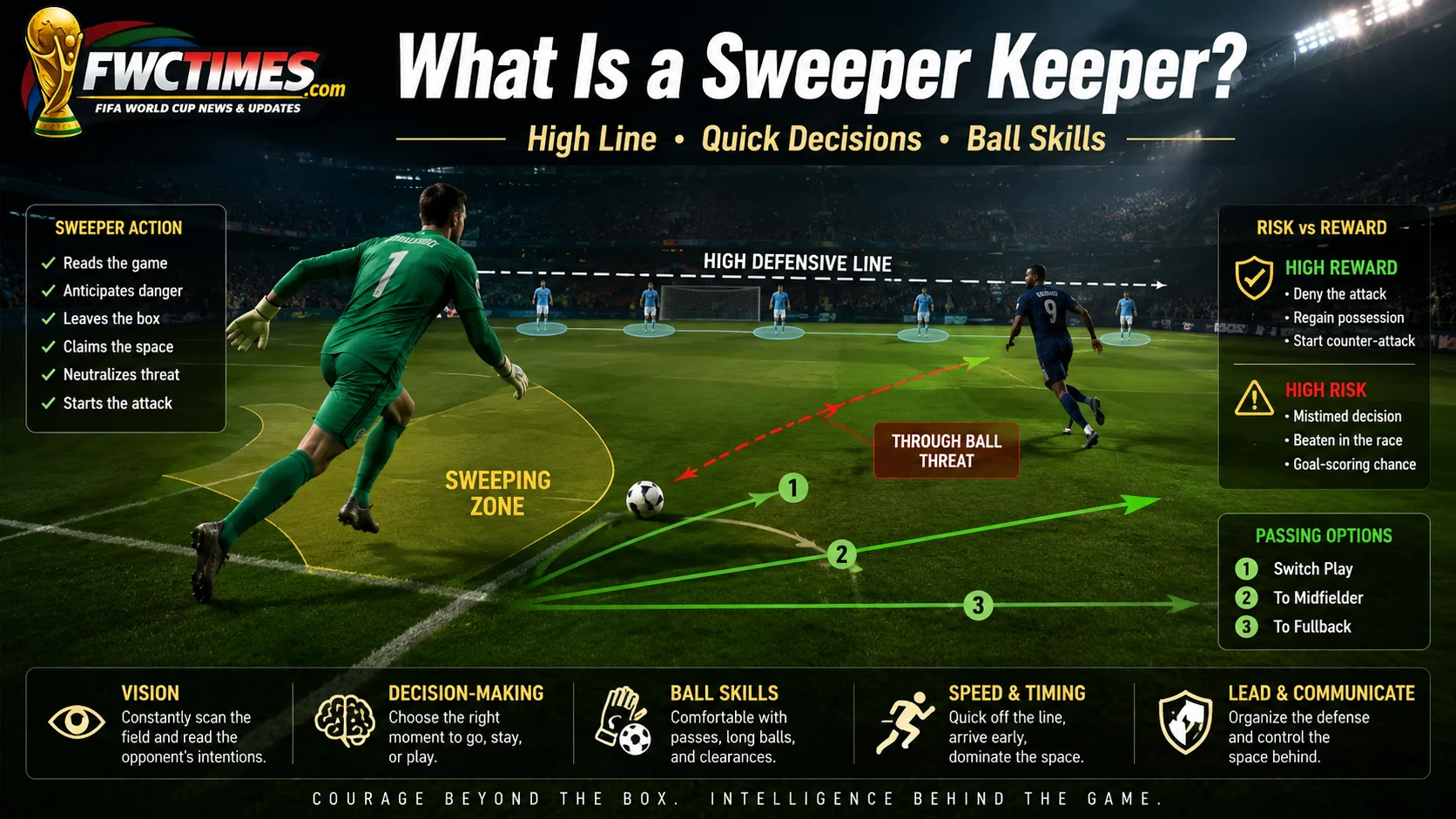
Sweeper keeper football describes a goalkeeper who defends space behind the back line and helps build attacks. The role asks a keeper to read passes early, move outside the box, and use the feet well. Modern teams use it to support high pressing and controlled possession. This article explains the tactical requirements, history, and risks of this modern role.
A keeper must train timing with defenders and midfielders to make this system work. They must react to through balls before attackers can reach them. We will explore how coaches deploy these active goalkeepers in high-level matches. We will also analyze the key skills needed for this demanding position.
What is a sweeper keeper in football?
A sweeper keeper is a goalkeeper who acts like a last defender when the team pushes high. They stop through balls, offer a passing option, and still protect the goal. This dual responsibility requires excellent anticipation and high technical skill with the ball. They must remain composed when opposing forwards try to press them.
Sweeper Keeper Football Role Explained
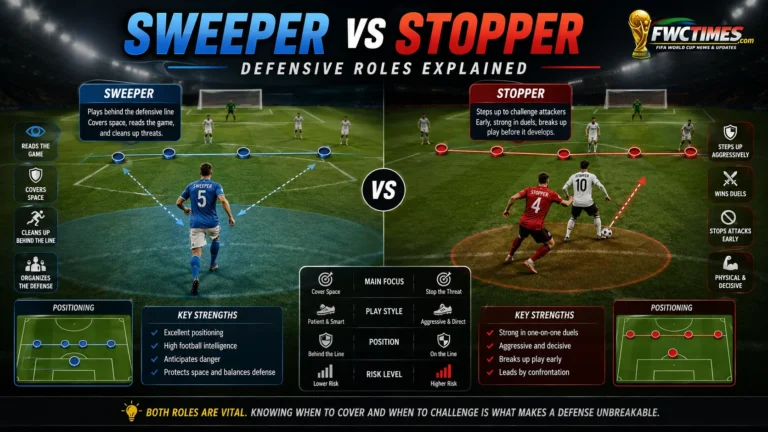
The role combines traditional goalkeeping with defensive reading of the game. A sweeper keeper starts higher than a traditional shot-stopper and watches the space behind centre-backs. When a pass breaks the defensive line, the keeper attacks the ball before the striker arrives. This action prevents the opponent from creating clean one-on-one chances.
FIFA Training Centre analysis has highlighted goalkeeper positioning and support in modern build-up play. That explains why the role belongs to team structure, not only individual bravery. A keeper must train timing with defenders and midfielders. They must understand when to step up and when to retreat.
Why Sweeper Keeper Football Changed Modern Tactics
Sweeper keepers allow defenders to hold a higher line on the pitch. That compresses the space and helps the team press after losing possession. It also gives centre-backs a safe passing option under heavy pressure. The goalkeeper becomes an extra outfield player during the build-up phase.
This tactical shift has changed how teams construct attacks from the back. Instead of clearing the ball long, keepers play short passes to start moves. This style of play requires high technical ability and calm decision-making. Defenders can play with more confidence knowing the keeper covers the space behind.
Key Duties of an Outfield Goalkeeper
A sweeper keeper clears through balls outside the penalty area. They also receive passes near the box and switch play with accurate distribution. The best keepers turn defensive pressure into the first pass of an attack. This proactive style of play keeps the team in control of the rhythm.
The role still starts with elite shot-stopping and box command. A keeper who sweeps badly creates easy goalscoring chances for opponents. Coaches look for judgment, footwork, body shape, and calm passing before they trust this style. A single error can lead to a conceded goal from long range.
Famous Sweeper Keeper Examples
Manuel Neuer made the role famous at elite international level. His 2014 World Cup performances showed how a goalkeeper could defend huge space behind a high line. That style later shaped how clubs and national teams trained keepers. He remains the standard reference for modern goalkeeper coaches.
Other modern keepers have carried the idea into possession teams. Coaches now value distribution, receiving angles, and fast decisions. Ederson and Alisson showcase these skills weekly in the Premier League. The role has become a key part of elite football recruitment.
Sweeper Keeper Compared With Traditional Goalkeeper
| Role | Starting Position | Main Strength |
|---|---|---|
| Traditional goalkeeper | Closer to goal | Shot-stopping and box command |
| Sweeper keeper | Higher behind defence | Clearing space and passing |
| Possession goalkeeper | Near build-up line | Receiving and distribution |
| Emergency sweeper | Outside box when needed | Stopping through balls |
| Late attacking keeper | Opponent box at set pieces | Extra aerial target |
The comparison shows why the goalkeeper’s starting position is so important. A traditional goalkeeper remains inside his six-yard box to maximize reaction time. A sweeper keeper moves up to the edge of the area to cut off passes. Coaches choose between these styles based on their defensive line height.
Both styles have distinct advantages depending on match situations. A team defending deep needs a keeper who excels at shot-stopping. A team playing a high line must have a keeper who sweeps. Modern training ensures that elite keepers can adapt to both defensive setups.
Connection to FIFA World Cup 2026
At the tournament matches, sweeper-keeper tactics will matter because many teams want compact lines. Fans tracking the goalkeepers should look beyond simple saves during matches. Starting position and passing choices will reveal each team’s risk level. The best keepers will dictate how high their defenders can play.
The role links closely with rules governing how goalkeepers play outside the box. A keeper can leave the area, but handling the ball remains a handball offence. That risk makes timing the key skill for these players. A split-second hesitation can result in a red card and a suspension.
Teams also build the role into their overall tactical formations. A high-pressing side needs the keeper as a spare defender. A deeper team asks the keeper to stay closer to goal. Coaches will adjust these instructions based on the speed of opposing forwards.
Skills and Risks of the High Starting Position
A sweeper keeper needs a clean first touch, strong passing, and fast reading of danger. The player must see the pass before the striker starts the run. That early read creates the extra second needed to clear the ball. They must distribute short passes and long balls with equal comfort.
Communication with the central defenders is also vital for success. Defenders must know when the keeper will attack the space behind them. Without clear calls, two players can chase the same ball. This confusion leaves the goal completely exposed to a quick shot.
The role fails when timing turns bold play into panic. A keeper who rushes out late may foul the attacker outside the area. A keeper who stays too high can also be beaten by an early long-range chip. Teams reduce this risk through constant repetition on the training ground.
Frequently Asked Questions
What is sweeper keeper football?
Sweeper keeper football is a goalkeeping style where the keeper defends the space behind the defensive line. The player also supports the team’s build-up play with passing and high positioning. This role acts as an eleventh outfield player during possession phases.
Why do teams use a sweeper keeper tactically?
Teams use a sweeper keeper to support a high defensive line and reduce space. The role also helps the team keep possession when opponents apply heavy pressing. It provides centre-backs with a safe passing option under pressure.
Who made the sweeper keeper role famous?
Manuel Neuer made the modern sweeper keeper role famous during the 2014 World Cup. His performances showed how a goalkeeper could control space far from the goal line. His proactive style revolutionized how coaches train goalkeepers worldwide.
What is the difference between a sweeper keeper and a normal goalkeeper?
A normal goalkeeper stays closer to the goal and focuses primarily on shot-stopping. A sweeper keeper starts much higher up the pitch to clear through balls. They also participate actively in build-up play with their feet.
Will sweeper keepers matter at FIFA World Cup 2026?
Yes, sweeper keepers will matter at the tournament because many teams defend very high. Their decisions can stop dangerous counters or expose an empty goal to the opponent. Their distribution will also help teams break through compact presses.
Conclusion
A sweeper keeper gives a team more control when the defensive line pushes high. The role demands excellent timing, courage, footwork, and strong passing. Fans should watch positioning before the through ball, not only the final save. Stay tuned to FWCTimes.com for the latest tournament updates.
To read more about goalkeeper rules, check our other explainers. Read Also: What Happens If a Goalkeeper Gets a Red Card? Our team publishes fresh rule guides and tactical analyses regularly.