How World Cup 2026 FIFA Ranking Shaped Seeding


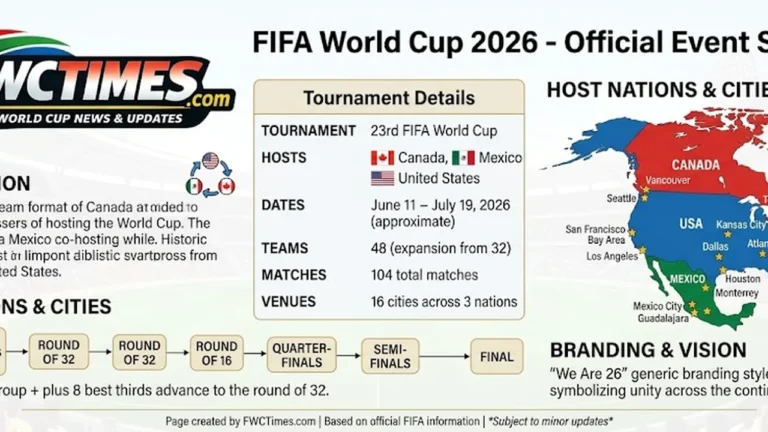
Organizers used the World Cup 2026 FIFA ranking to organize the final draw for the forty-eight qualified nations. The official tournament seeding rules placed the host nations directly into the top tier. As a result, fans can expect highly balanced groups when the matches begin. You should learn how these ranks decided the team placements.
The draw split the qualified countries into four separate selection pots. In fact, the FIFA World Cup draw system wanted to separate the strongest contenders early. This method ensures that elite teams do not face each other in the opening rounds. The seeding setup affects the entire path to the final match.
What is the World Cup 2026 FIFA ranking?
The ranking system calculates points based on international match results over a four-year period. FIFA uses this data to order national teams across the globe. Higher positions on the list reflect consistent success in regional and global matches. So, the rankings create a fair seeding order for the draw.
Host countries receive automatic top seeding regardless of their current position on the list. The United States, Canada, and Mexico gained this placement for the tournament. This status helps the hosts avoid playing top-seeded opponents in the group stage. Fans can look forward to competitive matches in every stadium.
How the World Cup 2026 FIFA ranking affected Pots
Pot one carried the three host nations and the nine highest-ranked qualified countries. Pots two, three, and four carried the remaining nations in descending order. On top of that, each group received exactly one team from each pot. This structure prevents multiple elite teams sharing a single group.
Why Top Seeds Carry Huge Advantages
Top seeds avoid playing other group favorites during the opening matches. This setup provides a smoother path toward the knockout stages. Seeded teams also secure favorable kickoff times in their respective host cities. These benefits can boost a country’s hopes of progressing far.
Playing in front of home fans gives host countries an extra lift. The hosts will use this crowd support to their advantage in the early rounds. Seeded status helps them build momentum before facing top teams like France or Spain. Every host city is preparing for massive matchday crowds.
Ranking vs Tournament Performance
Rankings represent past performances over a long qualification period. Yet, actual tournament form matters more once the matches begin. A lower-seeded team can easily cause an upset on any day. Teams must prepare tactically for their specific group opponents.
Injuries and travel fatigue can quickly disrupt a team’s ranking advantage. Elite players often arrive tired after long European club seasons. As a result, squad depth will determine which nations survive the busy match schedule. Coaches must manage player minutes to avoid late collapses.
| Pot 1 Team | Ranking Used for Draw | Seeding Reason |
|---|---|---|
| Spain | 1 | Top ranked qualified team |
| Argentina | 2 | Top ranked qualified team |
| France | 3 | Top ranked qualified team |
| England | 4 | Top ranked qualified team |
| Brazil | 5 | Top ranked qualified team |
| Portugal | 6 | Top ranked qualified team |
| Netherlands | 7 | Top ranked qualified team |
| Belgium | 8 | Top ranked qualified team |
| Germany | 9 | Top ranked qualified team |
| United States | 14 | Host country |
| Mexico | 15 | Host country |
| Canada | 27 | Host country |
Frequently Asked Questions
What is the World Cup 2026 FIFA ranking?
The ranking system orders teams based on international match points. FIFA used these ranks to decide the final draw pots. Top-seeded teams secured spots in Pot 1. Lower-ranked nations entered Pots 2, 3, and 4.
Why were USA, Mexico, and Canada seeded in Pot 1?
Host nations automatically receive Pot 1 status for the draw. This rule applies even if their rank is lower. It helps hosts avoid the strongest qualified teams. Fans can expect hosts to play in front of home crowds.
Does a higher FIFA ranking guarantee victory?
High rankings do not guarantee wins in tournament football. Upsets happen regularly during group stages. Matchday preparation and player form decide the final scores. Teams must perform well on the pitch to advance.
Which ranking list did FIFA use for the draw?
FIFA used the official ranking list from November 2025. This list locked the seeds for all qualified teams. The pots remained fixed until the draw event ended. Fans can view the final groups online.
How many pots were used for the draw?
The draw system used four pots of twelve teams. Each group received one team from each pot. This process ensured a balanced distribution of teams. Group stage matches will begin in June 2026.
Conclusion
The ranking system played a crucial role in shaping the tournament draw. Seeding helps organize the match schedules and host cities fairly. Still, ranking numbers mean nothing once the referee blows the whistle. The best teams must prove their value on the field.
Fans can prepare for an exciting summer of football in North America. Since the groups are set, teams can study their opponents in detail. You can stay updated on team preparations by checking our site daily. Let us support our favorite countries as the kickoff draws near.