Tactical Trends Shaping the 2026 World Cup

The expanded 48-team format and three-nation geography have forced national team managers to redesign their strategic playbooks. Tactical success now depends on managing player energy across eight matches rather than relying on a static starting eleven. In fact, travel distances and extreme climate variations make the traditional approach of constant pressing obsolete. Coaches must adapt their tactical systems to survive the longest tournament in World Cup history.
This tournament introduces structural changes that make the 2022 Qatar blueprint unusable. Qatar featured matches played in a single metropolitan area with cool winter weather. The 2026 tournament stretches across Canada, Mexico, and the United States, presenting extreme humidity in Miami and high altitude in Mexico City. As a result, squads must prioritize recovery and adapt their defensive lines to match the local conditions.
The tournament format changes the math of the group stage. With twelve groups of four, the eight best third-place finishers advance to the new Round of 32. This change adds a complete round of knockout matches to the schedule. In fact, a finalist must now play eight matches over 39 days to win the trophy.
Why the 48-Team Format Dictates Strategy
The expansion from 32 to 48 teams changes the physical demands of international football. Finalists must play eight matches instead of seven, adding another 90 minutes of high-intensity load. Because of this change, coaches cannot rely on a single core starting eleven. Squad depth and systematic rotation have become the baseline requirements for tournament survival.
Geographic scale also acts as a primary tactical constraint. Teams must travel thousands of miles between group matches, crossing multiple time zones. As a result, training sessions between matches focus on physical recovery rather than tactical drills. Coaches who refuse to rotate their rosters will find their squads exhausted by the round of 16.
The introduction of the Round of 32 changes the risk calculus for managers. Teams can advance with a single win and a draw in the group stage. This safety net allows coaches to rotate players early in the tournament. In fact, keeping key players fresh for the knockout stages is now more important than winning every group match.
Seven Strategic Trends Defining the Tournament
Calculated Bursts of Pressing
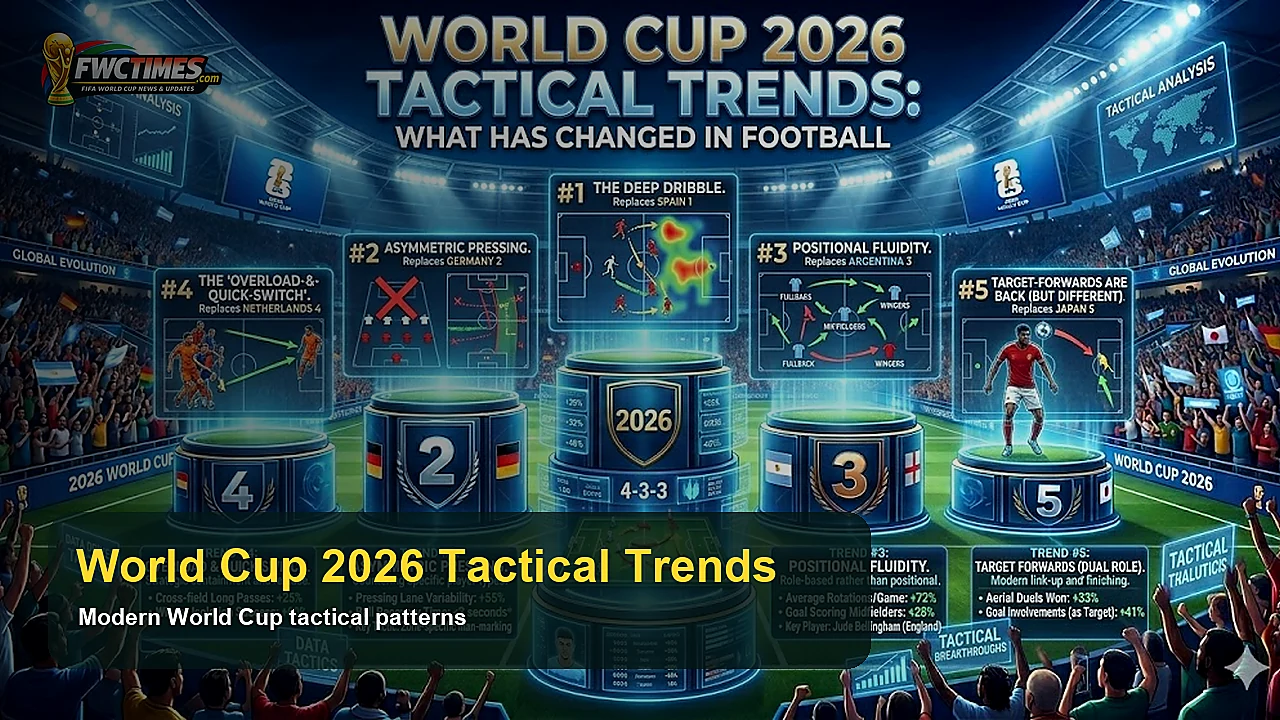
Teams have abandoned the idea of pressing high for a full 90 minutes. Instead, coaches instruct their players to press in short, coordinated bursts of four to six minutes. These bursts target specific triggers, such as a poor touch by an opposing centre-back. This selective approach preserves energy while still forcing turnovers in the final third. The high press World Cup guide explores these pressing triggers in greater detail.
Pressing intensity has become a rolling calculation. Teams drop into a compact mid-block to rest, then spring the trap when the ball enters wide areas. This pattern allows squads to maintain defensive stability without burning out. On top of that, it forces the opponent to break down a settled block, which is much harder than exploiting transition gaps.
The Inverted Full-Back Requirement
The traditional overlapping full-back has become a liability against fast transitions. Modern systems ask at least one fullback to step into central midfield during possession. This movement creates a temporary double pivot that protects the centre of the pitch. As a result, the team keeps a secure rest defense while wide forwards stretch the opponent.
Inverting the full-back also creates a fluid 3-2-5 attacking shape. The shape provides numerical superiority in the midfield and helps control the tempo of the match. Teams that lack players comfortable in this hybrid role are structurally behind. The possession football World Cup guide explains how this shape-shifting system controls possession.
Liquid Systems and Shape-Shifting
Fixed formations no longer exist in modern tournament play. Elite teams defend in one shape and attack in another, shifting fluidly between phases. For example, Argentina playing style World Cup matches show a team that attacks in a 3-2-5 but defends in a compact 4-4-2 block. This adaptability makes the team extremely difficult to scout and neutralize.
These liquid systems rely on players who can fill multiple roles within the same match. A central midfielder must be ready to drop into the defensive line, while a winger might tuck inside to act as a playmaker. This flexibility allows coaches to change tactics without making a substitution, keeping the opponent guessing.
Hydration Breaks as Coaching Time
FIFA has made three-minute hydration breaks mandatory at the 22nd minute of each half. Smart coaching staffs treat these breaks as strategic timeouts rather than rest periods. Assistants use laptops to show real-time video analysis to players on the pitch. As a result, matches feel like they are played in four distinct quarters.
These breaks allow coaches to adjust pressing lines and correct defensive positioning mid-half. A team struggling against a specific overload can reset their defensive shape immediately. In fact, these breaks have reduced the impact of early tactical surprises, as managers get an automatic window to adjust.
Planned Squad Rotation and Platooning
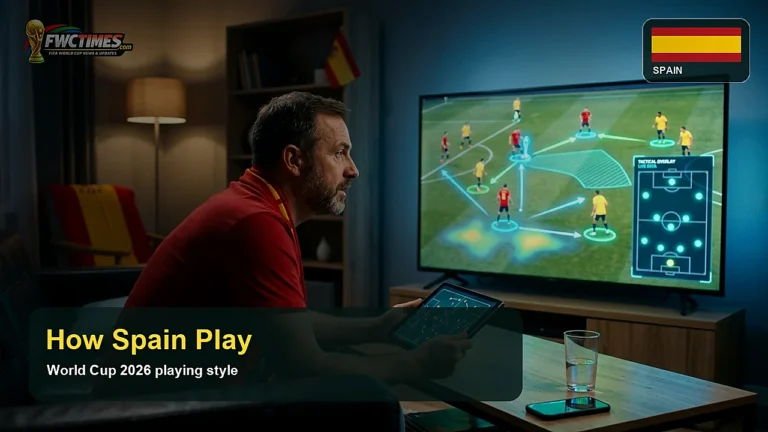
The extra match load means squad rotation is now a core tactical plan. Spain has pioneered an A/B roster system, rotating up to five players between matches without losing tactical identity. This strategy keeps the squad fresh and reduces the risk of muscle injuries. Positional platooning, where two players share a single demanding role, has become common.
Coaches must design systems that do not depend on a single player. The 4-3-3 formation World Cup guide shows how teams build position-agnostic structures to facilitate rotation. Except for key anchors like Rodri, every position must have a capable backup who understands the exact same tactical instructions.
Set Pieces as a Strategic Department
Set pieces account for over 30% of goals in modern international tournaments. Because open-play goals are hard to find against low blocks, dead-ball situations receive massive training focus. Most federations now employ specialist set-piece coaches who design complex routines. These routines use blockers and decoy runners to create free headers in the box.Defensive set-piece organization is equally critical. Pressing teams often play with a high defensive line, making them vulnerable to long deliveries. A single mistake on a defensive corner can undo 90 minutes of tactical dominance. As a result, set-piece drills occupy a significant portion of pre-match preparation.
Real-Time Performance Analytics
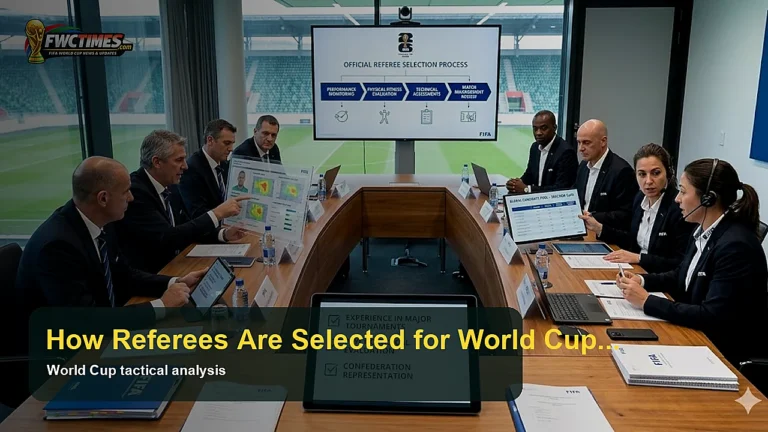
The FIFA Technical Study Group, led by Arsene Wenger, uses a six-camera system to analyze matches in real time. This data is shared with coaching staffs and broadcast to fans during the game. Analysts track metrics like line-breaking passes, pressing efficiency, and defensive compactness. This instant feedback allows coaches to make data-driven decisions on substitutions.
This analytics wave has removed guesswork from tournament coaching. A manager can see exactly when a midfielder’s pressing intensity drops below their baseline. This insight triggers a substitution before the opponent can exploit the physical decline. In fact, real-time data has made in-game adjustments far more precise than in previous tournaments.
Expert Verdict
The tactical winner of World Cup 2026 will be the team that manages their physical resources best. A brilliant tactical plan is useless if the players lack the energy to execute it in the quarterfinals. For this reason, Spain and Argentina enter the tournament with a structural advantage. Both squads have the tactical fluidity to shift shapes and the depth to rotate without dropping quality.
The key tactical risk is over-indexing on high-intensity pressing. The travel demands and summer heat will punish teams that try to run for 90 minutes. The smart managers will use mid-blocks, calculated pressing bursts, and set pieces to win matches efficiently. The champion will not be the most aggressive team, but the most adaptable one.