
3-5-2 Formation at the FIFA World Cup

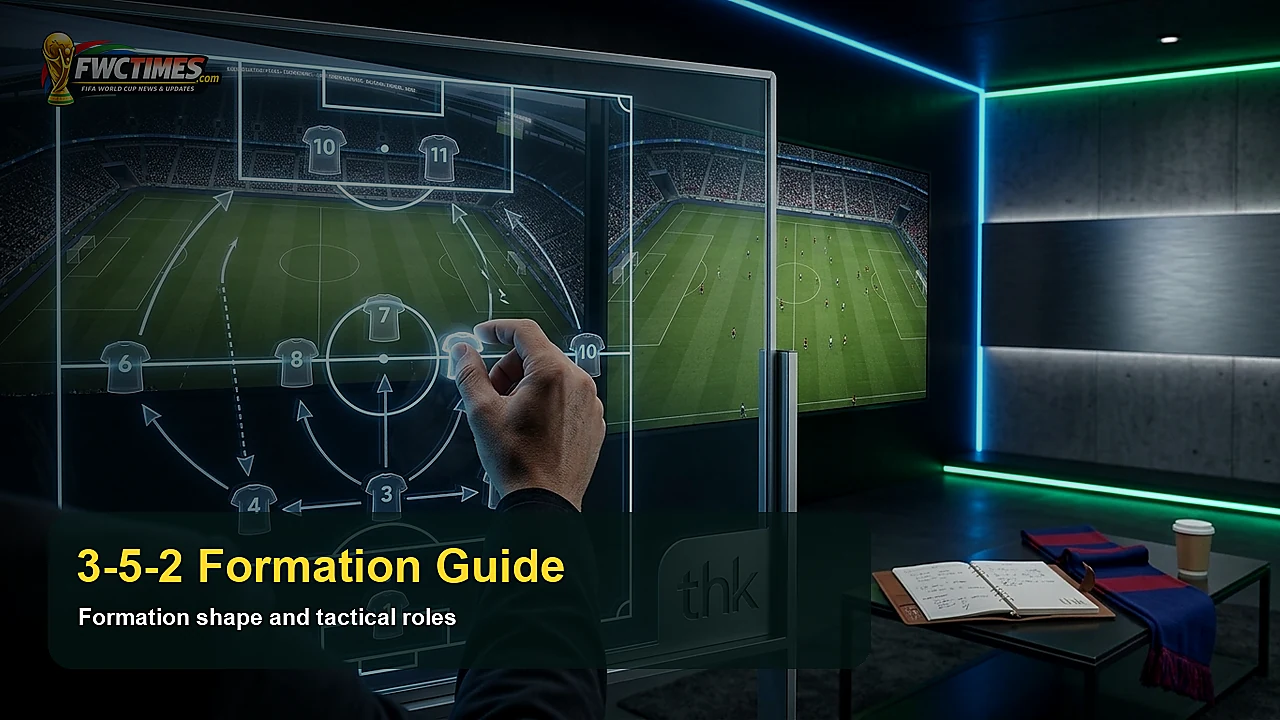
The 3-5-2 formation football World Cup shape offers a powerful solution for controlling the midfield and securing the box. Coaches select this back-three system because it creates a five-man midfield in possession while providing cover through three centre-backs. In fact, the role of the wing-backs is the most demanding position in this tactical structure. This guide explains how teams adapt the shape to survive the high physical demands of tournament play.
The physical load of the expanded 48-team schedule makes tactical efficiency a primary concern. With travel across multiple host countries and varying climates, coaches must avoid systems that exhaust their players too early. The 3-5-2 shape distributes defensive work across a compact central unit, protecting the core of the team. As a result, squads can control match tempo without running themselves into physical exhaustion.
The history of the tournament shows that a back-three system can carry underdogs deep into the knockout rounds. The shape is highly effective at neutralizing teams that rely on wide overloads and crosses. By keeping three central defenders, the team can secure the penalty area against physical strikers. This defensive resilience is why the shape remains a staple of international tournament football.
The Core Components of the 3-5-2
The Double-Duty Wing-Backs
The success of the 3-5-2 relies entirely on the quality and stamina of the wing-backs. These players must cover the entire flank, acting as wingers in attack and fullbacks in defense. In possession, they push high to provide width and deliver crosses into the penalty box. Out of possession, they drop deep to complete a five-man defensive line.
This double responsibility makes the wing-back position physically punishing. Coaches must choose players with elite aerobic capacity and tactical discipline for these roles. A single slow transition from a wing-back can expose the space behind the back three. On top of that, it allows the opponent to overload the wide areas before cover arrives.
The Three-Man Central Defense
The three centre-backs form the defensive spine of the system. This trio provides natural coverage against two-striker systems and crosses from wide positions. One centre-back typically acts as the lead organizer, while the wide centre-backs step out to challenge attackers. This structure allows the team to defend the box with a numerical advantage at all times.
Modern variations encourage wide centre-backs to support the build-up play. When the wing-back pushes high, the wide centre-back can step into the half-space to pass forward. This movement creates passing triangles that help the team play through the opponent’s press. The possession football World Cup guide breaks down how these build-up patterns control matches.
Tactical Advantages of the Back-Three Shape
The primary advantage is the numerical superiority in central midfield. With three central midfielders and two wing-backs, the team can easily control possession. This central overload makes it difficult for opponents running a double pivot to win the ball. The midfield trio can recycle possession safely, dictating the tempo and rhythm of the match.
The system also supports a highly effective two-striker partnership. The constant movement of two forwards can stretch and unsettle traditional back-four defenses. One striker can drop deep to link the play, while the other runs in behind the defensive line. The 4-3-3 formation World Cup guide shows how this two-striker threat compares to lone-forward setups.
The shape also provides excellent protection during transition moments. Because the three centre-backs remain deep, the team is rarely exposed to direct counterattacks. Even if the wing-backs are caught high, the central trio can delay the attacker until support arrives. This defensive insurance is why coaches select this shape for high-stakes knockout matches.
Defensive Transition to the 5-3-2 Block
Out of possession, the 3-5-2 shifts into a compact 5-3-2 defensive structure. The wing-backs drop next to the three centre-backs, creating a flat bank of five. The three midfielders stay narrow in front of them, closing down central passing lanes. This defensive block is notoriously difficult to play through.
This transition allows teams to defend deep and absorb pressure without losing their structure. The compactness forces opponents to play toward the flanks, where the wing-backs can press them. This zonal coverage prevents the opponent from pulling the central defenders out of position. The 5-3-2 formation World Cup guide explores the defensive mechanics of this low-block system.
Underdog teams use this defensive block to frustrate superior opponents and launch quick counterattacks. By soaking up pressure, they draw the opponent forward and exploit the space left behind. When the ball is won, the wing-backs sprint forward to initiate the transition. This vertical speed is what makes the counter-attacking system so dangerous.
Trophies and History of the 3-5-2
Brazil used a highly attacking version of this shape to win the 2002 World Cup. Head coach Luiz Felipe Scolari utilized the wing-back brilliance of Cafu and Roberto Carlos. This setup allowed Brazil to attack with pace while keeping a secure back three. Brazil’s fifth title proved that a back-three system could dominate at the highest level.
Germany also found success with this shape, winning the 1990 World Cup under Franz Beckenbauer. Beckenbauer utilized a sweeper behind two central defenders to control the defensive phase. This structural organization became the blueprint for German football during that era. Today, coaches use modern variations to match the tactical trends of the 2026 tournament.
Italy has historically relied on back-three systems to control major tournaments. Under Luciano Spalletti, the Italian national team utilized a 3-5-2 shape to establish a stable identity. Spalletti selected wing-backs like Dimarco and Cambiaso to drive both phases of play. The Argentina playing style World Cup guide shows how other top nations adapt their systems to counter these Italian shapes.
Expert Verdict
The 3-5-2 will remain a powerful match-up system at the 2026 World Cup. Its ability to shift into a 5-3-2 block gives coaches a reliable defensive platform against possession-heavy sides. The success of the shape depends on the physical readiness of the wing-backs. If the wing-backs lack the stamina to track back, the system breaks down.
The most successful teams will use the shape to control the central zones. By dominating the midfield, they can restrict the opponent’s creative playmakers. This tactical control is what allows teams to survive the long knockout rounds. The 3-5-2 is not the most common starting shape, but it is one of the most structurally secure.