2026 FIFA World Cup in United States, Host Cities, Stadiums, Schedule, Tickets Guide

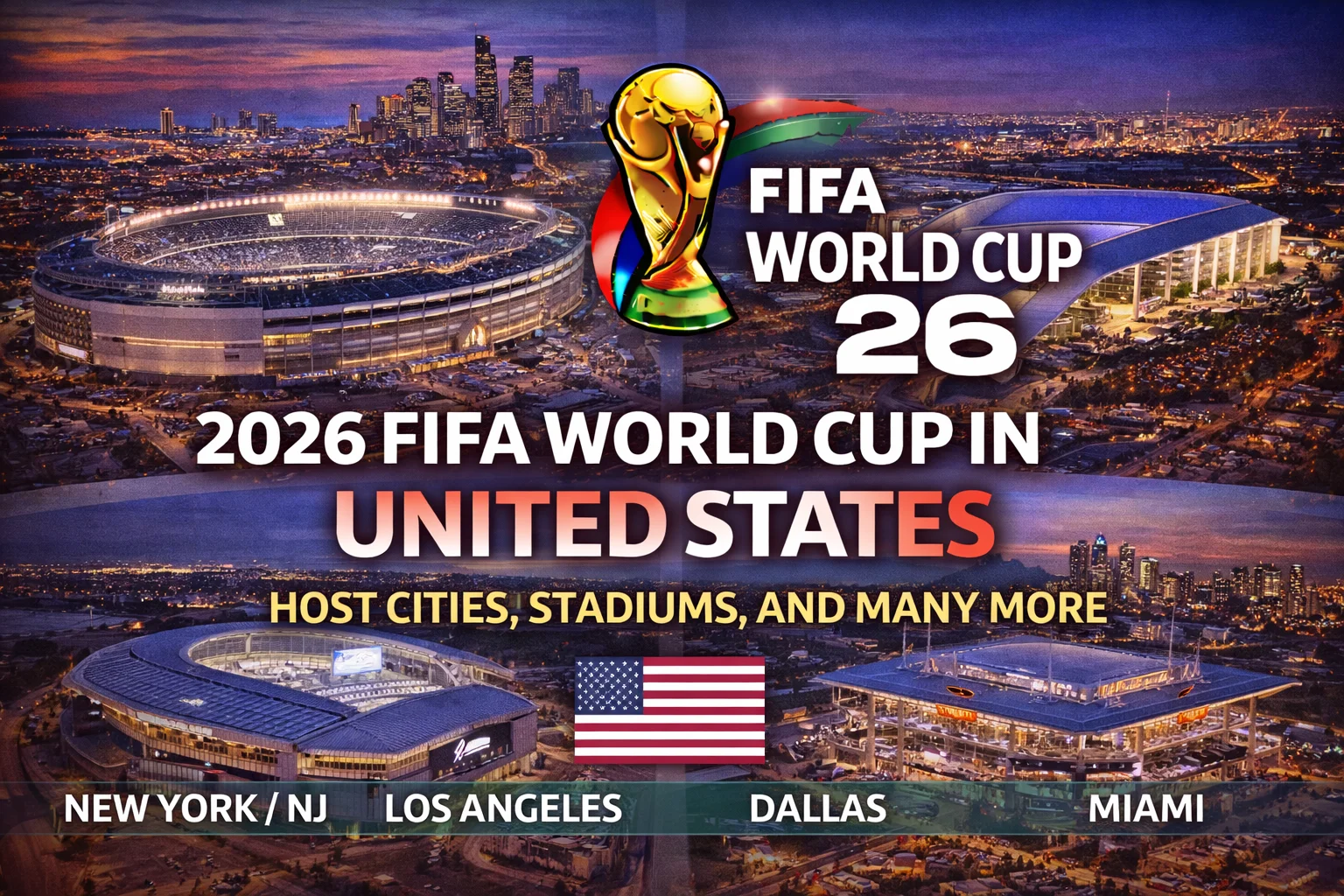
The 2026 FIFA World Cup in the United States is set to be one of the biggest sports moments of this generation. It is co-hosted across the United States, Canada, and Mexico, and it expands to 48 teams and 104 matches. Because more countries are involved, the energy will feel like a month-long festival, not just a tournament.
In addition, the United States plays the central role for many fans because it hosts 11 of the 16 host cities. That also means most match travel routes, fan events, and stadium experiences will happen in the U.S. As preparations intensify, the tournament is positioned to deliver iconic crowds, cultural celebrations, and unforgettable matchdays from coast to coast.
Tournament dates and overall timeline
The tournament runs from June 11 to July 19, 2026. During that period, the group stage builds early momentum, and then the knockout rounds raise the intensity as teams chase the trophy through the round of 32 and beyond.
Expanded format explained in simple terms
This edition introduces a larger, more inclusive structure:
- 48 national teams compete.
- The group stage has 12 groups of four teams each.
- The top two teams in each group advance.
- Eight best third-placed teams also advance.
- The knockout phase begins with a round of 32.
As a result, the competition stays busy and dramatic, and every matchday matters because the path to the knockout rounds is wider but still competitive.
Why the United States is the center of World Cup 2026
The United States hosts 78 of the 104 total matches, which is the majority of the tournament. In fact, the U.S. venues also stage the biggest moments late in the competition, including high-pressure knockout rounds and the final.
Because the country is so large, the host city list is designed for geographic spread and strong infrastructure. The selected cities were chosen after evaluations focused on transport, accessibility, and facilities that can handle global crowds. Many of the stadiums are already proven at major events, which supports smooth operations and a high-energy atmosphere.
What “USA host cities” really means for fans
For fans, the U.S. scale creates two clear advantages. First, you can plan trips around themes, such as a regional run in Texas or a Northeast cluster. Second, you can stay in one base city and still reach other venues with short flights if you want more variety.
United States host cities for the 2026 FIFA World Cup
Eleven U.S. cities will host matches, and each location brings a different vibe to the tournament. Some are global megacities, while others offer a strong local sports culture that can make matchdays feel intense and personal.
Atlanta
Atlanta features modern facilities and an enthusiastic fan base. It hosts several group matches and a round of 16 game. Moreover, the international airport makes it an easy entry point for visitors.
Boston
Boston blends deep history with a high-profile sports environment. It hosts group games and a quarterfinal. Additionally, local transit helps many visitors navigate the area.
Dallas
Dallas stands out for huge capacity and a major role in the schedule. It is set to host nine matches, including a semifinal. Because it delivers a true big-event feel, it is one of the most important U.S. stops of the entire tournament.
Houston
Houston’s multicultural identity matches the global nature of the World Cup. It hosts group and knockout stage matches, and its domestic flight connections make it practical for multi-city plans.
Kansas City
Kansas City brings strong soccer identity and warm hospitality. It hosts group matches and a round of 16. In addition, team base-camp attention has already pointed to Kansas City, with England confirmed in the area.
Los Angeles
Los Angeles combines matchday excitement with entertainment culture. It hosts multiple group games and a quarterfinal. It is also tied to the USA’s opening match, which adds extra attention and atmosphere.
Miami
Miami’s sunny setting attracts fans who want football and vacation energy in one trip. It hosts group matches and the third-place match, and it is known for lively post-match celebrations.
New York and New Jersey
The New York and New Jersey area is the epicenter of the closing chapter of World Cup 2026. It hosts eight matches and the final on July 19, bringing enormous crowds to one of the world’s most iconic metro regions.
Philadelphia
Philadelphia hosts group matches and a round of 16. Beyond the stadium, the city’s historic identity adds meaning for fans who want more than match tickets.
San Francisco Bay Area
The Bay Area hosts group matches and pairs its innovative spirit with sustainability initiatives that align with FIFA’s green goals.
Seattle
Seattle hosts group matches including a USA match. It also offers cooler weather in summer compared to several other U.S. cities, which can be a welcome change during June and July travel.
Stadiums hosting World Cup 2026 matches in the United States
The U.S. venues are large, modern stadiums, many of them home to NFL teams. For the World Cup, they undergo adjustments to meet FIFA standards, including natural grass fields and matchday operations built around global crowds. Capacities range from about 65,000 to over 90,000, which means even group-stage matches can feel massive.
It also helps to remember that FIFA often uses “City Stadium” style labels during tournaments, while most fans continue using the common stadium names.
Quick table of U.S. host cities and stadiums
| Host city (metro) | Stadium (common name) |
|---|---|
| Atlanta, Georgia | Mercedes-Benz Stadium |
| Boston/Foxborough, Massachusetts | Gillette Stadium |
| Dallas/Arlington, Texas | AT&T Stadium |
| Houston, Texas | NRG Stadium |
| Kansas City, Missouri | Arrowhead Stadium |
| Los Angeles/Inglewood, California | SoFi Stadium |
| Miami, Florida | Hard Rock Stadium |
| New York/New Jersey | MetLife Stadium |
| Philadelphia, Pennsylvania | Lincoln Financial Field |
| San Francisco Bay Area/Santa Clara, California | Levi’s Stadium |
| Seattle, Washington | Lumen Field |
U.S. venue capacity and key matches snapshot
| Stadium | City | Capacity | Key matches and roles |
|---|---|---|---|
| AT&T Stadium | Dallas (Arlington) | 94,000 | Group stage, knockouts, semifinal |
| MetLife Stadium | New York/New Jersey | 82,500 | Group stage, round of 16, final |
| Mercedes-Benz Stadium | Atlanta | 71,000 to 75,000 range | Group stage, round of 16 |
| NRG Stadium | Houston | 72,000 | Group stage, round of 16 |
| SoFi Stadium | Los Angeles | 70,000 | USA opener, group stage, quarterfinal |
| Hard Rock Stadium | Miami | 65,000 | Group stage, third-place match |
| Gillette Stadium | Boston | 65,000 | Group stage, quarterfinal |
| Lincoln Financial Field | Philadelphia | 69,000 | Group stage, round of 16 |
| Levi’s Stadium | San Francisco Bay Area | about 68,500 to 71,000 range | Group stage |
| Lumen Field | Seattle | 69,000 | Group stage including USA match |
| Arrowhead Stadium | Kansas City | about 73,000 to 76,000 range | Group stage, round of 16 |
Match schedule highlights for USA venues
The schedule framework was announced earlier, and then a fuller schedule with venues and kick-off timing details followed after the Final Draw event held on December 6, 2025. That schedule clarity matters because it lets fans plan travel blocks, day-of-week patterns, and rest-day gaps with more confidence.
Key tournament dates fans keep circling
- June 11 to July 19, 2026: full tournament window
- June 11 to June 27: group-stage window referenced in the planning flow
- June 28 onward: knockout rounds begin
- July 14: Dallas hosts a semifinal
- July 18: third-place match in Miami
- July 19: final in the New York/New Jersey area
USA opening match spotlight
A major early headline is the USA opener on June 12 in Los Angeles, with USA vs Paraguay in the Los Angeles venue context. That match sets the tone for the U.S. home atmosphere and will likely be one of the loudest early nights of the tournament.
How to use the schedule as a traveler
Even with dates known, smart planning still matters. You can book flights and hotels with flexible change policies, then lock details once your team’s group and match venues are confirmed. If you are traveling as a neutral, you can plan city blocks first, then pick matches inside those blocks later.
Tickets for the 2026 FIFA World Cup in United States
Ticket demand is expected to be massive, so preparation is part of the strategy. While the exact steps can vary by sales phase, the most reliable approach stays consistent: be ready early, know your priorities, and avoid risky sources.
How to improve your chances of getting tickets
- Create your FIFA ticketing account early and keep login details secure.
- Decide your must-see matches and your backup matches in different cities.
- Build a travel budget that includes fees and local transport costs.
- Avoid risky resale sources that could invalidate entry at the gate.
Smart ticket planning for families and groups
If you are traveling with others, a simpler plan usually wins. Choose one base city and target matches there first. Then, add a second city only if the dates line up cleanly, because constant movement can drain time and budget quickly.
Travel planning for a USA World Cup 2026 trip
The United States is huge, which is exciting but also challenging. Because airports, traffic, and hotel check-ins can pile up, a two-city plan often beats a seven-city sprint.
Base city approach
Pick one host city and attend two to four matches nearby. Between games, add fan festivals and day trips to fill rest days without stressful travel.
Regional road trip approach
Choose a cluster such as Texas (Dallas and Houston) or the Northeast (New York/New Jersey, Philadelphia, Boston). Then combine short flights or drives while keeping luggage simple.
Bucket list approach
Mix one East Coast city and one West Coast city for variety. Plan one long travel day, then stay put for several matches so the trip feels enjoyable instead of rushed.
Weather and packing tips across U.S. host cities
June and July conditions vary widely across the U.S. Expect hot and humid weather in Miami and Houston, strong sun in Texas and California, and milder conditions in Seattle and the Bay Area. Because stadium environments can also be heavily air-conditioned, packing for both outdoor heat and indoor chill makes matchdays more comfortable.
Packing checklist that actually helps
- Lightweight clothing plus one warm layer for indoor cooling
- Comfortable walking shoes for transit and fan zones
- Sunscreen for daytime city travel
- Refillable bottle for long outdoor days
- Portable charger because tickets and maps are phone-based
- Small rain cover, especially for coastal cities
Getting around on matchday
In many host cities, public transport will be the least stressful option. In others, ride-shares and shuttles may be more realistic, especially when a stadium is outside the downtown core. Either way, planning the last mile is just as important as booking the flight.
Matchday movement tips
- Arrive early and plan for security screening lines.
- Save offline maps and stadium entry details before leaving your hotel.
- Pick a meetup point in case your group gets separated.
- Leave extra time after the match for crowd-controlled exits.
Fan experience, culture, and what to do between matches
World Cup culture does not stay inside the stadium. Host cities typically build official fan zones with big screens, music, sponsor activations, and food vendors. Even if you attend only one match, the atmosphere can still feel like a city-wide celebration.
To get more from the trip, balance one tourist activity with one local activity on rest days. That mix keeps your travel feeling personal, not only scheduled around kick-off times.
Safety, accessibility, and sustainability practices
World Cup events are designed for huge crowds, so you should expect strong security and clear entry rules. Respect stadium policies, avoid prohibited items, and follow staff instructions to keep entry smooth.
If you need accessible seating or mobility support, planning early matters because inventory can sell out quickly and transport may require extra time.
Sustainability also plays a visible role. The tournament emphasizes eco-friendly initiatives, including reusable water stations. In addition, carbon-neutral goals and green planning are part of the broader event message, so small choices from fans can support that effort.
Economic and cultural impact on host cities
This tournament is expected to inject billions into host economies through tourism and infrastructure activity. Job creation rises in hospitality, events, and local services. At the same time, cultural exchange is a major part of the World Cup identity, because fans from many countries bring traditions, songs, and celebrations that turn host cities into global meeting points.
In the long term, legacy projects such as youth academies and continued tourism interest can remain after the final whistle. You can check aslo How to watch FIFA World Cup 2026 in United States.
FAQs
The United States has 11 host cities, which is more than any other host country in 2026.
The USA hosts 78 out of 104 total matches.
The World Cup runs from June 11 to July 19, 2026.
The final is on July 19 in the New York/New Jersey area.
There are 48 teams in 12 groups of four, and 32 teams advance to the knockout stage starting with the round of 32.