2026 FIFA World Cup Hosts, Cities, Stadiums, Teams, Dates & Travel Tips

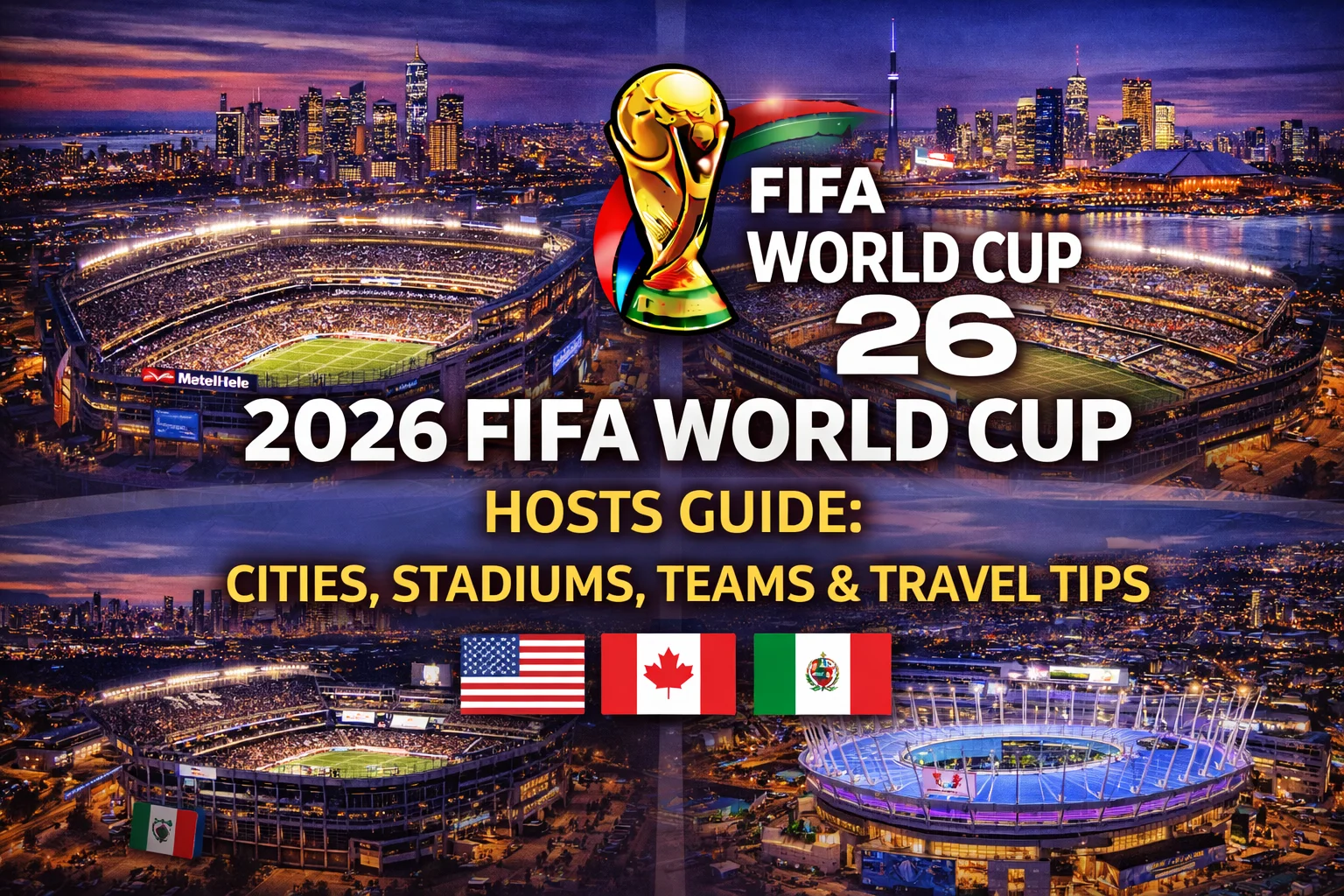
The 2026 FIFA World Cup, also called World Cup 2026, marks a historic milestone in international football. For the first time, the tournament expands to 48 teams, 2026 FIFA World Cup Hosts by the United States, Canada, and Mexico. As a result, fans can expect a truly massive festival that stretches across three countries, 16 host cities, and world-class stadiums.
Even better, this edition is built for global participation and modern fan experiences. It is scheduled to run from June 11 to July 19, with 104 matches planned from the group stage through the final. With so many games and destinations, planning matters more than ever. Therefore, this guide brings everything together in one place, using the details you need for smarter decisions, smoother travel, and a more enjoyable matchday experience.
Overview of the 2026 FIFA World Cup Hosts
This tournament introduces multiple firsts in FIFA history. Most importantly, it grows from 32 to 48 teams. Consequently, more nations from every region have a chance to qualify, which adds new playing styles, fresh storylines, and broader fan representation.
In addition, hosting duties are shared across North America. That co-hosting approach creates cultural variety from city to city, while also offering modern infrastructure, strong transport networks in major hubs, and stadiums built for huge crowds.
Key features of the expanded 48-team format
The new structure changes how the competition flows, so it helps to understand it clearly.
- The tournament uses 12 groups of four teams each.
- The group stage alone includes 72 matches.
- The top two teams in each group move on.
- Eight of the best third-placed teams also advance.
- After that, a new Round of 32 begins the knockout phase.
Because of this format, more teams stay alive longer. So, underdogs can still reach the knockouts, and fans may get more meaningful games across more cities. Also, the tournament duration stretches to 39 days, which creates a packed schedule while still allowing rest days between stages.
Host countries and why this hosting plan is special
The 2026 World Cup will be hosted by three nations, making it one of the most unique editions ever planned. Each country plays a specific role, and together they shape a tournament that feels both enormous and connected.
United States: primary host nation
The United States will stage the majority of matches. This includes many knockout games and the final, which will be played in the New York/New Jersey region at MetLife Stadium. With multiple large-capacity venues and strong airport connectivity, the U.S. portion is designed for scale and logistics.
Canada: first-ever men’s World Cup host
Canada will host men’s World Cup matches for the first time. Games will be played in Toronto and Vancouver, giving fans a welcoming experience in two major cities that combine modern event facilities with strong public transit and easy city access.
Mexico: a legendary World Cup host
Mexico brings deep football tradition and passionate atmospheres. In 2026, Mexico becomes the first nation to host the tournament three times, after 1970 and 1986. The opening match will be played at Estadio Azteca in Mexico City, a venue known worldwide for iconic moments and unforgettable energy.
2026 FIFA World Cup host cities across North America
In total, 16 dynamic cities across three countries will welcome supporters. The United States hosts 11 locations, Mexico hosts 3, and Canada hosts 2. Each destination offers its own culture, food, and local rhythm, which means your trip can be about more than football.
Because match locations are spread widely, many fans do best by planning around a few cities instead of trying to chase everything. This approach keeps your schedule realistic and your travel more enjoyable.
United States host locations
The U.S. host cities stretch coast to coast, so you can build trips around regions or specific match routes.
- Atlanta
- Boston
- Dallas
- Houston
- Kansas City
- Los Angeles
- Miami
- New York/New Jersey
- Philadelphia
- San Francisco Bay Area
- Seattle
Mexico and Canada host sites
Mexico will deliver strong football culture in three major cities.
- Guadalajara
- Mexico City
- Monterrey
Canada provides two standout host experiences.
- Toronto
- Vancouver
Stadiums hosting 2026 World Cup matches
These venues range from about 40,000 seats to more than 80,000 seats. Many are famous for hosting major events already, and several will install temporary grass surfaces to meet FIFA standards. In addition, upgrades focus on fan comfort, accessibility, and modern technology that improves the in-stadium experience.
Full stadium list with capacities and features
| Country | City | Stadium | Capacity | Notable Features |
|---|---|---|---|---|
| USA | Atlanta | Mercedes-Benz Stadium | 71,000 | Retractable roof, massive video board |
| USA | Boston | Gillette Stadium | 65,878 | Multi-purpose venue, Patriot Place nearby |
| USA | Dallas | AT&T Stadium | 80,000 | World’s largest domed structure |
| USA | Houston | NRG Stadium | 72,220 | Rodeo history, climate-controlled |
| USA | Kansas City | Arrowhead Stadium | 76,416 | Loudest stadium record holder |
| USA | Los Angeles | SoFi Stadium | 70,240 | Infinity screen, luxury amenities |
| USA | Miami | Hard Rock Stadium | 65,326 | Tennis complex integration |
| USA | New York/New Jersey | MetLife Stadium | 82,500 | Hosts final, dual-team NFL home |
| USA | Philadelphia | Lincoln Financial Field | 69,796 | Eagle sculptures, tailgating culture |
| USA | San Francisco | Levi’s Stadium | 68,500 | Eco-friendly design, tech hubs |
| USA | Seattle | Lumen Field | 68,740 | Sounders legacy, waterfront views |
| Mexico | Guadalajara | Estadio Akron | 48,071 | Chivas home, modern architecture |
| Mexico | Mexico City | Estadio Azteca | 87,523 | Third World Cup host, iconic status |
| Mexico | Monterrey | Estadio BBVA | 53,500 | Mountain backdrop, innovative design |
| Canada | Toronto | BMO Field | 45,000 | Expanded for tournament, urban setting |
| Canada | Vancouver | BC Place | 54,500 | Retractable roof, Olympic history |
Highlighted venues for key games
Some stadiums carry extra attention because of where the biggest moments land.
- Opening match: Estadio Azteca in Mexico City on June 11
- Final: MetLife Stadium in New York/New Jersey on July 19
- Semi-finals: Atlanta and Dallas
In addition, the U.S. hosts most knockout fixtures, which helps with logistics and stadium capacity for high-demand matches.
What “stadium naming” means during the tournament
During FIFA competitions, venues often use event-specific naming rather than sponsor-based stadium names. So, you may see simplified names like “New York/New Jersey Stadium” on official schedules. This is normal and part of consistent tournament branding.
Qualified teams and qualification updates
The three host nations qualify automatically: Canada, Mexico, and the United States. That leaves the remaining places for global contenders.
According to the information available here, qualification is approaching completion with playoffs in March, and many teams have already secured places through their confederation routes. This expanded tournament creates more openings, which is why fans are seeing more variety and more possible debut storylines in the build-up.
Confirmed qualifiers by continent
Europe: France, Spain, Germany, England, Portugal, Netherlands, Italy, Croatia, Belgium, Switzerland, Denmark, Serbia, Austria, Ukraine, Poland, Sweden (with some noted as pending playoffs).
South America: Brazil, Argentina, Uruguay, Colombia, Ecuador, Chile.
Africa: Morocco, Senegal, Nigeria, Egypt, Algeria, Cameroon, Ghana, Ivory Coast, Tunisia.
Asia: Japan, South Korea, Australia, Iran, Saudi Arabia, Qatar, United Arab Emirates, Iraq.
North America: Host nations plus Costa Rica, Panama, Jamaica.
Oceania: New Zealand.
Remaining spots and playoffs
As listed here, European spots and inter-confederation playoffs still influence the final lineup. These late-stage games often create peak drama, because a single result can change a nation’s entire World Cup journey.
Match schedule and important dates
The tournament timeline is clear, and it helps fans plan travel, accommodation blocks, and city-to-city movement.
- June 11: Opening match in Mexico City
- June 11–27: Group stage
- June 28–July 3: Round of 32
- July 4–7: Round of 16
- July 9–11: Quarter-finals
- July 14–15: Semi-finals
- July 18: Third-place match
- July 19: Final
Because matches are spread across time zones, global viewing remains a major part of the experience. At the same time, fans attending in person should plan rest and travel days carefully so the trip stays fun, not exhausting.
Travel tips for World Cup fans visiting the USA, Canada, and Mexico
With multiple borders and long distances, travel planning is just as important as ticket planning. The best approach is to lock in the essentials early, stay flexible where match locations may shift, and avoid overloading your itinerary.
Visa and entry essentials
Start by checking entry requirements based on your nationality. Many visitors may need authorization such as ESTA for U.S. entry, or similar processes for Canada and Mexico. Since approvals can take time, applying early reduces stress. Also, keep digital backups of your passport and key documents, because travel across multiple countries increases the chance of misplacing something.
Transportation between host cities
North America is large, so travel choices depend on your route.
- Flights connect major hubs quickly and are often the easiest option between far-apart cities.
- Trains and buses can work well for specific corridors, and they add a scenic experience.
- Renting a car can offer flexibility, especially when stadium areas or accommodations are spread out.
Even so, staying within a region can simplify everything. For example, choosing a cluster of nearby cities reduces fatigue, lowers costs, and keeps your plans more stable if match schedules shift.
Accommodation and budget advice
Because demand will be high, booking early matters. Fans can choose hotels, rentals, or hostels depending on comfort and budget goals. Also, staying near reliable transit routes can save time on matchdays.
Based on the guidance here, peak season pricing can be significant. Therefore, many fans plan a base city and use day trips when possible, instead of changing hotels every couple of nights.
Simple budget breakdown to avoid surprises
| Category | Estimated Cost (USD/person) | Tips |
|---|---|---|
| Flights (intl to hub) | 800-1,500 | Book early for deals |
| Internal Travel | 300-600 | Use rail where possible |
| Accommodation (10 nights) | 1,000-2,500 | Plan location carefully |
| Food/Incidentals | 500-800 | Balance restaurants and local options |
| Tickets (3 matches) | 200-1,000 | Track sale phases closely |
Safety and health recommendations
June and July can bring heat, humidity, and occasional storms depending on the city. So, staying hydrated and wearing comfortable shoes can make a big difference. In warmer destinations, sun protection matters as much as your match ticket. Also, carrying health insurance helps with unexpected issues, and following crowd guidance supports a better stadium experience for everyone.
Fan experiences and cultural highlights beyond the matches
The World Cup is never only about 90 minutes. In every host city, fans can explore local neighborhoods, food scenes, and cultural landmarks between matchdays. In addition, fan zones bring people together with live screenings, music, and entertainment.
Stadium tours and matchweek activities also add value to your trip, especially on rest days. Moreover, sustainable habits like using public transport and carrying a reusable water bottle fit the modern direction of global events, while also making daily routines easier.
FAQs
The tournament is co-hosted by the United States, Canada, and Mexico, marking the first three-nation hosting collaboration.
A record 48 teams will compete, expanding from the previous 32-team format to include more global representation.
The opening match takes place at Estadio Azteca in Mexico City on June 11, while the final will be held at MetLife Stadium in New York/New Jersey on July 19.
Depending on nationality, visas or electronic authorizations such as ESTA for the United States may be needed. It is best to check early and apply in advance.
Choose a base city or regional cluster, book refundable stays where possible, and avoid building a schedule that forces constant city-to-city moves.
Final Checklist
Start by picking the host cities that fit your budget, travel style, and match interests. Next, build a plan that focuses on one region or one base city, because it keeps travel easier and reduces costs. Then, track key dates from June 11 through July 19, and keep your bookings flexible where matchups may still affect your plans. Finally, arrive early on matchdays, use fan zones on rest days, and focus on comfort so the experience stays memorable for the right reasons.