Full Back Role Football Explained for Fans

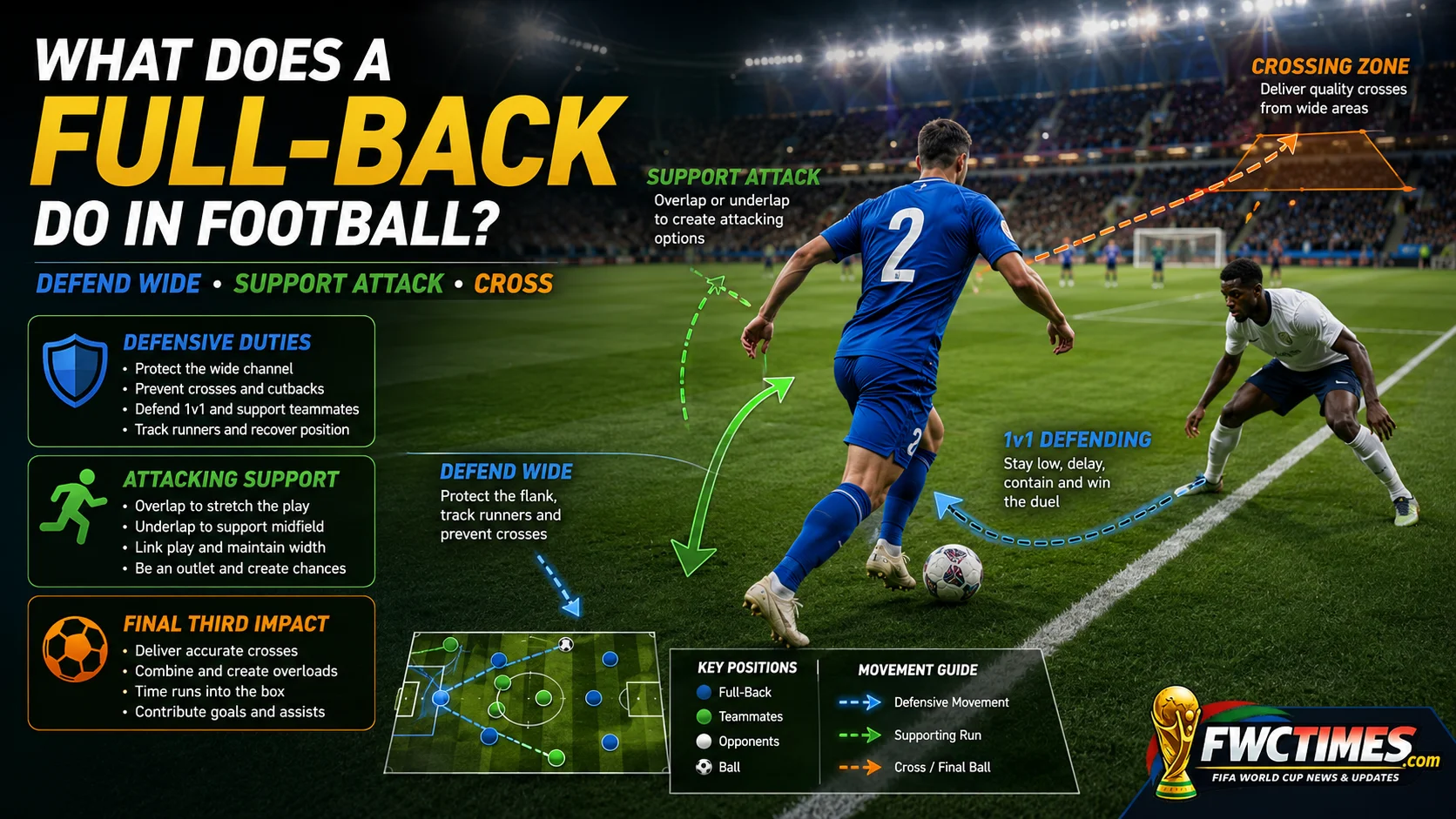
In full back role football, the player defends wide areas and supports attacks from the flank. A wide defender tracks wingers, protects the far post, overlaps midfielders, and helps build possession. Modern coaches also ask these players to move inside to support the midfield. This tactical flexibility makes the position one of the most demanding in the sport today.
FIFA Training Centre material highlights both overlapping and inverted full-back tactics. In fact, these movements create wide passing combinations or overload central zones. The choice depends on the specific game plan and the opponent’s defensive structure. You can analyze how these movements influence matches as you watch your favorite teams.
Full Back Role Football Explained
Full Back Role Football Details
Understanding the full back role football details is essential for analyzing the tactical setup of modern teams. Coaches build their structures to exploit these specific movements during competitive matches. Fans can follow these details closely throughout the tournament stages.
The full-back usually plays on the right or left side of a back four. The player defends wide spaces, blocks crosses, and tracks runs behind the defensive line. In possession, the player gives the team width or moves inside to pass. As a result, the role changes quickly between defending and attacking phases.
The main duties include defending wingers, stopping crosses, supporting build-up, and timing forward runs. A defender must also protect the far post when the ball is on the opposite flank. The player needs immense stamina because wide zones demand repeated high-speed sprints. Since mistakes create open crossing lanes, body positioning remains critical.
Defending Wide Areas
A wide defender protects the space near the touchline. The player must stop opposing wingers from crossing or cutting inside the penalty area. Good defenders delay attackers until midfield help arrives to secure the zone. So, they know when to force the attacker outside or block the inside lane.
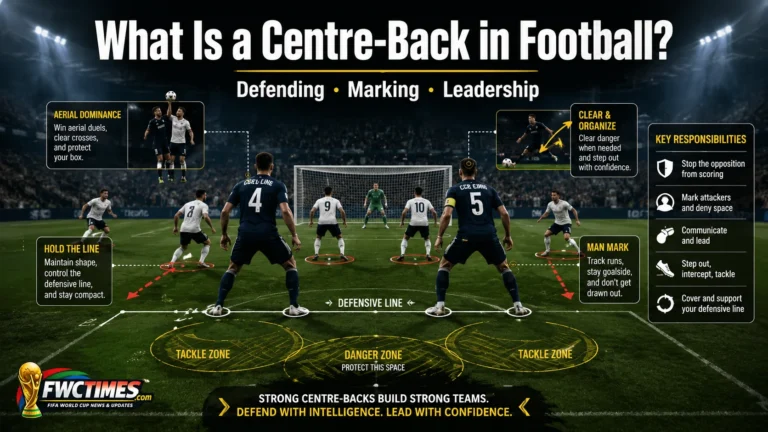
The role depends on close cooperation with the centre-backs. If a wide defender steps out, the nearest centre-back must cover the open channel. A back line works best when those movements happen together. Still, clear communication stops wide attacks from becoming central shooting chances.
Overlaps, Underlaps, and Inverted Full-Backs
If the winger drifts inside at the right moment, the full-back can overlap at speed. This movement creates crossing opportunities and stretches the opponent’s defensive line. It also forces the opposing midfielders to track deep defensive runs. You can see how this links with the winger in football role during transitions.
Inverted full-backs move inside instead of staying wide. This tactic helps overload central areas and creates space for wide attackers. The role requires midfield-level passing skills and high spatial awareness. On top of that, these movements help control possession in the opponent’s half.
| Defensive Role | Primary Area | Main Tactical Job | Key Positional Difference |
|---|---|---|---|
| Full-back | Wide defensive zones | Defends flanks and overlaps | Works near the touchline in a back four |
| Centre-back | Central defensive zones | Protects goal and marks strikers | Stays in central defensive spaces |
| Wing-back | Entire wide flank | Attacks and defends wide zones | Plays outside three central defenders |
| Inverted full-back | Wide to central midfield | Supports midfield in possession | Moves inside during the build-up phase |
A full-back differs from a wing-back because the back-line structure changes. A full-back usually starts in a traditional back four. A wing-back often plays outside three central defenders. This is because the extra defender gives the wing-back more attacking freedom to cross.
Connection to FIFA World Cup 2026
At the FIFA World Cup 2026, wide defenders will face elite attackers on the flanks. They must handle fast counter-attacks and late pressure from opponents. Their choices will decide whether teams defend safely or create attacking overloads. Since matches are highly competitive, physical fitness remains vital.
Teams like England rely on high-quality full-backs to drive their attacking plays. The tactical systems used by coaches will shape how these wide defenders perform. You can track these structural trends during the tournament. After all, tactical innovations often emerge during major international cups.
Conclusion
The wide defender gives a team defensive balance and attacking width. The role now demands speed, timing, passing, and high tactical awareness. World Cup 2026 will test these players against elite wingers and changing formations. You can check our tactical formation guide to understand the details.
Staying updated on player roles helps you enjoy soccer tactics more. In fact, following specific matches allows you to see these systems in action. You can check related position breakdowns on our website. As a result, you will understand how teams organize their wide defences.
Frequently Asked Questions
What is full back role football?
Full back role football describes the wide defensive position in a back line. The player defends opposing wingers, blocks crosses, and supports attacking moves. In fact, these defenders must balance their duties between attack and defence. They typically play on the left or right side.
What does a full-back do tactically?
A full-back protects wide spaces and helps the team progress the ball. The player may overlap, underlap, or invert into midfield depending on the system. So, their movements depend on the coach’s specific game plan. These actions help stretch the opponent’s defensive lines.
Why has the full-back role changed?
The role changed because modern possession teams ask defenders to build attacks. FIFA analysis has highlighted more inverted full-backs and central overloads in recent years. These changes require defenders to have excellent passing skills. Yet, their primary job remains protecting the wide defensive areas.
How is a full-back different from a wing-back?
A full-back usually plays in a back four and starts from a deeper line. A wing-back often plays outside three centre-backs and has more attacking freedom. Since wing-backs have extra defensive cover, they run forward more often. After all, the team’s formation determines their overall running requirements.
Will full-backs matter at World Cup 2026?
Yes, wide defenders will be crucial because wing duels decide tight matches. Teams need players who can defend fast counter-attacks after attacking transitions. Since elite wingers will participate, defensive discipline is vital. Fans can watch how these battles shape the knockout tournament brackets.