FIFA World Cup 2026 Ticket Categories Explained
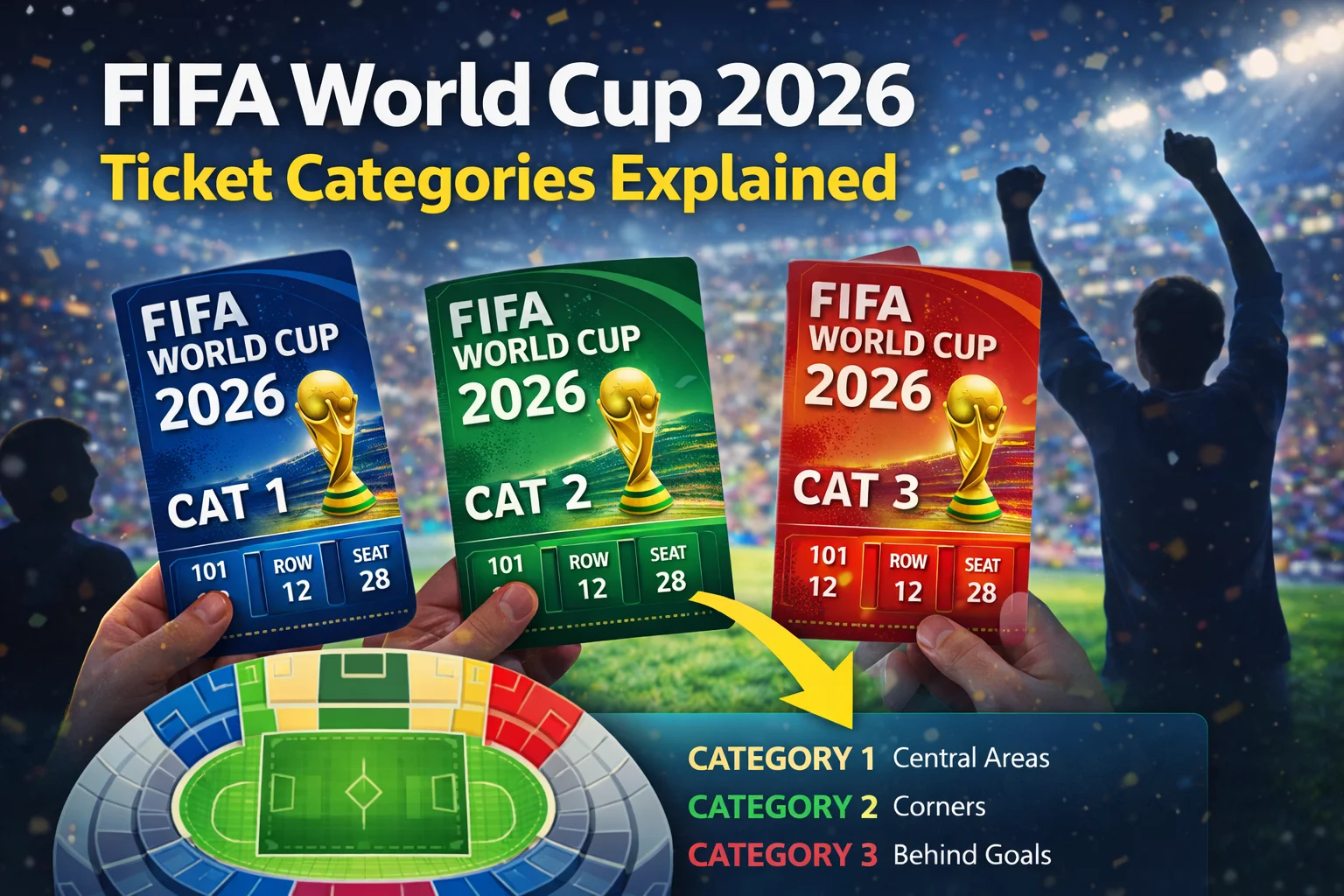
World Cup 2026 Ticket Categories are FIFA’s way of grouping seats by price level and stadium zone. You pick a category during the buying process, but your exact section and row are usually assigned later based on availability. That is why two fans can buy the same category and still sit in different areas of the stadium.
If you are planning travel early, it also helps to learn the difference between ticket categories and ticket products. Categories describe where you sit. Ticket products describe what you are buying (one match, a venue bundle, or a team bundle).
Category 1 is the highest-priced seating, usually in the lower tier, while Category 4 is the most affordable and typically in upper-tier areas. Category 2 and 3 sit between them, and accessible seating areas are available in every stadium for fans with disabilities or limited mobility.
World Cup 2026 Ticket Categories
A ticket category is a seating zone, not a promise of the best view. FIFA sets category blocks in each stadium map so they can manage demand across many matches and cities. You choose a category at purchase, then FIFA allocates exact seats later.
This approach matters because stadium designs vary. A Category 2 seat in one venue may feel different than Category 2 in another venue. The category defines the band you are in, not the exact camera angle.
Category 1: highest-priced seating, usually lower tier
Category 1 is described as the highest-priced seats, located primarily in the lower tier. These seats are often popular for big games because you are closer to the pitch and the atmosphere feels more intense.
Choose Category 1 if your priority is comfort and being close to the action, and you are okay paying more and facing higher demand.
Category 2: outside Category 1 blocks, lower or upper tier
Category 2 sits outside Category 1 areas and can appear in both lower and upper tiers. Many fans see it as the “balance” option because you may get strong views without paying the top price.
Choose Category 2 if you want a solid matchday experience but still want some budget control, especially if you plan multiple matches.
Category 3: typically upper tier, outside Categories 1 and 2
Category 3 is outside Categories 1 and 2 and is typically in the upper tier. It is a common pick for fans who want to attend more matches and care more about being in the stadium than sitting close.
Choose Category 3 if you want better odds of attending multiple games while keeping costs lower than Category 1 and 2.
Category 4: most affordable, usually upper tier, high demand pressure
Category 4 is the most affordable category, located outside Categories 1–3 and positioned in the upper tier. These tickets can be very hard to get because many fans prefer “any seat” over no seat.
Choose Category 4 if your main goal is entry at the lowest cost, and you can stay flexible on match choice.
Accessible Seating Area
Each World Cup 2026 stadium includes a designated accessible seating area to accommodate individuals with disabilities and limited mobility. If you need accessible seating, plan early and follow the official process during the sales phase you are using.
Ticket products vs Ticket categories
Ticket categories tell you where you sit. Ticket products tell you what kind of purchase you are making. FIFA has described several ticket products that may appear across different sales phases, and not every product is guaranteed to appear in every phase.
Ticket products you may see in official sales phases
Single Match Ticket(s) let one person attend a specific match. Venue Specific Tickets are multi-match packages for a particular stadium (including an extended venue option). Team Specific Tickets cover your chosen team’s three group stage matches only and do not include knockout rounds.
| Option | What it covers | Best for | Key thing to remember |
|---|---|---|---|
| Category 1–4 (seating category) | A seating zone for a ticket | Choosing price and stadium level | Final seat location is assigned later |
| Single Match Ticket(s) | One match | Fans targeting a specific game | Inventory depends on the sales phase |
| Venue Specific Tickets | Multiple matches at one stadium | Fans staying in one city | Not every match at that venue is included |
| Extended Venue Specific Tickets | More matches at one stadium (extended bundle) | Longer trips in one city | Availability can vary by phase |
| Team Specific Tickets | Your team’s three group stage matches | Following one team in the group stage | No Round of 32, Round of 16, quarters, semis, bronze final, or final included |
| Ticket-inclusive hospitality packages | Premium experiences with tickets included | Comfort-focused fans and corporate groups | Hospitality is separate from Category 1–4 tickets |
Supporter tickets and Conditional Supporter Tickets
Besides the standard public categories, FIFA also offers supporter-focused options linked to Participating Member Associations. These supporter tickets can be labeled differently from Categories 1–4, but the idea is similar: there are premium-to-entry choices within a team’s allocation.
A Conditional Supporter Ticket has an important rule: it is valid only if the supported team qualifies for the specific knockout match. If the team is eliminated, the ticket for that later round stops being valid under those conditions. This matters a lot for travel planning, especially if you are booking flights and hotels around potential knockout games.
Hospitality Packages vs Standard categories
Hospitality packages are not the same as Category 1. Hospitality is sold through FIFA’s official hospitality program and can include upgraded seating plus added services like food, beverage, and lounge access. It is typically priced and presented as an all-in matchday experience.
If you only want a seat, a standard category ticket is usually the cleaner choice. If you want extra comfort and included services, hospitality may fit better.
Sales phases, allocation, and why categories can change by phase
FIFA ticket products and categories are released across different sales phases, and availability can change. Even within the same phase, some categories may not appear for every match because of demand, stadium configuration, and allocations.
One phase FIFA used was a Random Selection Draw application period that ran from December 11, 2025 to January 13, 2026. In that model, fans apply and then FIFA notifies results after allocation. FIFA has also communicated a Last-Minute Sales phase in early April 2026, described as first-come, first-served and potentially running until the tournament ends depending on inventory.
Practical takeaway: categories matter most when you are actually in a buying window. If your top category is not available, being flexible on category, match, or venue can improve your chances.
Smart ways to choose the right category without regrets
Pick your priority first: comfort, value, or number of matches
If you want one “big” match memory, going higher in category for that match may make sense. If you want a fuller tournament experience, lower categories can help you attend more games.
Avoid the “Category 1 equals best view” trap
Category 1 is the highest-priced tier, but stadium layouts vary. Think about what you enjoy: close action, wide tactical view, or a lively end-zone vibe.
Build flexibility into your plan
Category 4 can be extremely competitive. If you can accept Category 3 or Category 2, your odds may improve. Flexibility with host city and kickoff time can also help, because demand is not equal across all matches.
Do not lock travel plans before ticket status is clear
This is especially important for draw-based phases and conditional supporter tickets. If you must book early, consider refundable options so your trip can adjust to allocations and team progression. You can check also How to Buy World Cup 2026 Tickets
FAQs
FIFA lists four standard categories for match tickets: Category 1, Category 2, Category 3, and Category 4. Accessible seating areas are also available in every stadium.
No. A category sets the zone and price band, but FIFA usually allocates the exact seats later based on availability.
A ticket category describes where you sit (Category 1–4). A ticket product describes what you buy, like a Single Match Ticket, Venue Specific Tickets, or Team Specific Tickets.
No. Hospitality is a separate ticket-inclusive product sold through the official hospitality program and may include premium services like lounges and catering.
A Conditional Supporter Ticket is only valid if your supported team qualifies for that knockout match. If the team is eliminated, that later-round ticket is no longer valid under those conditions.
Conclusion
World Cup 2026 ticket categories are about seat zones and price levels, not exact rows and sections. Start by choosing the matchday experience you want, then match it to Category 1–4 and the ticket product that fits your trip. If you stay flexible on category, match choice, and travel plans, you give yourself the best chance to secure tickets the safe, official way.