Why FIFA World Cup 2026 has 48 teams
The 2026 tournament is the first FIFA World Cup with 48 teams, and fans keep asking Why FIFA World Cup has 48 teams now? The simple answer is that FIFA wanted a bigger, more inclusive event, with more nations involved and more matches for fans to watch.
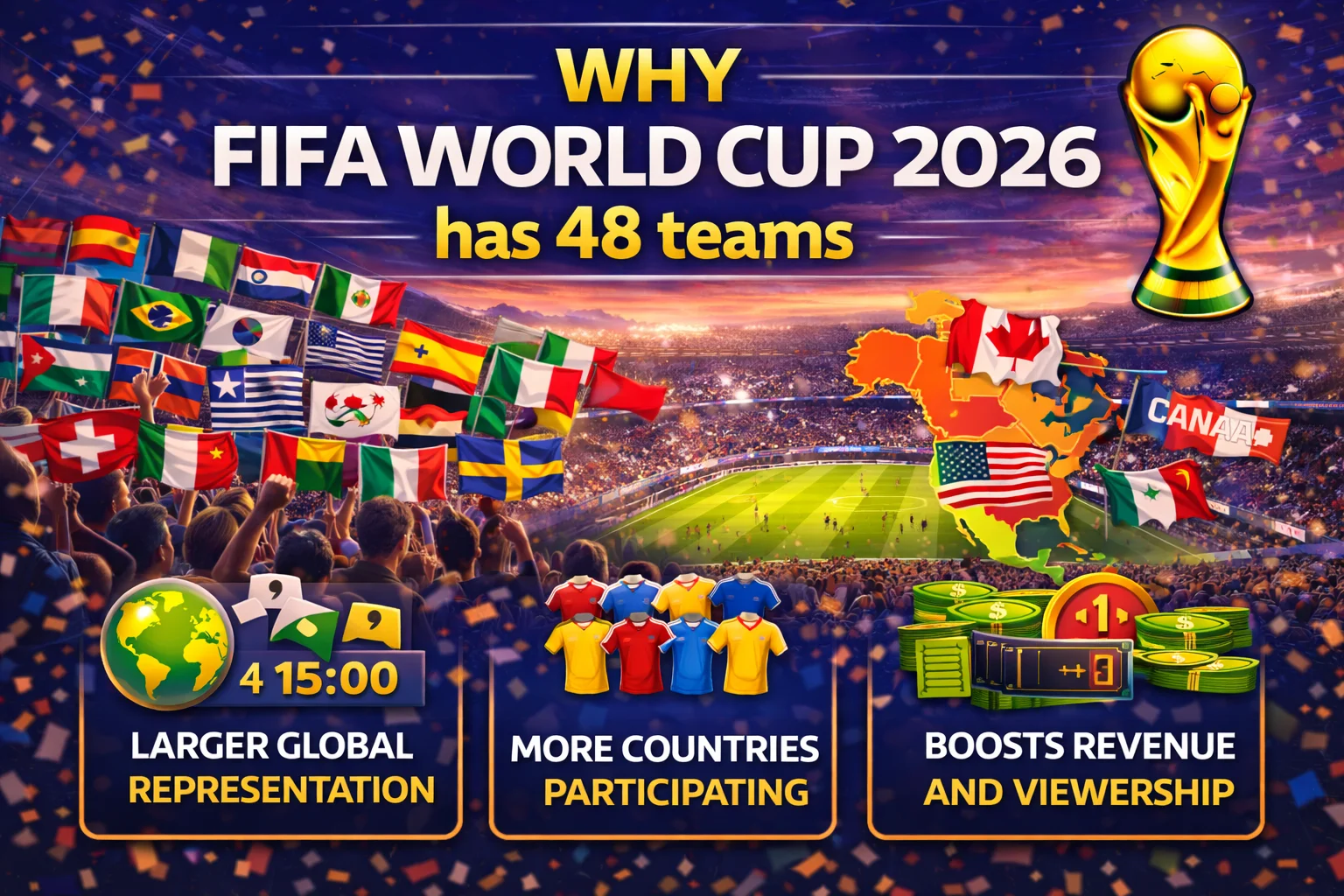
FIFA expanded to 48 teams to increase global representation, create more competitive chances in qualifying, and grow the tournament’s commercial value. The new structure keeps three group matches per team, then adds a bigger knockout stage.
Why FIFA World Cup has 48 teams the main reasons behind
FIFA’s decision is not just about adding 16 extra teams. It changes who can qualify, how the tournament is staged, and how much football fans get across the host countries.
More countries, more representation across continents
With 48 teams, more nations can realistically reach the finals, especially from Africa, Asia, and Oceania. For many federations, qualifying for a World Cup can unlock funding, improve facilities, and boost youth development. In simple terms, the World Cup becomes achievable for more teams, not just the usual powers.
Bigger tournament, bigger revenue (and wider reinvestment)
A larger finals tournament creates more matches and more broadcast inventory. That typically means more value from TV rights, sponsorships, tickets, and the overall event ecosystem in host cities. FIFA’s argument is that higher revenue can be redistributed to support football programs across member associations.
Keeping what fans know, while scaling it up
FIFA kept the familiar rhythm of three group-stage games per team. That matters because it protects the “group drama” fans understand. The key difference is what happens after the groups: more teams advance, and the knockout rounds begin earlier with a Round of 32.
The three-host setup makes a larger World Cup workable
The 2026 World Cup is hosted by the United States, Canada, and Mexico. A wider host footprint makes it easier to spread matches across venues and cities, and handle the logistics of a bigger field. This is one reason the expansion is happening in a tournament with a large stadium network.
48 team World Cup format explained
The expansion is also about structure. FIFA originally discussed a three-team group idea, but the confirmed plan is now designed to protect fairness and keep matches meaningful.
Group stage: 12 groups of four teams
Here’s the simple flow:
How 48 team World Cup works in the group stage
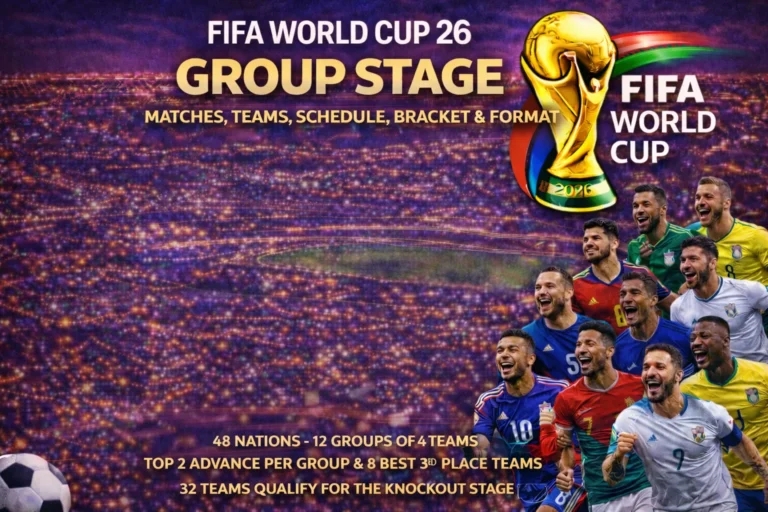
Each team plays three group matches. The top two teams in every group qualify for the knockout stage. Then, the eight best third-place teams also go through. That creates a 32-team knockout bracket.
Knockouts: a new Round of 32
In the old 32-team era, knockouts began at the Round of 16. In 2026, the tournament adds an extra knockout round at the start: the Round of 32. For fans, this means more do-or-die games earlier and a wider set of matchups.
32 vs 48 team World Cup comparison (at a glance)
| Feature | 32-team World Cup (recent editions) | 48-team World Cup (2026) |
|---|---|---|
| Teams | 32 | 48 |
| Group structure | 8 groups of 4 | 12 groups of 4 |
| Group matches per team | 3 | 3 |
| Knockout start | Round of 16 | Round of 32 |
| Total matches | 64 | 104 |
Qualification changes: where the extra teams come from
The expansion also reshapes qualifying. More direct slots are available across confederations, plus playoff routes for final places. The published allocation for 2026 is summarized like this: AFC 8 direct + 1 playoff, CAF 9 + 1, CONCACAF 6 (including hosts) + 2, CONMEBOL 6 + 1, OFC 1 + 1, UEFA 16 + 0.
For fans, the main takeaway is clear: more regions get guaranteed representation, and Oceania has a clearer path than before.
Benefits and criticisms of a 48-team World Cup
Fans will feel real upsides, but there are also fair concerns.
Benefits fans will notice
More matches means more storylines, including debut nations and fresh matchups. Groups may stay alive longer because third-place teams can still advance. Also, more host cities can stage games, which can help ticket access and local matchday experiences.
Criticism of 48 team World Cup
Some supporters worry match quality could drop if more lower-ranked teams qualify. Others focus on player workload, because the path to the trophy now includes an extra knockout round. FIFA’s move to four-team groups is designed to reduce risk of odd incentives and keep group games competitive.
FAQs
FIFA expanded the tournament to include more nations, increase global representation, and create more opportunities through qualifying, while also growing the event’s commercial value.
There are 12 groups of four teams. The top two in each group qualify, plus the eight best third-place teams, creating a Round of 32 knockout stage.
The 2026 World Cup is planned to have 104 matches, compared with 64 matches in the 32-team format.
Africa and Asia gain major increases in direct places, and Oceania gets one guaranteed spot plus a playoff opportunity. CONCACAF also has more representation due to hosting.
It could create some uneven matchups, but it can also produce classic underdog moments. The four-team group structure is designed to keep games meaningful and reduce fairness concerns.
Conclusion
FIFA World Cup 2026 has 48 teams because FIFA wants a bigger, more globally representative tournament that still feels familiar to fans. The format keeps three group games per team, adds a Round of 32, and opens the door for more nations to compete on the biggest stage.