How to Watch FIFA World Cup 2026 Live in Belgium

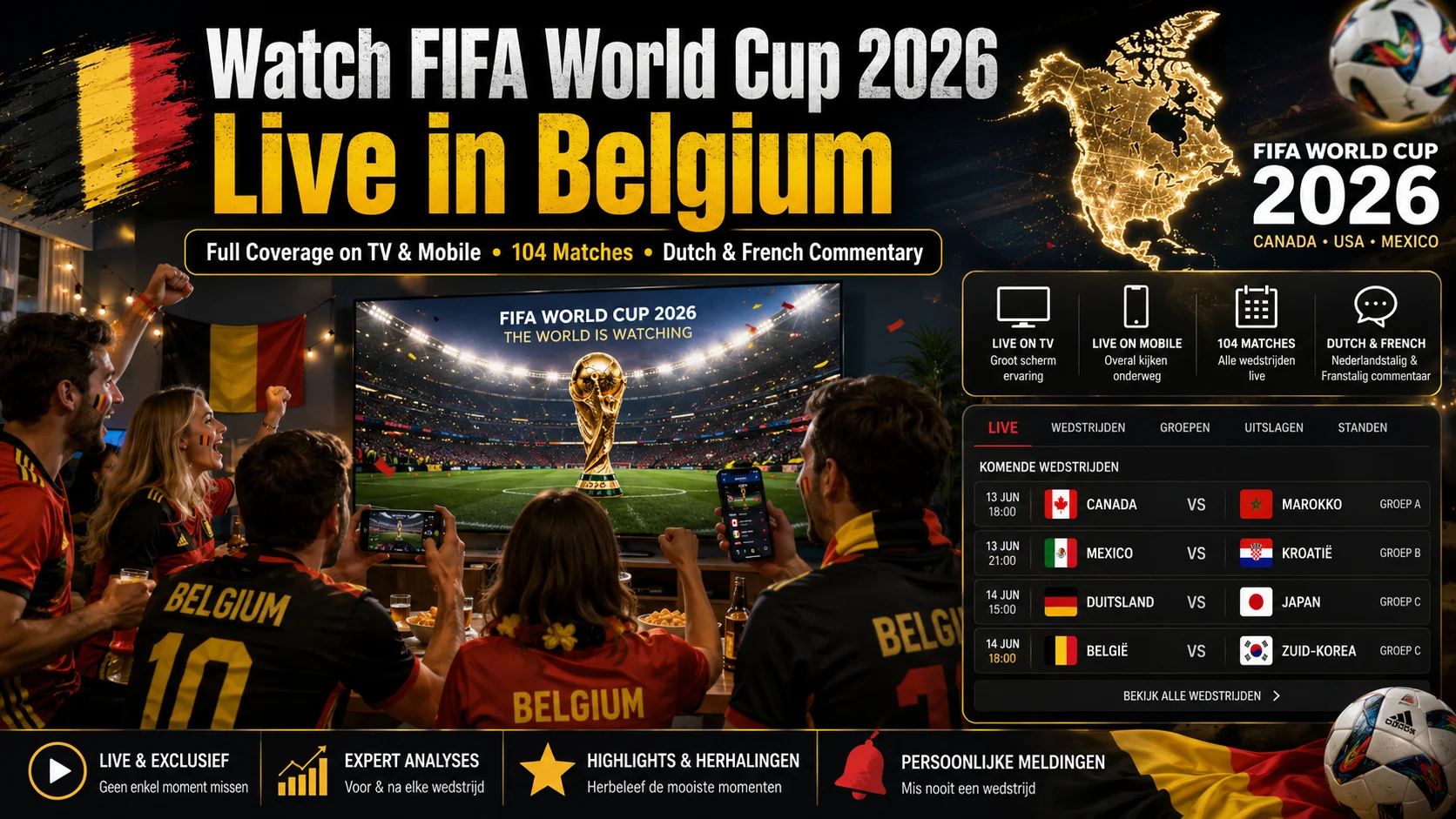
Belgium has a strong World Cup 2026 viewing setup, but it is not built around a single national broadcaster in the way some smaller markets are. VRT is the clearest Flemish route, while RTBF remains active on the French-speaking side, so Belgian viewers should expect the tournament to live across the two main public-broadcast environments. That gives the country a solid domestic answer even if the final match-by-match allocation is best checked closer to kickoff.
This matters because Belgium is a multilingual media market, and the viewing choice is often as much about language and editorial style as it is about raw access. The country does not need a simplistic “one channel solves everything” article. It needs a usable explanation of how the Dutch-speaking and French-speaking routes fit together. The wider picture still begins with World Cup 2026 broadcasting rights, but Belgium already has a clear public-broadcast base.
Belgium World Cup 2026 Broadcast Overview
Belgian viewers already have several useful public signals. VRT is openly preparing around the World Cup through its VRT and Sporza ecosystem, while RTBF continues to run active World Cup support material on the francophone side. That suggests a dual-market public-broadcast setup rather than a paywall-first solution.
The exact final split of every match across each service is still worth checking closer to kickoff. Yet the core answer is already good enough to plan around. Belgian fans know the event sits inside the public-broadcast space, not outside it.
| Belgium World Cup 2026 Detail | Status | Why It Matters |
|---|---|---|
| Flemish route | VRT and Sporza active | Dutch-speaking viewers have a familiar football home |
| Francophone route | RTBF active | French-speaking viewers also have a domestic path |
| Access model | Public-broadcast base | Belgium avoids a simple pay-TV gate |
| Exact final allocation | Check closer to kickoff | Language-market scheduling still matters in practice |
Why Belgium’s Split Model Still Works Well
A split language-market setup can sound messy until you understand Belgium’s media habits. In practice, many viewers already know whether they live more naturally in VRT or RTBF territory. That makes the choice less confusing than it might look from outside the country.
It also gives the tournament a more local feel on both sides of the language divide. Fans are not forced into one national feed that flattens the audience. They can follow the event in the broadcast culture they already trust.
How North American Kickoff Times Help Belgium
Belgium is in a relatively comfortable European position for many North American kickoff windows. A large share of matches should land in the late afternoon or evening locally, which makes live following easier than it will be in Oceania. That should help the event feel more accessible across the full group stage.
Even so, the expanded format still matters. A 104-match tournament creates more daily traffic, more neutral matches worth following, and more need for a dependable broadcaster environment. Belgium has that.
Why VRT Matters On The Flemish Side
VRT and Sporza give Flemish viewers a strong football environment that is already familiar from other major sports events. That matters because World Cups are not only about live feeds. They are also about tone, recap style, and the comfort of a broadcaster that already fits the audience’s habits.
The existence of VRT World Cup preparation activity also signals that the event is not being treated like a minor secondary property. That is a useful practical cue for viewers.
Why RTBF Matters On The Francophone Side
RTBF’s active World Cup support material tells the same story from the French-speaking side. Belgian viewers who live inside francophone media habits do not need to borrow coverage identity from another market. They have a domestic route that speaks to their own football audience.
That local relevance becomes more important if Belgium goes deep into the tournament. As public interest rises, language-specific coverage usually matters even more.
What Belgian Viewers Should Expect
The simplest expectation is that VRT and RTBF form the core public-broadcast answer for Belgium, with viewers choosing the route that best fits their language and media habits. That is a better way to understand the market than pretending one single universal channel settles everything.
It also means the final schedule details are worth checking later without changing the core conclusion now. Belgium already has a strong and practical base for the event.
| Viewer Need | Best Belgium Route | Related Article |
|---|---|---|
| Need the clearest Flemish broadcaster | Start with VRT and Sporza | VRT |
| Need Belgium team follow-up | Keep the national team coverage nearby | Belgium |
| Need kickoff planning | Use the time-zone tracker | World Cup 2026 time zones |
| Need one central tournament hub | Keep the main site open for fixtures and updates | FIFA World Cup 2026 |
How To Prepare For World Cup 2026 In Belgium
The most sensible plan is to decide early which language environment you want to use most. Fans on the Flemish side should watch VRT and Sporza scheduling. Fans on the francophone side should watch RTBF updates. That keeps the setup simple and local.
It also helps to think beyond Belgium matches. The late-stage bracket, major neutral clashes, and daily group-stage rhythm are easier to follow when you settle on your preferred broadcaster base before the opener.
Who Should Use This Belgium Route Most
This route suits anyone in Belgium who wants a local-language public-broadcast answer rather than a generic imported one. It works for Dutch-speaking viewers, French-speaking viewers, and bilingual homes that simply want to understand the market structure clearly.
That is the main job of the article. It should make a split market feel simpler, not more complicated.
What Belgium Viewers Should Not Assume
Do not assume Belgium needs a single national channel to have a strong tournament setup. The dual-market public-broadcast model is normal here and can work very well.
Do not assume the final operational split is already irrelevant. Match-by-match and language-market scheduling still deserve a final check closer to kickoff.
FAQs
How can fans watch World Cup 2026 in Belgium?
Belgium’s strongest current setup centers on VRT and Sporza on the Flemish side and RTBF on the francophone side. That gives viewers a strong public-broadcast base before kickoff.
Does Belgium have one single broadcaster for World Cup 2026?
Belgium works more naturally through its language markets than through one simple national channel. The public-broadcast answer is stronger when you understand that split.
Why is the Belgium viewing setup still considered strong?
Because both major language communities already have active public-broadcast routes around the tournament. That makes access and local coverage more stable than in many markets.
Do Belgian viewers still need to check the final daily schedule?
Yes. The core broadcaster picture is strong, but the exact match-by-match and language-market allocation should still be checked closer to kickoff.
What is the best World Cup 2026 setup for viewers in Belgium?
Choose the broadcaster environment that fits your language and viewing habits best, then follow its final schedule updates as the tournament approaches. That gives Belgium fans the cleanest local plan.
Conclusion
Belgium does not need a one-channel myth to have a strong World Cup 2026 setup. VRT on the Flemish side and RTBF on the francophone side already give the market a solid public-broadcast base. The final schedule details still matter, but the core domestic answer is already strong enough to plan around with confidence.