World Cup 2026 Referees Group Fixed At 170 Officials

World Cup 2026 referees list talk has surged again as teams arrive and the officiating group enters opening week fully locked in. FIFA’s final line-up stands at 52 referees, 88 assistant referees and 30 video match officials. That makes 170 officials across all six confederations and 50 member associations. The size of the pool reflects the expanded tournament as much as the pressure of the matches themselves.
The timing matters because the officials are no longer an abstract list on a FIFA release. They are part of the event machine now, with seminar work in Miami and video operations shifting toward Dallas. Fans following the wider FIFA World Cup 2026 build-up will also notice that technology sits closer to the referees than ever. FIFA are asking a bigger referee team to manage more matches, more tools and a wider geography than any World Cup before it.
Why FIFA Expanded Team One Before Kickoff
The basic reason is volume. A 48-team World Cup with 104 matches cannot lean on the same officiating structure used in smaller finals. FIFA responded by naming its largest Team One group ever, which adds 41 more match officials than Qatar 2022. That change is structural, not cosmetic.
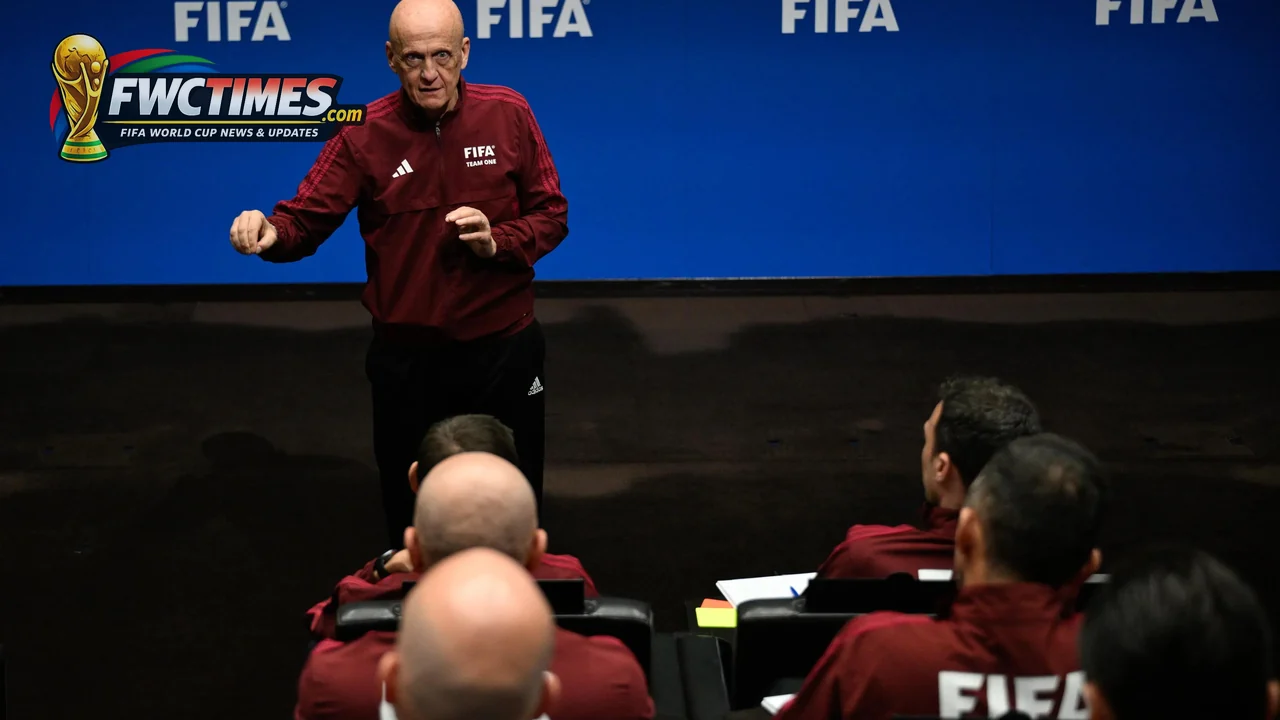
FIFA’s own language around the appointments was deliberate. Chief Refereeing Officer Pierluigi Collina said, “The selected match officials are the very best in the world.” He also called this the biggest World Cup in history, which helps explain why FIFA widened the referee pool before the tournament even started. More matches across three host countries demand depth as much as headline names.
The preparation base also tells you how carefully FIFA have staged the operation. The officials meet in Miami for a ten-day seminar, while the video match officials later move to Dallas and the International Broadcast Centre. Those locations matter because they place the on-field crew close to one hub and the VAR group close to another. That arrangement should help the technical side run more cleanly once matches start in venues like Miami Stadium and across the wider bracket.
There is also a meaningful representation point inside the final group. FIFA confirmed that six women match officials are part of the selection, continuing the shift first seen at the previous men’s finals. That does not change appointments by itself, yet it shows FIFA no longer treat elite women’s refereeing as a symbolic add-on. The pathway is now embedded in the main tournament structure.
RefCam, VAR Changes And Match Tempo Now Share The Spotlight
The official list matters, but the working conditions around the officials may matter even more. FIFA confirmed that goal-line technology, an advanced version of semi-automated offside technology and connected ball technology will all be active during the tournament. Those tools give referees faster support, yet they also raise expectations around consistency. When technology is this visible, every delay and every review comes under heavier scrutiny.
The most interesting addition is the referee body-camera feed. FIFA say improved stabilisation software will smooth the live footage and reduce motion blur, giving supporters a cleaner on-field view from the referee’s perspective. That idea builds directly on the broader rule and protocol changes already approved for the tournament. Fans who followed the earlier World Cup 2026 law changes and VAR timeouts story will see this as the next step in how the game plans to explain decisions and speed up dead time.
Collina and FIFA are also framing the work as daily performance management, not one-time selection. Officials will train each day, work with match analysts and receive support from fitness coaches, doctors, physiotherapists and a mental specialist. That level of support shows how much modern officiating depends on preparation beyond the whistle. It also underlines how demanding the North American travel spread will be over a 39-day tournament.
The result is a referee group built for scale and visibility. They will not only decide penalties, cards and offside calls. They will also front a more public officiating model shaped by cameras, data and tighter anti-time-wasting measures. By the time the tournament reaches hubs like Dallas Stadium and the knockout rounds, the referee team may be one of the most watched groups in the competition.
| Officiating Detail | Confirmed Number Or Plan |
|---|---|
| Referees | 52 |
| Assistant Referees | 88 |
| Video Match Officials | 30 |
| Member Associations Represented | 50 |
| Preparation Bases | Miami for seminar work, Dallas for video operations |
This line-up matters because the tournament no longer gives referees room to fade into the background. The expanded format creates more high-pressure matches and more tight turnarounds. Officials will move through a schedule that is heavier, wider and more technical than previous finals. FIFA have built the structure to match that load.
Supporters should also expect officiating to stay central to the daily conversation. New camera angles, faster offside tools and stricter match-tempo measures will drag refereeing into every broadcast. That does not mean controversy disappears. It means the explanation around each decision will become more visible.
The final count of 170 officials is the headline, but the bigger story is preparation. FIFA are treating the referee team like a major tournament unit rather than a background service. Opening week will show how well that unit is ready to cope with the scale in front of it.
Frequently Asked Questions
The officiating group is set, and the real examination starts when the first decisions arrive under tournament lights. World Cup 2026 will test depth, technology and nerve at the same time.
Stay tuned to FWCTimes.com for the latest FIFA World Cup 2026 updates.
Read Also: Ma Ning Referee Spotlight Adds AFC World Cup Focus