Portugal Name World Cup 2026 Squad With Ronaldo

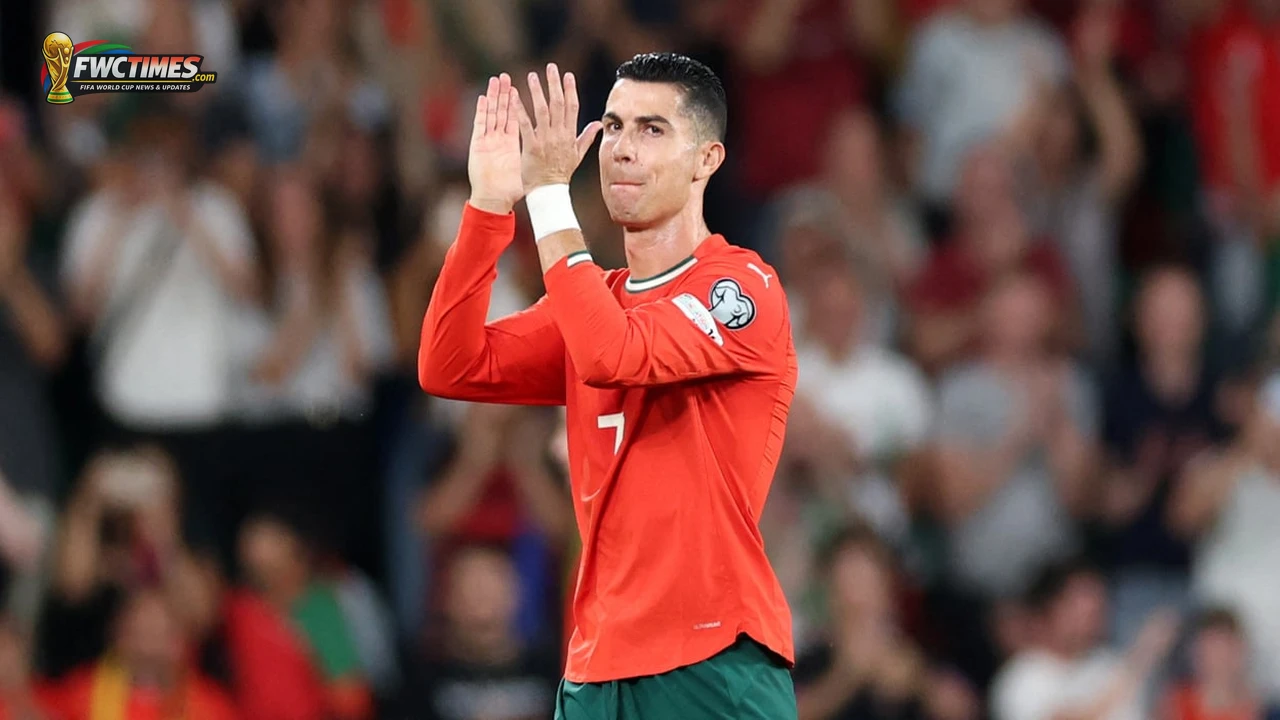
Portugal have named their Portugal World Cup 2026 squad Ronaldo will lead into North America this summer. Roberto Martínez confirmed a 27-man group on Tuesday, May 19, 2026, then framed it as “27 players plus one” in memory of Diogo Jota. That made the announcement bigger than a standard squad drop. Portugal used selection day to mix ambition, grief, and history in one message.
Reuters and Associated Press both confirmed the core headline. Cristiano Ronaldo, now 41, is set for a record sixth men’s World Cup, while Ricardo Velho travels as a fourth goalkeeper outside the standard active trio unless injury changes the final list. Martínez also said Jota remains the squad’s symbolic plus one after the forward’s death last year. The emotional tribute changed the mood around what might otherwise have been a straightforward title-contender story.
The competitive side still matters most once the tournament starts. Portugal open Group K against DR Congo in Houston on June 17, then stay in the same city to face Uzbekistan on June 23 before closing the group against Colombia in Miami on June 27. Readers tracking the wider team picture can also use Portugal’s team hub and revisit Ronaldo’s 2026 World Cup status. This squad reveal turns those long-running questions into a final tournament reality.
Why Ronaldo’s Sixth World Cup Still Shapes Portugal’s Entire Story
Ronaldo would have dominated this headline even without the tribute angle. A sixth World Cup appearance is unprecedented in the men’s game, and it extends one of the tournament’s biggest cross-era careers into another finals. AP noted that he had already told CNN last year this would “definitely” be his last World Cup. So the selection carries sporting value and farewell weight together.
Martínez also made a point of separating the icon from the player. AP quoted him describing Ronaldo as both a global symbol and a squad member who still has to meet the same standards as everyone else. That framing matters because Portugal do not want this campaign reduced to nostalgia. The coach wants the captain’s leadership and his goal threat, yet he also wants the squad judged as a modern title candidate.
That is the balance Portugal now have to manage. Ronaldo still gives the team a finishing reference, emotional gravity, and global attention no other player can match. Yet the squad is deep enough that this is not a one-man team. Bruno Fernandes, Bernardo Silva, Vitinha, João Neves, Nuno Mendes, Rúben Dias, and Rafael Leão all arrive with serious high-level form and tournament expectation.
Martínez Built The Squad Around Flexibility, Not Sentiment
Reuters showed that Martínez defended the structure of the squad in practical terms. He talked about weather, time zones, and the wider demands of a long tournament in North America. That explains why he leaned into extra fullback options and why Velho travels as a fourth-choice goalkeeper outside the core active three. The choices look unusual on paper, yet they fit a manager planning for stress points rather than headlines.
Portugal’s defenders tell the same story. João Cancelo, Diogo Dalot, Nuno Mendes, Nelson Semedo, Matheus Nunes, Gonçalo Inácio, Renato Veiga, Tomás Araújo, and Rúben Dias give Martínez overlap between fullback, wide progression, and central recovery roles. That makes shape changes easier from match to match. It also protects the team against climate and travel fatigue during the group stage.
The attack carries similar variety. Ronaldo remains the reference point, but João Félix, Gonçalo Ramos, Pedro Neto, Rafael Leão, Francisco Conceição, Francisco Trincão, Gonçalo Guedes, and Bruno Fernandes all offer different ways to attack the same game. That range is why Portugal can talk credibly about winning the tournament instead of only honoring a legend’s last ride.
| Squad Detail | Confirmed Value | Why It Matters |
|---|---|---|
| Coach | Roberto Martínez | He shaped the squad around flexibility and tournament conditions. |
| Headline selection | Cristiano Ronaldo | Portugal’s captain is heading to a record sixth men’s World Cup. |
| Declared group size | 27 players plus one symbolic tribute | The announcement carried both practical depth and a Diogo Jota memorial line. |
| Fourth goalkeeper | Ricardo Velho | He travels outside the active trio unless injury opens a formal spot. |
| Group opener | June 17 vs DR Congo in Houston | Portugal start with a match that should set the tone quickly. |
| Warm-up matches | Chile on June 6, Nigeria on June 10 | Martínez still has two live tests before the tournament begins. |
Portugal World Cup 2026 Squad List
Reuters and AP align on the core list, with the goalkeeper note providing the only unusual selection wrinkle. Portugal’s final active tournament list still has to fit FIFA’s 26-player limit, but the named travel group already shows Martínez’s priorities. He wants technical control in midfield, wide threat around the box, and enough fullback depth to survive a long schedule. That is a more serious construction than a ceremonial Ronaldo send-off.
The named squad is below in full, using the travel-group structure presented in the announcement coverage. Ricardo Velho’s role stays separate from the three registered keepers unless injury changes the final composition. That detail matters because it explains why Portugal’s list looked longer than the standard active squad at first glance.
| Unit | Players |
|---|---|
| Goalkeepers | Diogo Costa, José Sá, Rui Silva, Ricardo Velho |
| Defenders | Rúben Dias, João Cancelo, Diogo Dalot, Nuno Mendes, Nélson Semedo, Matheus Nunes, Gonçalo Inácio, Renato Veiga, Tomás Araújo |
| Midfielders | Bruno Fernandes, Bernardo Silva, Vitinha, João Neves, Rúben Neves, Samú Costa |
| Forwards | Cristiano Ronaldo, Rafael Leão, João Félix, Gonçalo Ramos, Pedro Neto, Francisco Conceição, Gonçalo Guedes, Francisco Trincão |
Why The Diogo Jota Tribute Changes The Emotional Weight Of This Squad
Most national teams use squad day to project confidence. Portugal did that, but they also chose to make grief part of the public message. Reuters carried Martínez’s explanation that Jota would remain the “+1” because the squad felt a responsibility to keep fighting for his dream and example. That line immediately reframed the squad from a list into a collective act of memory.
That choice could matter once pressure arrives. Tournament runs often depend on emotional coherence as much as tactical quality. Portugal now have a built-in internal story that can unify the group when results tighten or knockout tension rises. It is still a football competition first, yet teams often lean on shared meaning when talent alone stops being enough.
At the same time, Portugal cannot let tribute become distraction. Martínez still has to reduce the travel group into the formal tournament structure, settle his front-line balance, and decide how much the team should orbit Ronaldo versus run beyond him. Anyone tracking the tactical side can also revisit how Portugal play in 2026. The emotional story is powerful, but the football decisions still decide whether Portugal go deep.
What This Squad Says About Portugal’s World Cup Ceiling
Martínez told AP that Portugal should be seen as a candidate rather than a favorite. That is a measured line, yet it is not modesty for its own sake. Portugal have the player pool to beat almost anyone, but World Cups punish imbalance, defensive lapses, and wasted attacking volume. Their ceiling is obvious. Their guarantee is not.
The squad still looks one tier above many rivals because of its midfield control and wide quality. Vitinha and João Neves can set rhythm. Bruno Fernandes and Bernardo Silva can crack compact shapes. Leão and Neto can stretch back lines. Ronaldo and Ramos can finish. That gives Portugal multiple scoring routes instead of one fixed plan.
The challenge is turning talent into sequence. Portugal have often looked rich in names and thinner in tournament flow. If Martínez solves that, this team can make the semi-finals and dream beyond that. If he does not, the story will drift back to sentiment, legacy, and another near-miss around the sport’s biggest stage.
Frequently Asked Questions
Portugal have named a squad strong enough to chase the title and emotional enough to carry a deeper story with it. Now Martínez has to turn that mix into a tournament team, not just a memorable announcement.
Stay tuned to fwctimes.com for the latest FIFA World Cup 2026 updates.
Read Also: Will Ronaldo Play in the 2026 World Cup?