Iran Lion And Sun Flag Row Puts FIFA Stadium Rules Under Pressure

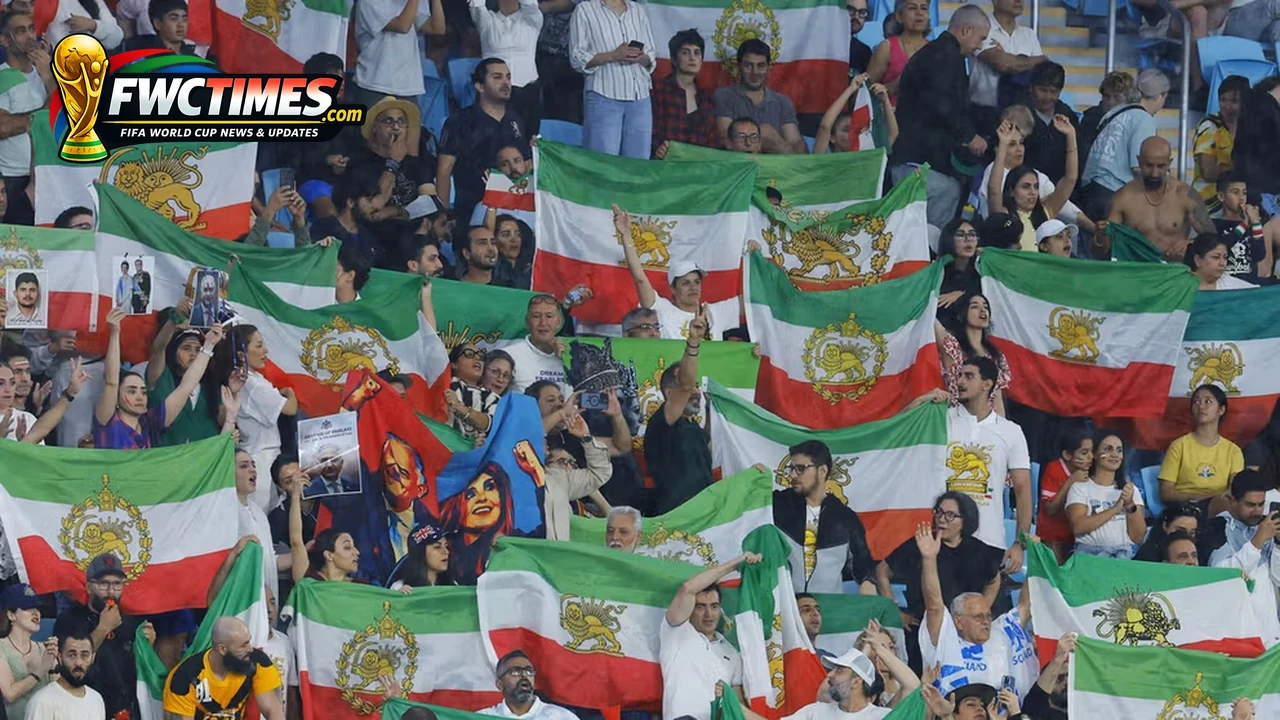
The Iran Lion and Sun flag dispute has put FIFA’s stadium rules under new legal and political pressure before World Cup 2026. Iranian opposition groups and diaspora voices are challenging any move to treat the pre-1979 emblem as a banned political symbol. Iran are due to play group matches in Los Angeles and Seattle. The dispute now sits alongside visas, security, and fan-entry rules before the FIFA World Cup 2026 begins.
The Lion and Sun emblem appeared on Iran’s national flag before the 1979 revolution. Many Iranians abroad still use it as a historic national symbol, while Iran’s current official flag carries post-revolutionary religious and political symbols. FIFA stadium rules bar political, offensive, or discriminatory materials. The core argument is whether the older flag is political or a national identity symbol.
FIFA’s Neutrality Rule Faces A Hard Iran Test
FIFA can control stadium entry, fan displays, banners, and apparel inside World Cup venues. That authority usually gives organisers wide room to remove political signs. The Iran case is harder because the disputed symbol was once an official national emblem. Fans who support its use say FIFA would be choosing one version of Iranian identity over another.

Iran’s football authorities have pushed for restrictions on non-official flags at matches involving Team Melli. Diaspora groups argue that fans should not lose the right to carry a historic Iranian symbol in U.S. venues. A legal letter has warned that court action could follow if the flag is excluded. FIFA has not published a flag-specific public ruling that settles the issue.
| Issue | Verified Detail |
|---|---|
| Symbol In Dispute | Pre-revolution Lion and Sun flag |
| Current FIFA Rule Area | Political, offensive, or discriminatory materials |
| Iran Match Cities | Los Angeles and Seattle |
| Legal Pressure | Threat of U.S. court action if the flag is excluded |
| Fan Concern | Diaspora identity and stadium access |
Los Angeles Matchday Could Become The Main Flashpoint
The dispute carries special weight in Los Angeles because the city has a large Iranian diaspora. Iran open their campaign in Los Angeles, so stadium enforcement will face attention from the first matchday. Any inconsistent gate decision could turn into a wider tournament story. Security staff will need clear instructions before fans arrive with flags, shirts, or banners.
The question is also broader than one match. Iran later face Belgium in Los Angeles and Egypt in Seattle, which means two host cities may need the same policy. If one venue allows a symbol and another blocks it, FIFA could face claims of uneven enforcement. That risk makes the final written guidance important for fans and organisers.
Why The Flag Row Matters Beyond Iran’s Group
World Cups often force organisers to draw lines between national identity and political messaging. The Iran flag row tests that line in a host country with strong free-expression expectations. FIFA’s stadium code gives the tournament a private-event rulebook, yet U.S. legal pressure can still shape how enforcement is challenged. That tension will be watched by other fan groups too.
The safest public reading is that no final stadium-by-stadium answer has been confirmed. Fans should wait for published venue guidance before carrying disputed symbols to matches. Iran supporters also need clear information before buying tickets, arranging travel, and planning group displays. FIFA has little room for ambiguity once matchday security starts screening thousands of supporters.
Ticket holders also need guidance before they pack for matchday. If disputed symbols face review at gates, fans may need alternate clothing or smaller handheld items. Clear language from FIFA would reduce confrontation between stewards and supporters before Iran’s first whistle.
Frequently Asked Questions
The next official update will decide whether the plan stays stable or forces another late adjustment.
Stay tuned to FWCTimes.com for the latest FIFA World Cup 2026 updates.
Read Also: South Africa World Cup Travel Hit By Visa Delay Before Mexico Trip