FIFA Unveils Social Impact Campaigns for World Cup 2026

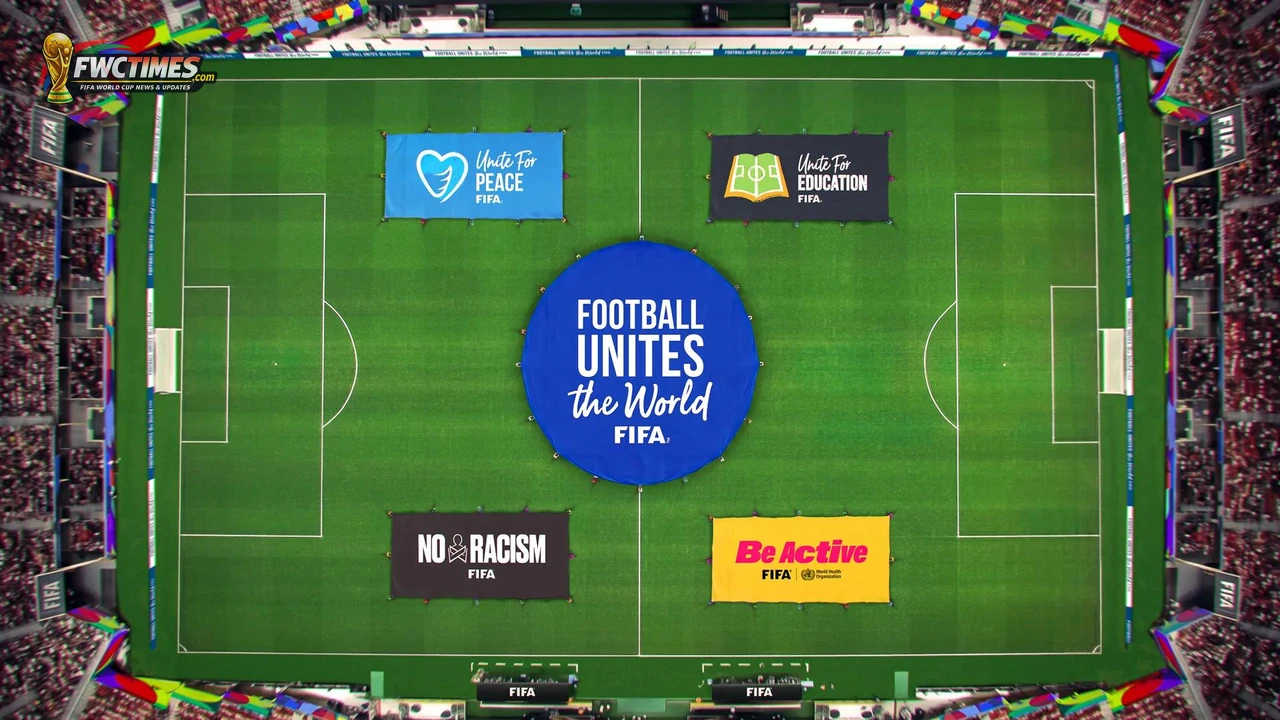
World Cup 2026 social impact campaigns are now part of FIFA’s final month rollout. The opening match arrives on Thursday, June 11. FIFA says the tournament will push messages around peace, education, anti-racism, and physical activity across all 16 venues. This is not side material for the margins. FIFA plans to put those messages on giant screens, LED boards, and campaign toolkits throughout the event. That makes the social program part of the public matchday picture.
World Cup 2026 social impact campaigns will run across the full tournament
FIFA confirmed five named campaign strands for the tournament build and match period. Football Unites the World remains the umbrella message. Under it, FIFA will push Unite for Peace, Unite for Education, No Racism, and Be Active. Each part will have its own timing, visuals, and delivery points inside the competition.
The structure matters because FIFA is no longer treating social messaging as one generic banner. It is assigning specific themes to different tournament stages. That gives the program more shape and makes the sleeve patches, screens, and activations easier to understand. Fans will not see one message repeated without purpose. They will see a staged sequence.
| Campaign Strand | Confirmed Use | Why It Matters |
|---|---|---|
| Football Unites the World | Umbrella campaign across the tournament | FIFA keeps unity as the core social message. |
| Unite for Peace | Group stage sleeve patch for all 48 teams and match officials | The opening phase gets a visible peace message. |
| Unite for Education | Round of 16, quarter-finals, and semi-finals sleeve patch | FIFA ties later knockout rounds to education support. |
| No Racism | Visibility at all 104 matches | The anti-racism message stays present throughout the event. |
| Be Active | Mascot workout, dance cams, and clinics | FIFA wants fans and children moving, not only watching. |
| World Football Week | May 21 to 25, 2026 | The campaign starts before kickoff and invites fan participation. |
FIFA is giving sleeve patches a defined role by round
The clearest new detail concerns the tournament sleeve patches. During the group stage, all 48 teams and match officials will wear the Unite for Peace patch. That gives the opening phase a shared visual cue across every match. It also ties the biggest and busiest part of the tournament to a message about dialogue and social cohesion.
Later, FIFA will switch the sleeve patch message to Unite for Education. That campaign will feature in the round of 16, quarter-finals, and semi-finals. The sequencing is not random. FIFA is using those rounds to push the education fund story. The same fund also sits inside the final-week entertainment build.
No Racism will stay visible at all 104 matches
FIFA also said No Racism will have visibility at every match of the tournament. This edition uses a direct call to action. FIFA phrases it as “Listen, Stand Up, Show Up.” It wants fans to hear people targeted by abuse. It also wants fans to oppose abuse openly and keep acting as allies. FIFA says this campaign will take a stronger educational shape than before.
That broader shape matters. FIFA plans online toolkits for member associations, schools, and grassroots clubs. The Players’ Voice Panel will also stay involved through in-person sessions and related activities. So the message will not stop at pitchside boards. FIFA wants it to move into local football structures as well.
Be Active is the most fan-facing part of the program
Some of these campaigns speak through symbolism and messaging. Be Active is more direct. FIFA says Maple, Zayu, and Clutch will lead a World Cup 2026 workout designed to be accessible for everyone. Stadium dance cams and training clinics will support that push in different locations.
This is the strand that reaches children and casual families most easily. FIFA is linking it to the World Health Organization guidance that children need at least 60 minutes of daily exercise. The football link is obvious, yet the practical target is larger. FIFA wants fans to do something physical, not only consume the event as spectators.
World Football Week gives the campaign a head start
FIFA will also bring back World Football Week from May 21 to 25. That gives the social campaign set a pre-tournament runway before the opening match. Fans are being invited to join the Be Active workout or create football-themed group events of their own. This is a clear attempt to start participation before teams even take the field.
The idea makes sense from a tournament-planning point of view. A month-long event needs emotional entry points before opening day. FIFA is using music, fan festivals, and now social campaign activations to build that runway. Readers following the broader tournament build can also see how this sits beside Infantino’s fan-experience message before kickoff.
The success test will be visibility with substance
These campaigns will only matter if fans actually notice them and remember what they mean. FIFA has the screens, venues, and broadcast scale to make that possible. The risk is familiar. Big tournaments can turn serious messages into background graphics if the delivery feels routine.
FIFA seems aware of that risk. The sleeve-patch timing, school toolkits, dance activations, and pre-tournament week all suggest more deliberate planning than a generic slogan drop. Now the tournament has to prove those pieces connect. If they do, the social side of World Cup 2026 will feel more integrated than decorative.
Frequently Asked Questions
FIFA has now made social messaging part of the visible matchday build for World Cup 2026.
Stay tuned to FWCTimes.com for the latest FIFA World Cup 2026 updates.
Read Also: Infantino Says World Cup 2026 Will Be Unforgettable