Charlotte Schools Join World Cup Youth Soccer Investment

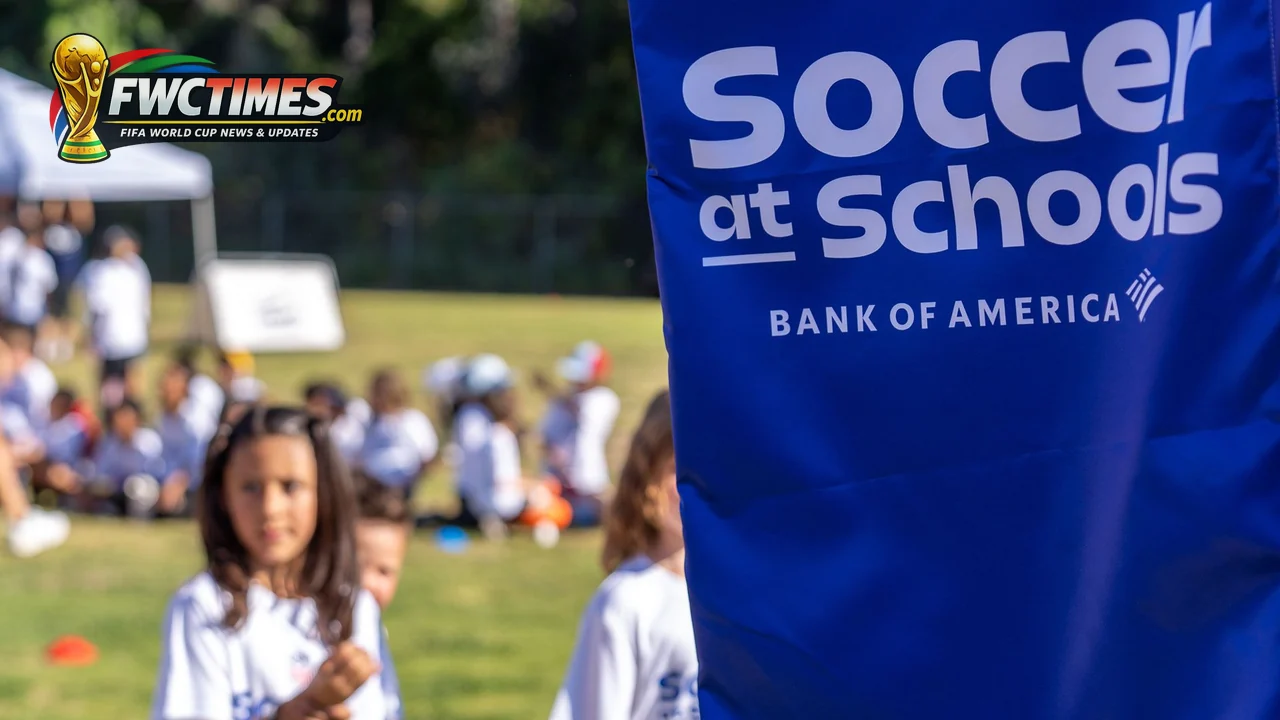
Charlotte schools World Cup soccer investment moved into a classroom-level test as more than 500 Pinewood Elementary students joined a Soccer at Schools clinic. Former national-team players Clint Dempsey and Crystal Dunn helped front the event, giving the program a visible link to American soccer history. Charlotte-Mecklenburg Schools now sit inside a broader access push tied to the FIFA World Cup 2026, which starts June 11 across North America. The local clinic shows how World Cup attention can move beyond stadium gates and into school gyms, fields, and physical education classes.
Charlotte Puts Soccer At Schools In Front Of Students
The Pinewood Elementary event gave students direct contact with soccer through a clinic rather than a distant tournament message. That matters because many children first meet a sport through school, not through club fees or travel teams. The program uses that access point to make soccer feel available during the school day. It also gives educators a clearer path to run simple activities without building a full competitive program.
Charlotte was listed as the third and final activation before the tournament begins. The city is not a World Cup host venue, but it remains connected to the U.S. soccer economy through Bank of America, school districts, and national-team activity. That makes the Charlotte stop useful for a legacy story. It shows how World Cup sponsors and soccer bodies can reach communities outside the 16 match host cities.
The clinic also brought a balance of men’s and women’s national-team visibility. Dempsey gives the event a direct USMNT reference, while Dunn connects it to the USWNT and the wider youth pathway. Students saw former elite players in a school setting, not only on a screen. That type of access can help the sport feel less distant for children who have not joined clubs.
Why The 2030 Goal Changes The Legacy Conversation
Soccer at Schools carries a national goal to make soccer possible in every U.S. school by 2030. Program lead Madison Hafitz gave the cleanest version of that ambition: “Our goal is to make soccer possible in every school in America by 2030.” The timeline matters because it extends four years beyond the tournament. It turns the World Cup from a summer event into a deadline for building access.
U.S. Soccer’s official program materials frame the initiative around educators, coaches, school leaders, community organizations, and state associations. The starter kit includes 60+ ready-to-use activities for recess, field day, and after-school settings. It also includes planning tools, partnership models, and inclusion guidance. Those details make the program more practical than a one-day clinic or sponsor appearance.
The national launch also named clear access problems. Parks and recreation departments reported shortages in fields and courts, while community sports agencies reported volunteer coach shortages. Those gaps shape whether children can play after a school event ends. A school-based model can reduce those barriers because teachers already have daily contact with students.
| Program Detail | Verified Information |
|---|---|
| Charlotte school event | More than 500 Pinewood Elementary students joined a Soccer at Schools clinic |
| Guest players | Clint Dempsey and Crystal Dunn participated at the clinic |
| National partners | U.S. Soccer, Soccer Forward Foundation, and Bank of America |
| Long-term goal | Make soccer possible in every U.S. school by 2030 |
| Starter kit | 60+ activities, planning tools, coaching guidance, and partnership models |
How This Fits The United States World Cup Moment
The United States will carry more than matchday pressure in 2026. It also has to prove that hosting can build participation after the trophy leaves North America. That is why the Soccer at Schools push connects naturally to the United States World Cup team and the broader growth of the sport. A deeper national-team run would help, but school access can build participation even without a perfect tournament.
The program also gives World Cup sponsors a measurable local role. Bank of America is based in Charlotte, so the Pinewood event placed the sponsor’s national soccer investment in its home region. The partnership with Soccer Forward creates a channel for equipment, training, and school resources. That setup gives the initiative more staying power than a simple branded clinic.
Timing still needs careful wording. Local event information points to a June 11 resource rollout around opening day, while the public Soccer at Schools portal lists Fall 2026 for schools serving kindergarten through middle school. That means educators should treat June 11 as the start of tournament-linked resources and Fall 2026 as the broader portal window. The distinction protects families and schools from expecting every tool on day one.
What Schools And Families Should Watch Next
Schools should watch for the starter kit, equipment-kit eligibility, and digital training steps. Title I elementary schools can apply for kits once a school representative completes the online training process. Those kits are expected to include soccer balls, pop-up goals, and cones. The equipment matters because it lets schools run repeat sessions after a launch event ends.
Families should also separate school access from tournament access. The Soccer at Schools program is about youth participation, while match access depends on FIFA inventory, venue rules, and official sales windows. Fans tracking matchday access should use the World Cup 2026 tickets hub for ticket information. Schools can focus on free or low-cost participation routes that do not require a match ticket.
The Charlotte event also pairs with a wider pressure story around American soccer. As the USMNT pressure debate grows, school programs show a different measure of success. The senior team will be judged by results, but the host-country legacy will depend on whether new players get chances to start. Soccer at Schools gives that legacy a clear classroom entry point.
Frequently Asked Questions
Charlotte’s school clinic gives the World Cup legacy conversation a concrete test: whether children can keep playing after the cameras move on.
Stay tuned to FWCTimes.com for the latest FIFA World Cup 2026 updates.
Read Also: Lalas Calls Out USMNT Pressure Talk Before Home World Cup