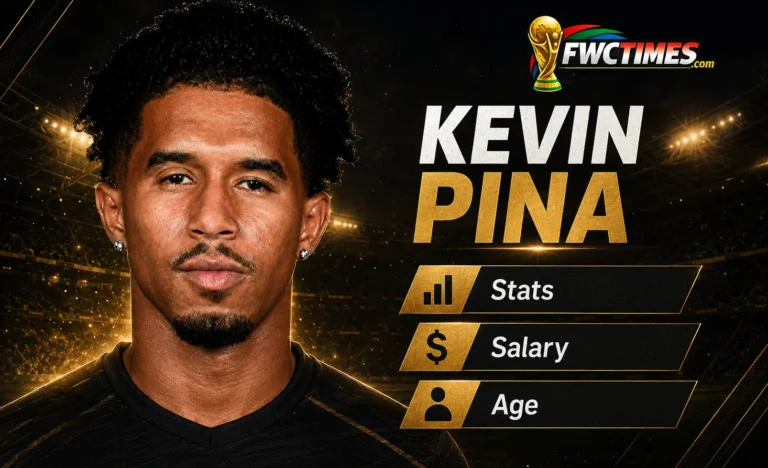
Juriën Gaari: Abha and Curaçao Career Profile 2026

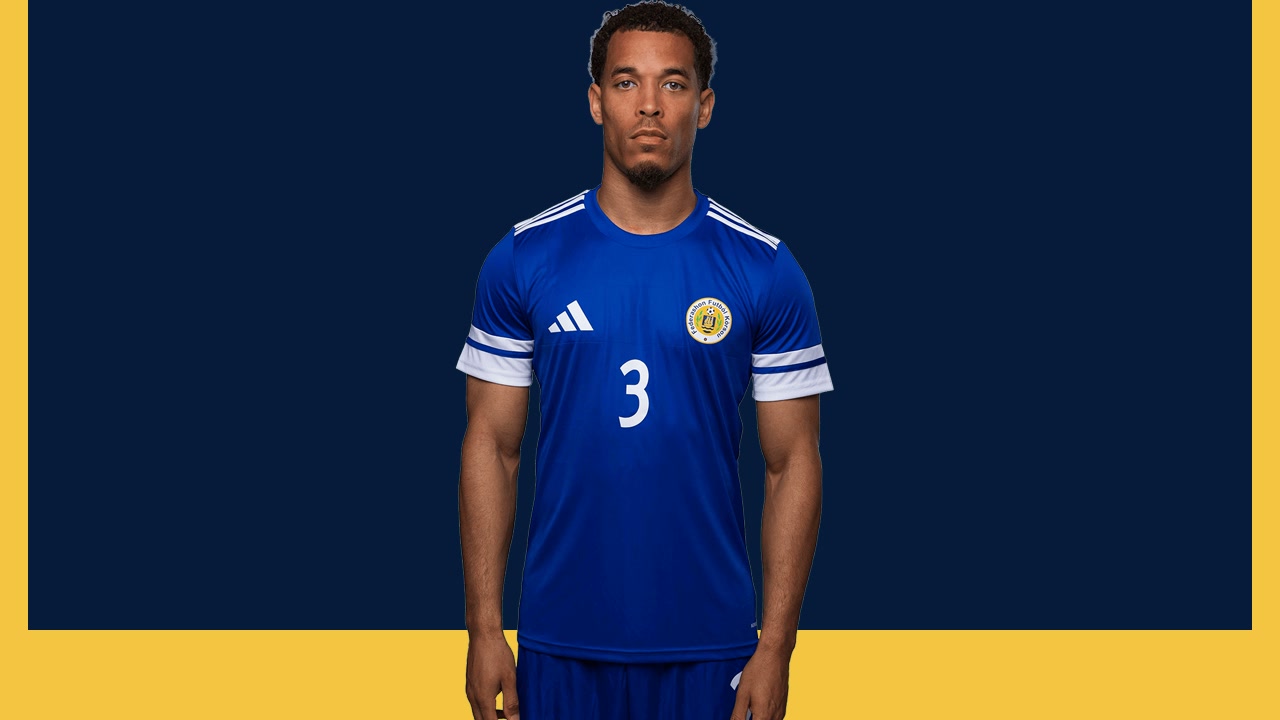
Juriën Gaari is a Curaçao international defender whose route to the 2026 FIFA World Cup ran through Dutch amateur football, six seasons with RKC Waalwijk and two promotion campaigns in Saudi Arabia. Born in Kerkrade on 23 December 1993, he is a right-footed defender who can operate at right-back or centre-back. FIFA listed him with Abha Club in Curaçao’s final tournament squad, while the national team’s current player profile records him at 1.83 metres.
This profile focuses on the football record that can be checked. It explains how Gaari moved from Smitshoek and Kozakken Boys into the professional game, what he contributed across the Eerste Divisie and Eredivisie, why his 2019 Gold Cup goal remains important, and how his role changed as Curaçao reached its first World Cup. Club and international totals can change, so every number below is attached to a season or a dated tournament source rather than presented as permanent.
Juriën Gaari profile at a glance
- Full name: Juriën Godfried Juan Gaari
- Date of birth: 23 December 1993
- Place of birth: Kerkrade, Netherlands
- Height: 1.83 m, according to Curaçao’s current player profile and FIFA’s 2026 squad list
- Preferred foot: Right
- Positions: Centre-back and right-back
- Latest verified club: Abha Club, as listed by FIFA for the 2026 World Cup
- National team: Curaçao
Who is Juriën Gaari?
A defender developed outside the academy spotlight
Gaari did not follow the standard path of a teenage prospect moving directly from an elite academy into a senior professional squad. His early football included De Musschen, Overmaas Rotterdam and the amateur section of Excelsior before senior spells with Smitshoek and Kozakken Boys. That route matters because it explains the foundation of his game. He learned senior football in competitive Dutch non-league environments where defenders must deal with direct attacks, second balls and physically demanding duels every week.
Kozakken Boys’ own historical player page identifies him as a defender, lists Smitshoek and Excelsior Rotterdam among his previous clubs, and records shirt number two for the 2017/18 season. Four seasons at Kozakken Boys gave him the regular football that can be difficult for a young defender to find in a professional reserve setup. By the time RKC Waalwijk recruited him in 2018, he was not an untested youth player. He was a mature defender with years of senior match experience and a clear understanding of more than one defensive role.
Where does Gaari play in 2026?
Abha is the latest club confirmed by tournament sources
FIFA’s final squad list for the 2026 World Cup named Abha Club as Gaari’s club. The Curaçao player profile published for the tournament also identifies Abha in Saudi Arabia as his current club. Those are the strongest dated references for his status during the competition. They support describing Abha as his latest verified club without making a claim about how long any agreement runs.
That distinction is useful during the summer registration period. Player databases can update at different speeds, and an expiring registration does not automatically prove a departure or a renewal. Until Abha or a new club publishes a clear announcement, the responsible wording is that FIFA listed him with Abha at the World Cup. This page will be updated if an official club statement changes that position.
How did he join Abha?
A second Saudi promotion race
Gaari moved to Abha in August 2025 after one season with Al-Hazm. The change kept him in the Saudi First Division and placed him inside another team competing near the top of the table. Public season records credit him with 31 league appearances for Abha in 2025/26. That volume is consistent with a first-choice defensive role rather than a short-term squad place.
Abha finished first in the division and earned promotion. For Gaari, the campaign extended a career pattern built on helping teams navigate demanding promotion seasons. He had already experienced the Dutch play-offs with RKC and the upper end of the Saudi second tier with Al-Hazm. At Abha he supplied experience across the back line while continuing to travel for Curaçao’s international programme. Managing both responsibilities required availability, recovery and the tactical flexibility to move between club and national-team systems.
What happened at Al-Hazm?
Immediate responsibility after leaving RKC
After his RKC contract ended in 2024, Gaari joined Al-Hazm for the 2024/25 season. Current competition databases record 32 league appearances and one goal. Al-Hazm placed third in the Saudi First Division, keeping the club involved in the promotion picture. It was a significant transition: he moved from the Dutch top flight to a different climate, league rhythm and football culture, yet remained a regular starter.
The season also broadened the evidence for his positional value. A right-back who can shift inside gives a coach options when injuries, opponents or game states require a different defensive structure. Gaari’s long professional record shows repeated use on the right and in central defence. The Al-Hazm spell therefore fits the wider story of a player trusted for reliability and adaptation rather than one narrow tactical task.
Why was RKC Waalwijk the turning point?
From non-league football to a professional debut
RKC signed Gaari in 2018 after his development at Kozakken Boys. He made his professional debut on 17 August 2018 in a 1-0 home victory over Telstar. That first season became more than a personal breakthrough because RKC reached the promotion play-offs and returned to the Eredivisie. Gaari had moved from the Tweede Divisie into a professional promotion campaign without a long adjustment period.
His rise was unusual enough to become part of the reporting around RKC. The key point is not that he arrived late, but that he converted senior amateur experience into professional reliability. He understood how to defend space, compete in contact and manage game pressure. RKC then gave him the platform to refine those strengths against faster attacks and more complex positional play.
How long did Gaari play for RKC?
Six seasons and 169 matches in all competitions
Gaari remained at RKC from 2018 until the summer of 2024. Contemporary coverage of his departure credited him with 169 appearances in the club’s shirt. The span included one Eerste Divisie season, the promotion play-offs and five Eredivisie campaigns. It is the central body of work in his club career.
Season records show how his role recovered after a lighter 2020/21 league campaign. He appeared in 30 Eredivisie matches in 2021/22, 33 in 2022/23 and 29 in 2023/24. That is 92 league appearances across his final three seasons. RKC repeatedly fought for top-flight stability, so those minutes were earned in matches where defensive concentration and points under pressure mattered. His final league season also included a goal, a reminder that he could contribute from advanced or set-piece situations even though defending remained his primary task.
What positions can Gaari play?
Centre-back and right-back responsibilities
Gaari is best described as a right-footed defender who can play centrally or on the right. At right-back, his job can include protecting the channel, engaging an opposing winger and supporting possession on the touchline. At centre-back, the emphasis shifts toward controlling the box, tracking runners and coordinating the defensive line. His 1.83 m frame gives him enough presence for central duels while retaining the mobility required on the flank.
Versatility should not be confused with having no fixed role. His teams have generally used him for defensive security first. He can help a back four become a back three in possession, or allow a coach to change shape without making an immediate substitution. For Curaçao, where squad places must cover the demands of a short international window, that flexibility is especially useful.
What are Gaari’s main defensive qualities?
Experience, positioning and physical presence
FIFA’s Curaçao squad announcement grouped Gaari with Roshon van Eijma as defenders who give the team physical presence. That description matches the visible parts of his role. He is comfortable meeting an attacker early, competing for loose balls and holding his ground when a forward receives with his back to goal. Years of senior football have also given him experience of when to step out and when to protect the space behind.
His right-back background helps in wider areas. He understands the angles of a winger’s run and the danger created when a full-back is isolated. As a centre-back, he can cover toward the touchline without looking uncomfortable. The trade-off is that any aggressive step must be supported by the midfield and the other defenders. Curaçao’s best defensive performances have depended on the entire block moving together rather than one player trying to solve every attack.
How does he fit Curaçao’s defensive shape?
A senior option in a flexible back line
Dick Advocaat selected a defensive group with players from different leagues and tactical backgrounds. Gaari brought the longest Curaçao service among several of the centre-back and full-back options. That experience helps during short preparation periods, when the team must absorb a match plan quickly and communicate through difficult phases.
Against stronger opponents, Curaçao can spend long stretches without the ball. The defenders must keep distances compact, protect the central lane and decide when a wide player can be pressed. Gaari’s ability to operate in two positions gives the coaching staff another way to balance those demands. He can start in one role or move during a match if the team changes between a back four and a line with three central defenders.
When did Gaari make his Curaçao debut?
The start of a long international career
Gaari entered the Curaçao senior setup in 2016 and became part of the side that was reshaping its regional standing. His early international period led into the 2017 Caribbean Cup success and Curaçao’s first Concacaf Gold Cup appearance under that name. The tournament experience was demanding: Curaçao did not advance from the 2017 Gold Cup group, but the squad gained direct experience against established Concacaf opponents.
That first cycle created continuity. Gaari stayed involved through coaching changes, Nations League campaigns, Gold Cups and World Cup qualifying. By the time FIFA published the final 2026 tournament squad list, it recorded 60 senior caps and one goal. The number is a dated pre-tournament snapshot, not a live total. It nevertheless shows why he entered the World Cup as one of the experienced voices in the defensive unit.
Why is his goal against Jamaica remembered?
The 93rd-minute strike that opened a quarter-final path
Gaari’s only senior international goal in FIFA’s pre-tournament record came at a decisive moment. Curaçao trailed Jamaica 1-0 in their final group match at the 2019 Gold Cup. In the third minute of stoppage time, Gaari struck from distance to make it 1-1. Concacaf’s tournament history confirms both the scorer and the timing.
The result took Curaçao to four group points. Honduras then defeated El Salvador 4-0, which allowed Curaçao to advance to the Gold Cup quarter-finals for the first time. Gaari told Concacaf after the match that the achievement meant everything to the team and the island. The goal remains important not because he became a regular scorer, but because a defender delivered in the exact moment his national team needed an equaliser.
What did the 2019 Gold Cup change?
Proof that Curaçao could survive tournament pressure
Curaçao’s 2019 campaign began with a 1-0 loss to El Salvador. The team then beat Honduras 1-0 for its first Gold Cup victory before drawing with Jamaica. That progression showed resilience across three very different matches. In the quarter-final, Curaçao lost only 1-0 to the United States. The run gave the squad evidence that organisation and belief could keep it competitive against deeper national teams.
For Gaari, the tournament tied his name to a national milestone while reinforcing his defensive role. His equaliser receives the attention, yet reaching the final eight required disciplined work throughout the group. The lessons from that campaign later mattered in qualifying matches where Curaçao again had to stay calm when the score, time or opponent created pressure.
How did Curaçao reach the 2026 World Cup?
A historic qualification built over several cycles
Curaçao’s place at the 2026 finals was the country’s first qualification for a FIFA World Cup. The achievement came after years of building a broader player pool and learning through Concacaf competition. Gaari connected the earlier Gold Cup generation with the group that completed qualification. His presence offered continuity alongside other senior internationals such as Eloy Room and Leandro Bacuna.
Qualification also changed the scale of every selection decision. A World Cup squad has only 26 places, and defenders must be trusted against elite forwards. FIFA’s May squad announcement specifically identified Gaari and Van Eijma as sources of physical presence. The final squad list then confirmed Gaari as number three, an Abha player and a 1.83 m defender with 60 caps at the tournament entry point.
What was his role at the World Cup?
Defensive depth for Curaçao’s first finals campaign
Curaçao entered Group E with Germany, Ecuador and Côte d’Ivoire. Every match presented a different problem: Germany’s movement and technical speed, Ecuador’s athletic transitions, and Côte d’Ivoire’s power in the final third. Gaari was selected as part of the group responsible for adapting to those contrasts while protecting a team making its first appearance on the sport’s biggest stage.
FIFA’s match coverage recorded one particularly difficult moment in the Côte d’Ivoire game, when a powerful Amad Diallo shot struck Gaari in the face during the first half. It was a reminder of the physical cost of defending at this level. Across the group, Curaçao also produced a historic result by holding Ecuador to a 0-0 draw, the country’s first World Cup point. The wider campaign gave this generation a reference point that did not exist before 2026.
What does the Ecuador draw mean for his generation?
A first World Cup point for the island
The goalless draw with Ecuador mattered beyond the table. Curaçao had arrived as the smallest nation ever to qualify for the men’s World Cup by population, and the team needed to prove it could compete for an entire match. Keeping a clean sheet against an experienced South American opponent gave the defensive group a permanent place in the country’s football history.
For a senior defender such as Gaari, the result connected years of regional progress to a global outcome. The 2017 Gold Cup introduced the team to a major finals environment, the 2019 run delivered a knockout place, and the 2026 campaign produced a World Cup point. Those milestones show a clear competitive progression rather than a single surprise result.
How did amateur football shape his career?
Senior minutes before professional recognition
Gaari’s years with Smitshoek and Kozakken Boys gave him a substantial base of senior competition. At that level, players often combine football with other responsibilities and face opponents with very different styles from week to week. A defender learns to solve practical problems quickly: contest the first ball, organise the second phase, defend a narrow lead and handle an experienced striker.
When he entered the professional game at 24, those habits reduced the gap in match maturity. He still had to adjust to the pace and detail of RKC’s environment, but he was already familiar with senior pressure. His story is therefore relevant to players who do not receive an early academy breakthrough. Development can continue through regular, accountable matches, provided performance is strong enough to earn the next opportunity.
What did Kozakken Boys contribute?
A stable platform and promotion experience
Kozakken Boys gave Gaari four seasons to become a regular defender. The club’s archive places him in the first team and confirms the earlier Smitshoek and Excelsior steps. During his spell, Kozakken Boys earned promotion and competed in the Tweede Divisie. Gaari moved from a promising amateur player into someone ready to attract a professional club.
The period also established the positional profile that followed him. Shirt number two and the defender listing point toward his work on the right, while later teams used his capacity to play centrally. RKC did not need to invent his competitive identity. The club could build on a player who had already learned to be available every week and to take responsibility inside a senior back line.
How should his statistics be read?
Context matters more than one isolated total
Defender records are easiest to understand when season, competition and role are clear. Gaari’s final three Eredivisie seasons produced 92 league appearances. His first Abha season produced 31 league appearances according to current season databases. Those totals show selection and availability, but they do not by themselves explain whether he played at right-back, centre-back or inside a changed formation.
International totals require the same care. FIFA’s final 2026 squad list recorded 60 caps and one goal before the tournament. Matches played after that list can raise the total, so the figure should always retain its date. The one goal has unusual importance because it was the stoppage-time equaliser against Jamaica in 2019. A good profile keeps that context rather than turning changing database fields into fixed biographical facts.
What is the strongest part of his career story?
Repeated progress after a late professional start
Gaari’s career is not built around one academy label or one transfer. Its strongest feature is sustained progression. He moved from Dutch amateur clubs to the Tweede Divisie, then into RKC’s promotion team, five Eredivisie seasons, two Saudi promotion races and a historic World Cup squad. Each stage required him to prove that experience from the previous level could transfer upward.
The path also contains setbacks and adjustments. RKC spent seasons fighting for survival, his minutes changed from one campaign to another, and leaving a six-year club meant adapting to a new country. Continued selection at club level and for Curaçao suggests coaches valued what he provided. That is a more useful assessment than reducing a defender to a single highlight or a single season total.
What should supporters watch in his game?
Decisions before the tackle
Watch Gaari’s starting position when the ball is on the opposite side. A defender who begins in the right place can close a cross or track a runner without needing a dramatic recovery. When he plays centrally, note whether he holds the line or steps toward the forward. When he plays at right-back, watch the distance between him and the nearest centre-back.
Also follow how his role changes when Curaçao gain possession. He may remain deeper to protect against a counter, move wider to offer a passing lane, or tuck inside so another player can advance. These choices are shaped by the coach’s plan and the opponent. They reveal more about his value than an isolated tackle clip because they show how he helps the team maintain structure.
Gaari’s verified career timeline
From Rotterdam-area clubs to the World Cup
- Before 2012: Development with De Musschen, Overmaas Rotterdam and Excelsior’s amateur pathway.
- 2012 to 2014: Senior football with Smitshoek.
- 2014 to 2018: Four seasons with Kozakken Boys, including promotion and Tweede Divisie football.
- 17 August 2018: Professional debut for RKC Waalwijk in a 1-0 victory over Telstar.
- 2018/19: Part of the RKC squad that won promotion through the play-offs.
- 2019: Scored a 93rd-minute Gold Cup equaliser against Jamaica as Curaçao reached its first quarter-final.
- 2019 to 2024: Five consecutive Eredivisie seasons with RKC.
- 2024/25: Played for Al-Hazm in the Saudi First Division.
- 2025/26: Joined Abha, made 31 league appearances and finished first in the division.
- June 2026: Entered Curaçao’s first World Cup squad as number three with 60 caps in FIFA’s tournament list.
Which sources confirm the profile?
Primary pages and dated competition records
The central tournament facts come from FIFA’s Curaçao squad announcement and the official final squad list. The 2019 goal and quarter-final context are confirmed by Concacaf’s Gold Cup history and its post-match Gaari interview. The early club pathway is supported by Kozakken Boys’ archived player page. Curaçao’s current tournament profile supplies the position, height and Abha listing.
The featured portrait is based on the current 2026 player cutout published by the Curaçao team profile at The Blue Wave. FWCTimes placed that exact-player portrait on a simple site graphic and retained the source attribution in the media caption. No unrelated footballer or old squad substitute has been used.
Related Curaçao profiles and coverage
Continue through the squad, not a dead-end page
Read the Curaçao team guide for fixtures and tournament context, then compare Gaari’s role with fellow defenders Roshon van Eijma, Sherel Floranus and Deveron Fonville. The Eloy Room profile adds the goalkeeper’s view of the same defensive unit. For the selection context, see the Curaçao World Cup squad report.
Juriën Gaari FAQ
What club does Juriën Gaari play for?
FIFA listed Gaari with Abha Club in Curaçao’s final 2026 World Cup squad. That is the latest official tournament reference used by this profile. Any later club change should be confirmed by an announcement from the player or the clubs involved.
What position does he play?
He is a right-footed defender who can play at centre-back or right-back. That flexibility lets a coach use him in a back four or as part of a three-player central defence.
How tall is Juriën Gaari?
Curaçao’s current player profile and FIFA’s final tournament list record him at 1.83 metres.
How many Curaçao caps did he have at the World Cup?
FIFA’s final squad list recorded 60 caps and one goal at the tournament entry point in June 2026. This is a dated figure and can rise with later appearances.
What was his most famous Curaçao moment?
He scored from distance in the 93rd minute against Jamaica at the 2019 Gold Cup. The 1-1 draw helped Curaçao reach the tournament quarter-finals for the first time.
Last reviewed: 27 July 2026. FWCTimes uses official competition documents and club or federation pages where available. Changing squad and club information is dated so readers can distinguish a verified snapshot from a live total.