Julian Nagelsmann: Age, Tactics, Career & Germany’s World Cup 2026 Plan

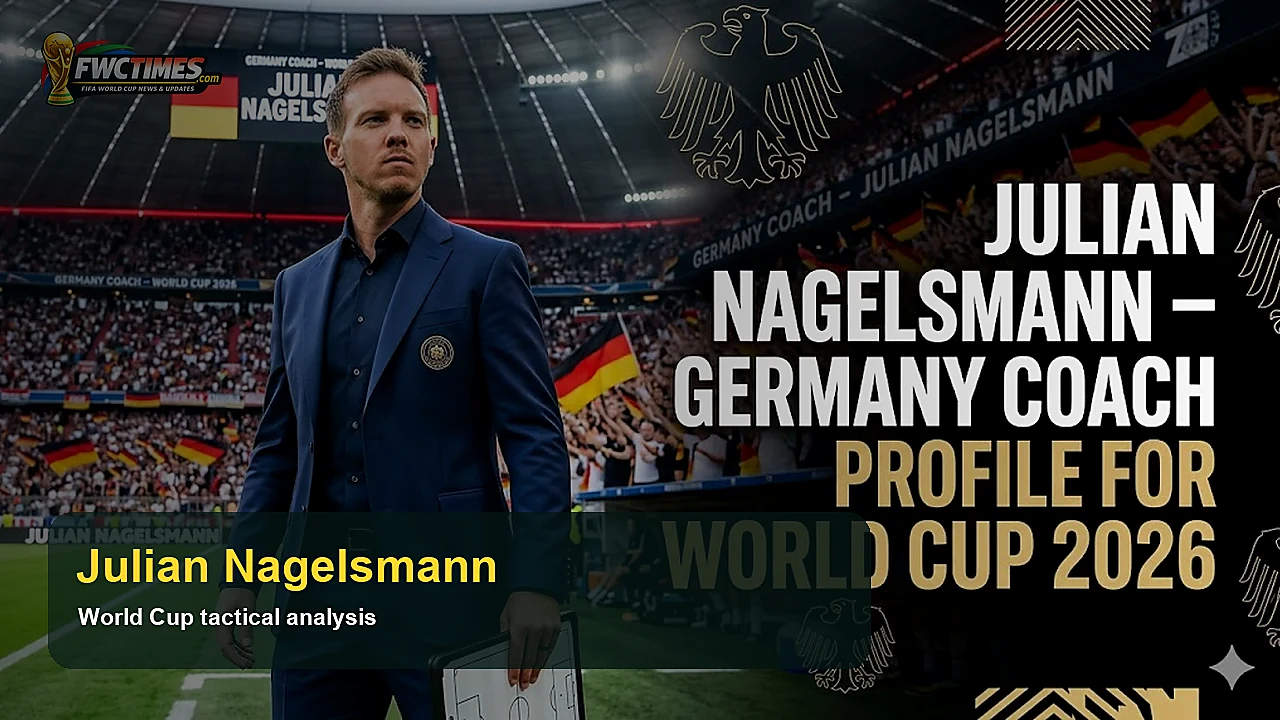
Julian Nagelsmann is Germany’s head coach for the 2026 FIFA World Cup, appointed on September 22, 2023. At 38, he is the youngest manager in the tournament. He brings a bold, data-driven approach to the national team. Germany qualified for the 2026 tournament as group winners. They won five of six matches and scored 16 goals while conceding just three. They are in Group E at the tournament, facing Ecuador, Ivory Coast, and Curaçao. So he enters the FIFA World Cup 2026 with high confidence.
The manager is one of the most highly regarded tactical coaches of his generation. He has managed elite clubs in Germany and holds several coaching records. His record includes taking Hoffenheim to the Champions League and winning the Bundesliga with Bayern Munich. He led Leipzig to the Champions League semi-finals. His coaching philosophy centres on aggressive pressing, high-intensity football, and developing young players into world-class performers. On top of that, he is famous for tactical innovation. So he is a strong fit for Germany.
Who is Julian Nagelsmann?
Julian Nagelsmann is the current manager of the Germany national football team. He is a German coach appointed in September 2023. He prefers an aggressive, high-pressing style using a 4-2-3-1 formation. His main target is to guide Germany to the World Cup title at the FIFA World Cup 2026. Still, the team faces challenging matches in Group E.
The coach believes in building a cohesive and energetic squad. He wants to leverage the technical qualities of his German players. As a result, the team has adopted a high-energy pressing system. They want to dominate matches through tactical intensity. Yet, they must remain defensively disciplined to succeed. Since the competition is tough, physical preparation is crucial.
Early Life and Coaching Career
The coaching journey of Julian Nagelsmann is built on decades of football experience. He began his path as a player before knee injuries ended his playing career. Later, he transitioned into a successful manager in the German Bundesliga. In fact, his early coaching years shaped his tactical understanding. Since he started coaching, he has managed high-pressure projects in elite leagues.
Background and playing career of Julian Nagelsmann
Julian Nagelsmann was born on July 23, 1987. He grew up in Landsberg am Lech, Bavaria, Germany. He played youth football as a defender showing great promise. Yet, severe cartilage injuries ended his playing career at age 20. He never made a senior professional appearance. Rather than stepping away from football, he immediately redirected his energy. So he began studying tactical coaching under Thomas Tuchel.
Tuchel recognized his tactical intelligence and encouraged him to scout opponents. This early mentorship shaped his analytical approach to the game. He began coaching youth teams in 1860 Munich in 2008. In 2010, he joined TSG Hoffenheim’s academy system. He won the U19 Bundesliga title there in 2014. His success led to his promotion to senior management. So he became the youngest permanent head coach in Bundesliga history.
His early retirement allowed him to focus entirely on tactical studies. He visited several top European clubs to observe different training styles. In fact, he wanted to combine German discipline with modern tactical flexibility. So he spent years refining his coaching methodology.
Coaching career start and progression of Julian Nagelsmann
He began his senior managerial career with Hoffenheim in February 2016. He was appointed at age 28 and saved the club from relegation. In July 2019, he moved to RB Leipzig as head coach. He guided Leipzig to the Champions League semi-finals. Because of his success, Bayern Munich appointed him in July 2021. He won the Bundesliga title in his first season. Still, he wanted to coach at international level. So he joined Germany in September 2023.
His contract with the German federation was extended in January 2025. It now runs through the end of UEFA Euro 2028. This extension shows the federation’s trust in his vision. His progress at international level has been highly positive. He led Germany to the Euro 2024 quarter-finals. They lost 2-1 to Spain in extra time. Even so, the tournament restored national pride. Now, they enter the World Cup with high motivation. On top of that, he wants to build a lasting legacy. So the squad has trained hard under his guidance.
His coaching progress reflects his adaptability and tactical expertise. He has managed elite clubs under high pressure. As a result, he knows how to handle tournament expectations. This experience has been crucial in his Germany role. So the squad has responded positively to his leadership.
Julian Nagelsmann at Germany
His appointment as Germany head coach represents a historic milestone. He took charge in September 2023 to prepare the team. Under his leadership, the squad has established a modern playing style. His primary goal is to guide them in Group E. That said, he must work under high pressure.
How he was appointed
The German Football Association appointed Julian Nagelsmann on September 22, 2023. He succeeded Hansi Flick after a series of disappointing results. The federation wanted an innovative manager to lead the national team. They valued Nagelsmann’s tactical reputation and player development record. Since he accepted the role, he has transformed the team’s training. In fact, he demanded immediate professional standards. So the players responded with high intensity.
He held individual meetings with key players to explain his vision. He wanted to build a strong team culture quickly. Since then, he has focused on tactical flexibility. His staff includes trusted assistants from his Bundesliga stints. On top of that, he integrated advanced sports science. So the preparation has been highly systematic.
The recruitment of his coaching staff brought stability to the setup. He wanted assistants who understood his pressing demands. As a result, the training sessions are highly organized. So the transition was smooth for the German players.
Results, achievements, and current standing of Julian Nagelsmann
Under his guidance, Germany qualified for the tournament through a successful campaign. They secured their qualification for the FIFA World Cup 2026. As a result, the federation praised his tactical organization. In fact, they recorded crucial wins during the qualification campaign. The team remained undefeated in their qualifying group. So the current standing of the team is confident.
Germany are currently preparing for their opening matches in Group E. They face Curaçao, Ivory Coast, and Ecuador. The training camps have focused on tactical flexibility. Even so, the coach wants better defensive communication. The squad has worked on defensive recovery in training. So they hope to avoid costly errors in the tournament.
The fans have shown great enthusiasm for his tactical approach. They believe his innovative methods can elevate the national team. As a result, the atmosphere around the squad is positive. So they enter the tournament with high morale.
Tactical Style and Formation
Nagelsmann is known for his aggressive and possession-based tactical style. His teams prioritize high pressing, rapid transitions, and positional control. He expects his players to be comfortable in possession, building attacks patiently. In fact, physical fitness is the cornerstone of his philosophy. The players must sustain high intensity for ninety minutes.
Preferred system and how the team plays under Julian Nagelsmann
He prefers a structured 4-2-3-1 formation with the Germany squad. This system focuses on midfield control and quick transitions. It utilizes ball-playing defenders to initiate play from the back. The full-backs push high to provide attacking width. The midfield pivot controls the center and protects the defense. Since he has athletic players, the system functions well.
Germany’s play under Nagelsmann emphasizes pressing and direct attacking. Jamal Musiala operates in the attacking midfield as a primary threat. The midfielders must recover possession immediately when the ball is lost. Even so, the team can defend in a compact mid-block. That said, counter-pressing remains their primary defensive tool. Because of this structure, they are difficult to play through.
The tactical setup requires the winger to track back defensively. They must support the full-backs to prevent wide overloads. As a result, the wide players run high distances. Still, this effort is necessary to maintain defensive balance. So the coach demands total discipline from his wingers.
The midfield pivot plays a crucial role in transitions. They must distribute the ball quickly to the attacking players. Because of this speed, Germany can catch opponents disorganized. So they create high-value scoring chances in transition.
World Cup 2026 Plan
Germany enters the tournament with a clear plan to compete. The coaching staff has focused on tactical details and recovery protocols. They want to ensure the players are ready for intense matches. On top of that, they must handle host-nation pressure. So they are building a resilient mindset.
Squad approach, key selections, and tournament goals of Julian Nagelsmann
His squad approach focuses on a blend of youth and experience. Key selections include versatile midfielders to control matches. The attack relies on dynamic wingers to execute the pressing plan. Germany is placed in Group E alongside Curaçao, Ivory Coast, and Ecuador. The main goal is to win the World Cup. They want to make a historic tournament run. So they prepare for every opponent with care.
They open their campaign against Curaçao on June 14 in Houston. They face Ivory Coast in Toronto on June 20. Their final group match is against Ecuador on June 25 in New York. Each match presents a unique tactical challenge. Still, Nagelsmann believes the squad has the quality to progress. Because of their hard work, they enter the matches with confidence. So they aim to make the German fans proud.
The manager has emphasized the threat posed by Ecuador’s physical style. The defenders have received specific instructions on how to contain them. Still, the primary focus is on team performance rather than individual opponents. So the squad is preparing for a collective effort.
Julian Nagelsmann Personal Info and Profile
| Full Name | Julian Nagelsmann |
| Date of Birth | July 23, 1987 |
| Age | 38 (as of June 2026) |
| Birthplace | Landsberg am Lech, Bavaria, Germany |
| Nationality | German |
| Height | 1.89 m (6 ft 2 in) |
| Playing Position | None (retired at 20 due to knee injury) |
| Current Role | Germany Head Coach |
| Appointed | September 22, 2023 |
| Contract Until | Through UEFA Euro 2028 |
| Annual Salary | Approx. €4.8 million gross |
| Estimated Net Worth | Will be updated soon |
| Preferred Formation | 4-2-3-1 |
Julian Nagelsmann Salary and Net Worth
Nagelsmann earns approximately €4.8 million gross per year as Germany head coach. This contract includes performance-based bonuses. He also holds endorsement deals with major brands. His overall net worth will be updated soon. Still, his successful Bundesliga coaching career has secured him financial comfort. His focus remains entirely on preparing the team for the tournament. He wants to deliver a successful World Cup. On top of that, he hopes to raise his profile further.
His net worth is estimated to be substantial after managing top clubs. He has coached in Hoffenheim, Leipzig, Bayern Munich, and now Germany. Yet, he has always prioritized tactical projects over financial gains. Because of his success, he remains in high demand. So his financial security is well-established regardless of contract details.
The coaching contract includes additional bonuses for reaching the final stages. These clauses provide extra incentives for the staff. Still, the primary motivation remains tournament victory. So they concentrate on winning matches on the pitch.
Frequently Asked Questions
Who is the head coach of Germany for the 2026 World Cup?
Julian Nagelsmann is the head coach of Germany. The German Football Association appointed him on September 22, 2023. He succeeded Hansi Flick to lead the national team.
What tactics and formation does Julian Nagelsmann use with Germany?
He prefers a structured 4-2-3-1 formation. His tactics focus on aggressive counter-pressing, rapid transitions, and high physical fitness. Jamal Musiala is a key attacking player in this system.
When does Julian Nagelsmann’s contract with Germany expire?
His current contract was extended in January 2025. It runs through the end of UEFA Euro 2028.
What are Germany’s tournament goals at the 2026 World Cup?
The primary goal is to win the World Cup title. Germany faces Curaçao, Ivory Coast, and Ecuador in Group E. They want to make a deep tournament run.
Conclusion
Julian Nagelsmann faces a major challenge as he leads Germany. His aggressive style will be key in Group E. While Ecuador and Ivory Coast are tough opponents, Germany can succeed. In fact, this tournament represents a historic opportunity. The players are ready to give their best under his guidance. So the nation eagerly awaits their opening match in Houston.
Read Also: World Cup 2026 Manager Profiles — All 48 Head Coaches