
Estadio Azteca Seating Map and Layout Guide

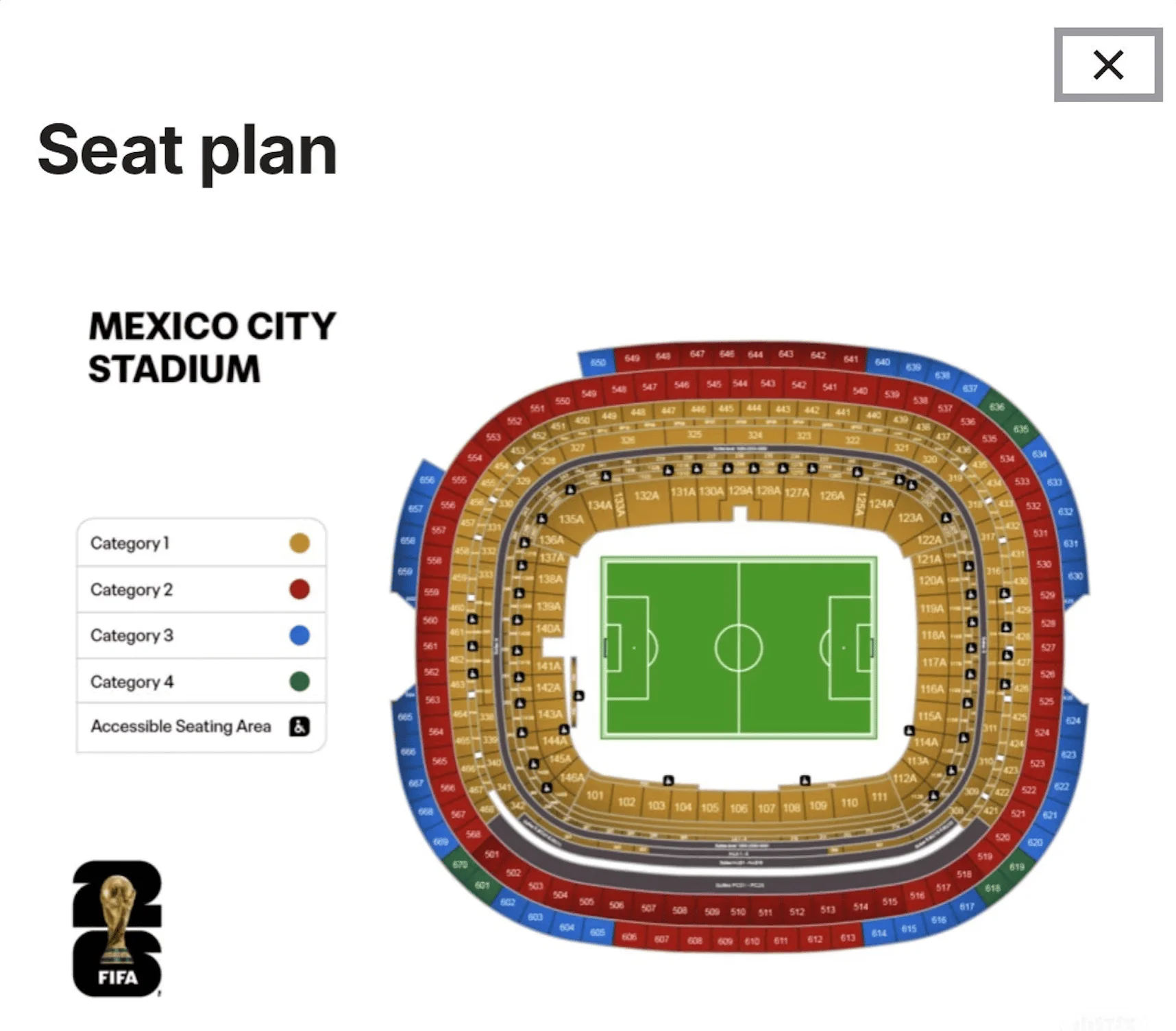
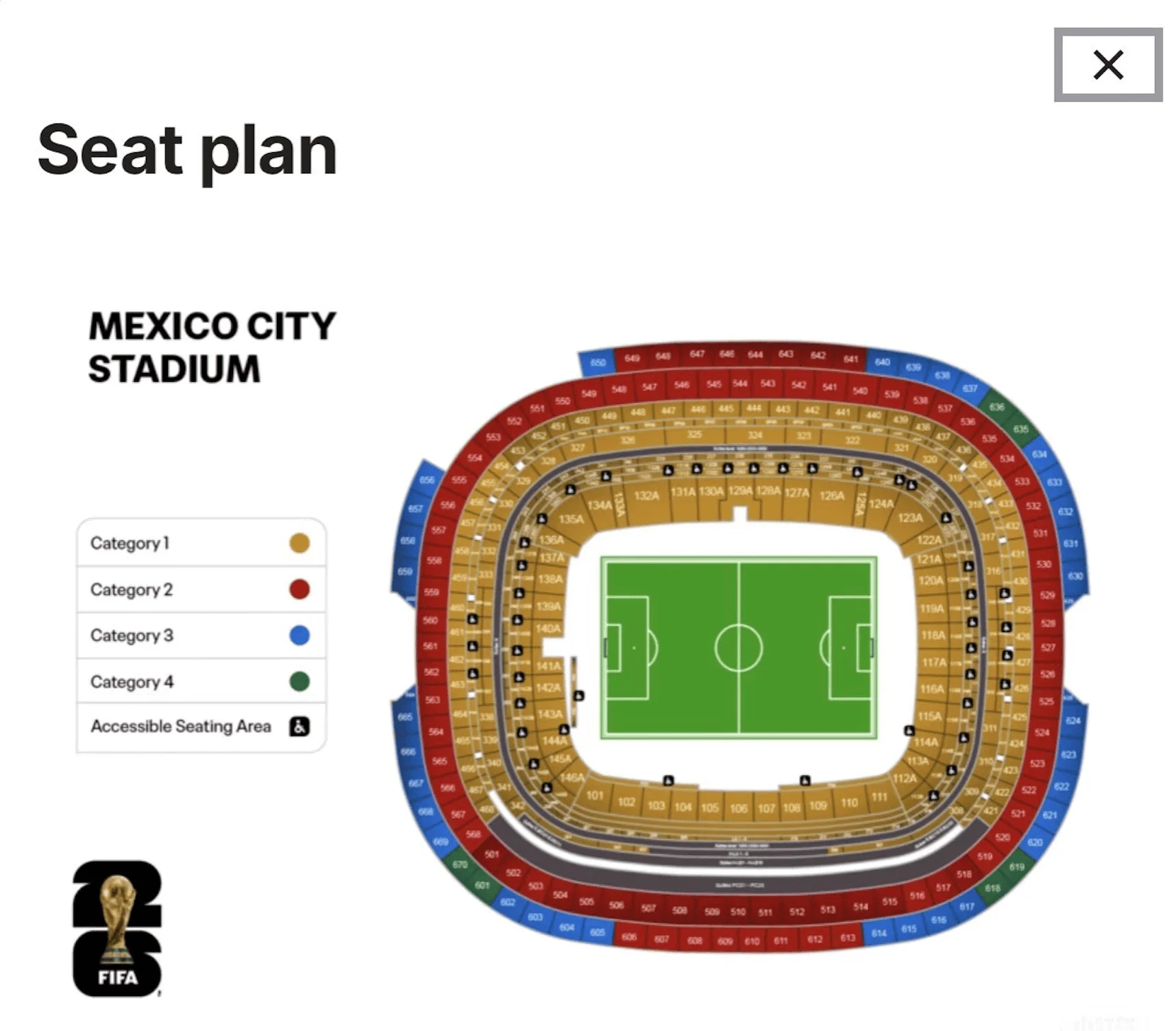
Estadio Azteca Estadio Azteca seating map planning starts with sight lines. The 2026 FIFA map for Mexico City Stadium uses four ticket categories, clearly marked accessible seating icons, and a bowl layout that rewards fans who match price tier with viewing angle.
The full Estadio Azteca World Cup 2026 guide covers the venue story, schedule, and Mexico City basics. This seating guide focuses on where fans should look first before choosing tickets through official sale windows.
FIFA lists Mexico City Stadium at Calzada de Tlalpan 3465 with a tournament Estadio Azteca capacity of 72,766, subject to configuration changes. Since World Cup overlays can adjust normal stadium layouts, fans should treat the official FIFA map as the controlling seat reference.
| Seating Zone | Section Range | View Quality | Ticket Tier |
|---|---|---|---|
| Lower Sideline | 101-110 and 126A-135A | Best pitch angle with low height | Premium |
| Lower Endline | 111-123 and 136-145 | Good close-range goal view | Standard to premium |
| Mid-Level Club | 301-336 and 401-463 rings, plus palcos and plateas | Very good raised view | Club or hospitality |
| Upper Sideline | 501-516 and 541-560 | Good full-pitch read | Standard |
| Upper Endline | 601-617, 623-637, and 650-669 | Fair distance with strong atmosphere | Budget to value |
| Accessible | Accessible icons across lower and mid concourse areas | Varies by assigned platform | All tiers |
Estadio Azteca Seating Zones Explained
Estadio Azteca uses a steep, enclosed football bowl, so fans see the pitch differently by height. Lower sections bring you close to the touchline, while upper sections trade distance for a complete tactical view.
The official FIFA map separates seats by Category 1, Category 2, Category 3, and Category 4 colors. Category 1 covers the strongest lower and central sight lines, while Categories 3 and 4 sit higher or nearer the ends.
Mexico City Stadium will host five World Cup 2026 matches, including the opener, two more group-stage matches, a Round of 32 match, and a Round of 16 match. As a result, demand should be strongest for lower sideline and central raised seats.
Estadio Azteca seating map: Lower Bowl Sideline Sections
Lower sideline sections 101-110 and 126A-135A sit closest to the long sides of the pitch. These seats suit fans who want player movement, benches, tactical shape, and corner-to-corner visibility without climbing high.
Rows nearer the front deliver intensity, yet a slightly raised row gives a cleaner read of passing lanes. Since football sight lines depend on pitch markings and camera positions, avoid choosing only by distance from grass.
Lower Bowl Endline Sections
Lower endline sections 111-123 and 136-145 bring fans close to penalty-area action. They can feel powerful when attacks come toward that goal, especially during Mexico matches and knockout games.
The tradeoff comes when play moves to the far end. Fans who want value near the noise should consider lower corners before straight endline seats, because corners keep more of the pitch in view.
Mid-Level Seating
The middle rings, including 301-336 and 401-463 areas, give a raised angle without the longest upper-deck climb. These sections suit fans who want to follow team shape, pressing triggers, and off-ball runs.
Palcos and plateas also sit in the premium seating conversation at Estadio Azteca. Recent legal attention around those spaces shows why fans should rely on official FIFA ticketing channels rather than resale promises for suite-style access.
Upper Deck Sideline Sections
Upper sideline sections 501-516 and 541-560 give fans a wider view of both halves. The distance increases, yet the sideline angle still helps you read possession, transitions, and defensive blocks.
These sections can offer stronger value than lower endline seats when price matters. Fans who care about a full-match view should compare upper sideline rows before choosing a cheaper endline option.
Upper Deck Endline and Corner Sections
Upper endline and corner sections include several 600-level blocks on the FIFA map. They sit farthest from one goalmouth, but they often carry the loudest supporter energy at major international matches.
Category 3 and Category 4 areas on the outer ring can make sense for budget buyers. Even so, fans should check the exact block, row, gate, and category before payment because final inventory can change by match.
Premium Suites and Club Areas
Accessible and Family Seating at Estadio Azteca
Which Seats Are Best for World Cup 2026 at Estadio Azteca?
Best for the Atmosphere
Best for the View
Best Value Seats
Estadio Azteca Seating Tips for Matchday
- Check the FIFA seat map again before payment because Mexico City Stadium capacity is still listed as configuration-dependent.
- Choose sideline blocks if you want the clearest tactical view across both halves.
- Choose lower corners if you want noise, goalmouth drama, and a better angle than straight endline seats.
- Confirm gate, row, and access route before matchday, especially with upper-ring or accessible seats.
- Use the World Cup 2026 match schedule before buying, because kickoff time and match stage can change seat priorities.
Estadio Azteca Seating Map and Ticket Category Notes
Frequently Asked Questions
Frequently Asked Questions
Frequently Asked Questions
Frequently Asked Questions
Frequently Asked Questions
Frequently Asked Questions
Where are the best seats on the Estadio Azteca seating map for soccer?
Midfield sideline seats at mid-height offer the clearest view of team shape and passing patterns. Lower-bowl seats bring fans closer to the action and the crowd noise. End sections work well for supporters wanting the loudest atmosphere near the goal.
How do FIFA ticket categories match to seating zones?
FIFA ticket categories do not always map to a single fixed section. Category prices cover a range of areas depending on the match tier. Fans should check the official interactive seat map before purchasing.
What is the best way to travel to the stadium on matchday?
Riding transit to Estadio Azteca Station avoids traffic and parking pressure near the venue. The service runs frequently on match days. Rideshare drop zones are also available for fans arriving from hotels.
Are accessible seating sections available in the stadium?
Accessible seating positions are spread across multiple levels of the venue. Companion seats are available alongside accessible spaces. Fans needing accessible entry should contact FIFA support before matchday.
Conclusion
Estadio Azteca seating map choices should start with the official FIFA category layout, not old resale charts. Lower sideline and central mid-level sections offer the best view, while lower corners and upper sideline blocks can deliver stronger value.
Mexico City Stadium will stage five World Cup 2026 matches, so seat demand should vary by stage and opponent. Compare category color, row height, gate access, and official ticket terms before committing to a seat.
