
Scotland World Cup 2026 Squad Announcement Set for May 19 — Steve Clarke Faces Final Calls

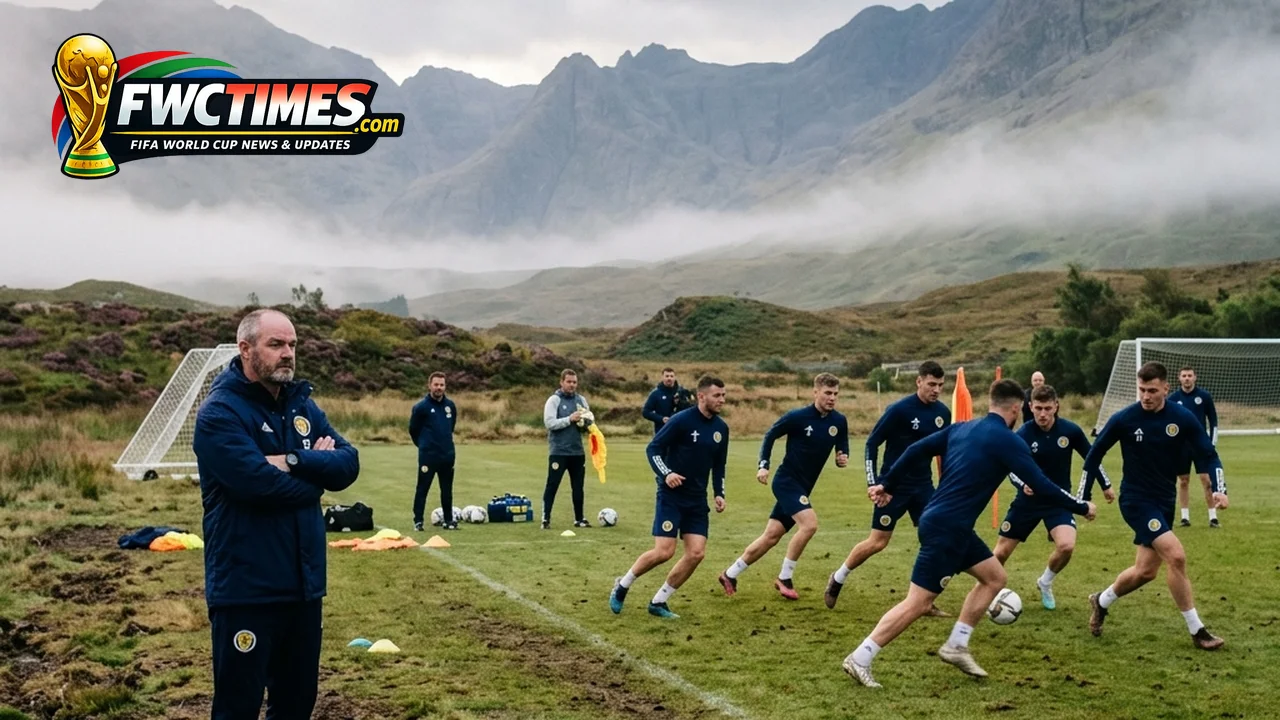
Steve Clarke will announce Scotland‘s final 26-man squad for the FIFA World Cup 2026 on Tuesday, May 19, ending the nation’s 28-year wait for a return to the global stage. The announcement takes place at Hampden Park and marks the finalization of a three-year qualification cycle that saw Scotland secure their place in North America with two matches to spare. Clarke submitted a 55-man preliminary list to FIFA earlier this month but must trim the group significantly before the June 2 deadline. Winger Ben Doak and midfielder Lewis Ferguson headline the final selection dilemmas as Clarke weighs the balance between tournament experience and raw attacking potential.
Scotland enter the FIFA World Cup 2026 in Group C, facing a demanding opening phase against Brazil, Morocco, and Haiti. The schedule begins on June 12 in Vancouver, making the May 19 announcement critical for the squad’s final tactical integration during their pre-tournament camp in Spain. Clarke hinted in recent press briefings that while roughly 22 spots are settled, the final four positions involve intense competition across the midfield and defensive departments. The May 19 date provides exactly 24 days of preparation before the opening whistle at BC Place.
Scotland’s Midfield Puzzle — Ferguson vs the Established Core
The deepest area of competition remains the Scottish midfield. Lewis Ferguson’s exceptional form in Serie A has moved him from a squad regular to a genuine starting contender, yet he faces competition from the established trio of Scott McTominay, Billy Gilmour, and Ryan Christie. Ferguson’s ability to operate in a box-to-box role gives Clarke a physical presence that matches the demands of a high-intensity group stage. His inclusion is certain, but whether he starts alongside McTominay or serves as a tactical substitute depends on the final training assessments Clarke conducts in the coming week.
Billy Gilmour and Kenny McLean provide the technical control Clarke demands for the “vertical possession” style Scotland utilized during the latter stages of qualification. In Group C matches against Brazil and Morocco, ball retention becomes the primary defensive tool. Scotland’s midfield must absorb pressure for extended periods while maintaining the composure to trigger transitions through McGinn and Christie. The May 19 announcement will reveal if Clarke opts for additional defensive cover in the form of a specialist holding midfielder or sticks with the creative group that served the team during Euro 2024.
Ben Doak and the Attacking Wildcard Selection
Ben Doak represents the most significant “wildcard” in Clarke’s selection pool. The winger’s directness and pace offer a profile no other Scottish attacker replicates, yet his lack of major tournament experience remains a factor for the coaching staff. Doak featured in the final three World Cup qualifiers and provided the assist for the winning goal against Norway, demonstrating his ability to perform under high-stakes pressure. If Clarke selects Doak on May 19, he likely sacrifices a more defensive-minded wing-back or a fifth central midfield option to accommodate the youngster’s specific profile.
The forward line remains built around Lawrence Shankland and Che Adams. Shankland finished the club season with 24 goals, establishing himself as the most clinical finisher in the Scottish setup. His partnership with John McGinn, who operates in the advanced “ten” role, is the primary source of Scotland’s goal threat. The May 19 announcement will confirm if Clarke takes a third specialist striker or utilizes Ryan Christie as an auxiliary forward to maintain numbers in the midfield. Scotland’s ability to score goals against disciplined blocks like Morocco’s defensive unit depends on the final balance Clarke achieves in this attacking group.
Group C Challenges — Facing the World’s Best in North America
Scotland’s presence in FIFA World Cup 2026 Group C provides a historic platform and a severe test of the team’s defensive evolution. Opening against Brazil on June 12 in Vancouver demands a level of concentration Scotland has rarely faced since the 1998 tournament. Morocco, who reached the semifinals in 2022, bring a settled defensive structure and high-quality wide players. The final group match against Haiti represents the most realistic opportunity for a victory, but the four points Clarke likely needs for qualification will require a result against either the South American giants or the African semi-finalists.
The logistics of Group C involve significant travel between Vancouver, Seattle, and Santa Clara. Clarke’s medical staff factored these travel times into the pre-tournament camp schedule, emphasizing recovery and physical load management. The May 19 announcement ensures the full 26-man group is assembled early enough to undergo the specific high-altitude and humidity training required for the North American summer. Scotland’s record of early tournament exits is a primary motivator for Clarke, who has publicly stated that his goal is to become the first Scottish manager to reach the knockout rounds of a World Cup.
Fans can follow every development from the Hampden Park announcement and the subsequent training camp updates in our FIFA World Cup news section. The final decision on Ben Doak and the midfield balance becomes official on Tuesday, May 19, marking the start of Scotland’s most anticipated football summer in three decades.
Frequently Asked Questions
Frequently Asked Questions
Scotland’s May 19 squad announcement marks the final step before the team departs for Spain, carrying the hopes of a nation ending nearly three decades of World Cup absence.
Stay tuned to FWCTimes.com for the latest FIFA World Cup 2026 updates.
Read Also: World Cup 2026 Injury Crisis: Xavi Simons, Gnabry, Rodrygo and Militao Ruled Out