FIFA World Cup 2026 Wikipedia – Key Facts Summarized

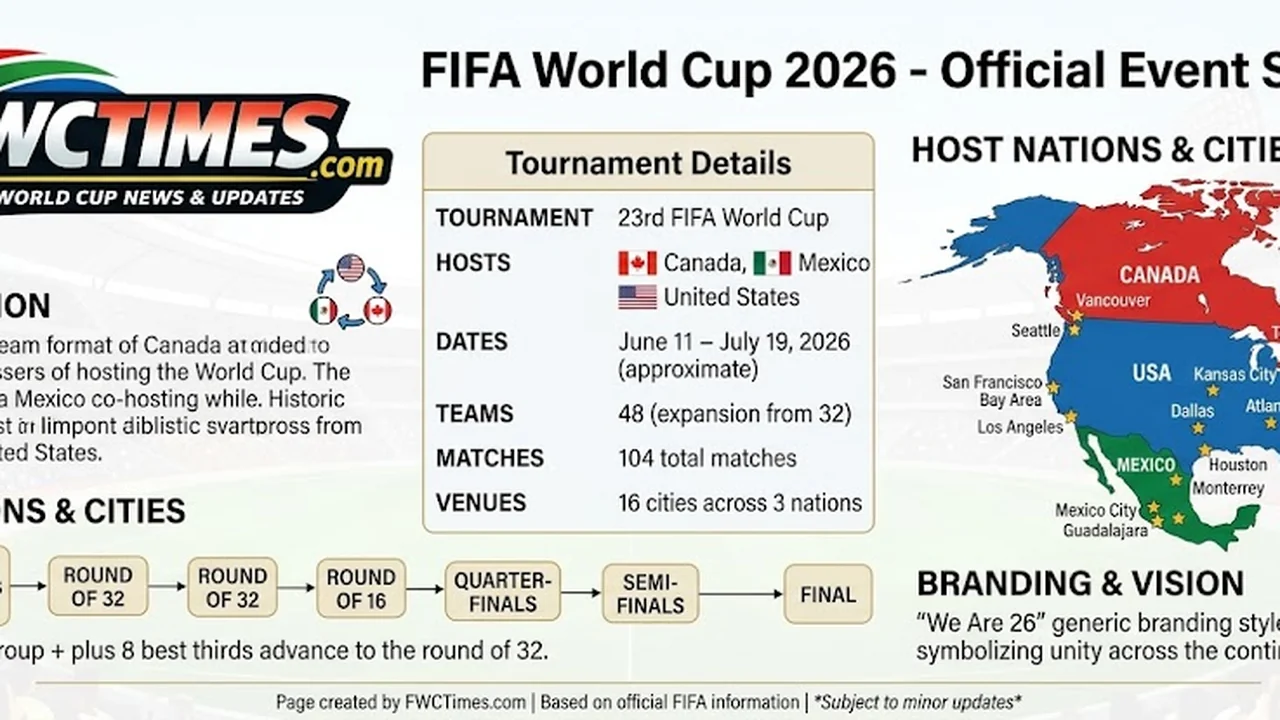
FIFA World Cup 2026 facts are easy to miss because this is the largest men’s World Cup yet. The tournament will run across Canada, Mexico, and the United States from June 11 to July 19, 2026. Fans can use the FIFA World Cup 2026 schedule hub as the starting point.
Quick Answer
FIFA World Cup 2026 has 48 teams, 104 matches, 12 groups, and 16 host cities. Mexico City hosts the opening match, while New York New Jersey hosts the final.
FIFA World Cup 2026 Facts Overview
The 2026 edition is the first men’s World Cup hosted by three countries. Canada, Mexico, and the United States share the tournament across 16 host cities. The article on where the World Cup is being held explains that host split.
The tournament also expands from 32 teams to 48 teams. That change creates 12 groups of four and a new round of 32. The full World Cup 2026 format guide explains how the bracket works.
World Cup 2026 starts on Thursday, June 11, 2026. It ends on Sunday, July 19, 2026. The guide on how long World Cup 2026 lasts gives the full stage-by-stage date picture.
FIFA World Cup 2026 facts at a glance
The opening match is Mexico against South Africa at Mexico City Stadium. The final is scheduled for New York New Jersey Stadium. The 104-match schedule gives fans more football than any previous men’s World Cup.
The host-city list includes two Canadian cities, three Mexican cities, and 11 United States cities. This wider map creates more travel choices and more time-zone planning. Fans should check city, venue, and kickoff details together.
| Fact | Confirmed Detail | Fan Meaning |
|---|---|---|
| Host countries | Canada, Mexico, United States | First men’s World Cup shared by three nations |
| Teams | 48 | Largest men’s World Cup field |
| Matches | 104 | Forty more matches than Qatar 2022 |
| Groups | 12 groups of four | Each team plays three group games |
| Opening match | Mexico vs South Africa, June 11 | Mexico City starts the tournament |
| Final | July 19, New York New Jersey Stadium | Champion is crowned in the New York area |
Host Countries and Cities
The United States has the largest number of host cities. Mexico has Mexico City, Guadalajara, and Monterrey. Canada has Toronto and Vancouver.
This hosting model gives the tournament a North American scale. Fans can attend matches in very different climates, stadium types, and city settings. The article on how many cities are hosting World Cup 2026 lists the city count.
Travel planning is more important than in a compact event. A fan moving between Vancouver, Mexico City, and Miami needs time, flights, and border planning. The tournament is one event, but the distances feel like several regional trips.
Teams, Groups, and Qualification
All 48 teams are now confirmed. The field includes the three hosts and 45 teams from regional qualification. The article on who qualified for World Cup 2026 gives the full team list.
The draw created 12 groups from A to L. The top two teams from each group qualify automatically, and the eight best third-place teams also advance. This sends 32 teams into the first knockout round.
The group-stage rules make goal difference and tiebreakers important. A team can finish third and still survive. Fans should follow standings closely from the second group match onward.
Opening Match, Final, and Match Count
Mexico City Stadium hosts the opening match on June 11. Mexico play South Africa, which gives the tournament a host-nation start. That match also makes Mexico City Stadium a historic venue again.
New York New Jersey Stadium hosts the final on July 19. The final sits at the end of a 39-day tournament. Fans can track the full journey through the tournament schedule guide.
The 104-match total changes how fans watch. There are more group-stage games, more knockout matches, and more chances for unfamiliar teams to reach a global audience. The bigger field also increases broadcast and travel planning needs.
Why These Facts Matter
These facts matter because World Cup 2026 is not a normal repeat of 2022. More teams, more matches, and more cities change the tournament rhythm. Fans who use old World Cup habits may underestimate the planning needed.
The expanded format also changes how teams manage squads. A finalist can play eight matches instead of seven. Depth, recovery, and travel planning will shape the tournament.
Fans should treat these facts as a base layer. After that, squads, injuries, kickoff times, and group standings will decide the daily story. The facts explain the structure before the football begins.
How Fans Should Use These Facts
Fans should use these facts to build a simple tournament plan. Start with dates, then add host cities, ticket windows, and broadcast options. A clear base stops schedule confusion once daily fixtures begin. It also helps families compare travel needs before prices rise.
Team followers should connect the facts with group-stage dates. A national team can move through several cities in a short span. Supporters need hotel flexibility, flight buffers, and matchday transport notes. The 48-team format rewards fans who plan early.
Common Mistakes to Avoid
Do not treat all host cities as close together. North America covers long distances, and some trips need flights. A fan cannot plan Vancouver, Mexico City, and Miami like one small route. Time zones also change the matchday clock.
Do not assume every old World Cup rule still works. The new round of 32 changes the knockout path. Third-place teams can still survive group play. As a result, standings will stay active deeper into the group stage.
Best Way to Track Updates
Fans should keep one updated schedule source and one local viewing source. The schedule explains dates, venues, and match numbers. The broadcaster explains channel placement and stream access. Using both avoids confusion when fixture demand rises.
Squads, injuries, and knockout opponents can still change the story. The core facts will not answer every fan question. They do give readers a stable base for the rest of their planning. From there, daily updates become easier to understand.
Frequently Asked Questions
What are the key FIFA World Cup 2026 facts?
World Cup 2026 has 48 teams, 104 matches, 12 groups, and 16 host cities. It runs from June 11 to July 19, 2026.
Who is hosting World Cup 2026?
Canada, Mexico, and the United States are co-hosting the tournament. It is the first men’s World Cup shared by three countries.
How many teams are in World Cup 2026?
World Cup 2026 has 48 teams. This is the first men’s World Cup with the expanded field.
Where is the World Cup 2026 final?
The final is scheduled for New York New Jersey Stadium on July 19, 2026. The venue is in the New York metropolitan area.
How many matches are in World Cup 2026?
World Cup 2026 has 104 matches. Qatar 2022 had 64 matches.
Conclusion
FIFA World Cup 2026 facts show a tournament built on scale. The event has more teams, more matches, more cities, and a longer knockout route.
Fans should keep these details close while tracking fixtures and squads. Read Also: World Cup 2026 Schedule PDF – How to Download