How Morocco Play at the 2026 World Cup

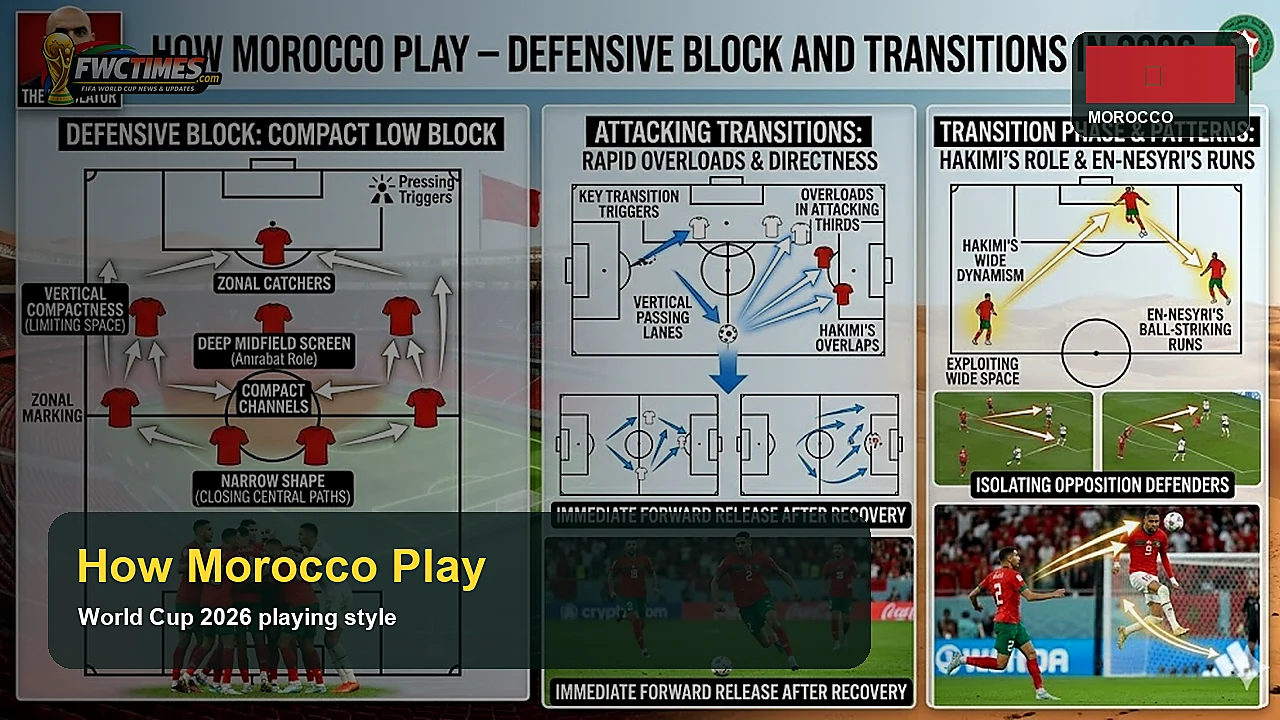
The Morocco playing style World Cup 2026 approach runs on a flexible 4-2-3-1 system installed by head coach Mohamed Ouahbi. Ouahbi took over the senior squad in March 2026, bringing his youth tournament success to the senior level. In fact, this system combines their traditional defensive compactness with a new, possession-based pressing style. This tactical setup aims to protect the central channels while utilizing Brahim Diaz’s creative talent.
This campaign is Ouahbi’s first major international challenge at the senior level. The former youth coach, who won the 2025 FIFA U-20 World Cup, has integrated younger options into the squad. The system shifts fluidly into a 4-2-2-2 shape during possession phases. As a result, Morocco can create wide overloads that release Achraf Hakimi down the right flank.
The physical load of the 104-match schedule dictates Morocco’s defensive strategy. Ouahbi instructs the squad to use zonal coverage rather than energy-draining man-marking schemes. The players maintain short distances between the lines to close down spaces in front of the box. This physical preservation is what allows Morocco to compete against the tournament’s top attacking sides.
Ouahbi’s Flexible 4-2-3-1 System
Mohamed Ouahbi has installed a flexible 4-2-3-1 shape as Morocco’s primary tactical baseline. The system focuses on central compactness, protecting the Zone 14 area directly in front of the penalty box. The double pivot shields the back four, while the midfielders travel together in tight horizontal layers. This structure makes the team extremely difficult to play through centrally.
In possession, the shape shifts into a 4-2-2-2 to create attacking space in wide areas. The wingers tuck inside to operate as interior playmakers, drawing the opponent’s fullbacks narrow. This movement opens up overlapping channels for the fullbacks to push forward. The 4-2-3-1 formation World Cup guide shows how this shape compares to other systems.
Achraf Hakimi as the Transition Outlet
Achraf Hakimi serves as the primary attacking outlet and transition engine of the Moroccan system. Under Ouahbi’s plan, the team looks to release Hakimi down the right flank the moment possession is won. His explosive speed and stamina allow him to transition from deep defense to attack within three passes. Hakimi’s overlapping runs create numerical superiority in the final third.
This wide threat forces the opponent’s defensive block to stretch, opening central channels. Brahim Diaz and the central forwards exploit these spaces to create shooting opportunities. Hakimi’s directness is Morocco’s most effective weapon for breaking down organized defenses. The possession football World Cup guide explains how fullback runs support possession play.
Brahim Diaz in the Creative Role
Brahim Diaz operates as the central playmaker, driving Morocco’s new possession-heavy approach. Ouahbi has built the attacking phase around Diaz’s ability to create chances in tight spaces. Diaz drops between the opponent’s midfield and defensive lines to link the play. His technical skill allows him to combine with the forwards and retain possession under pressure.
This playmaking role is supported by a hard-working double pivot behind him. The defensive midfielders handle the physical duels, allowing Diaz to focus on creative output. This balance is what makes the Moroccan attack far more dangerous than in previous cycles. In fact, Diaz’s integration has transformed Morocco into a proactive attacking side.
Zonal Defense and Compressing Zone 14
Morocco’s defensive phase runs on a disciplined mid-block that prioritizes zonal coverage over individual tracking. The players maintain consistent, short distances between units to block passing lanes. This compactness is specifically designed to police Zone 14, denying space to opposing playmakers. The high press World Cup guide explores how top teams organize these compact blocks.
If the opponent plays wide, Morocco shifts their block laterally to squeeze the ball-carrier against the touchline. The near-side fullback and midfielder double-team the attacker, forcing turnovers. This zonal discipline prevents the defense from being pulled out of shape by diagonal runs. This structure is the foundation of Morocco’s defensive success.
Key Vulnerabilities of the Moroccan System
The biggest tactical risk is the space left behind Hakimi when he pushes forward. If Morocco loses possession high up the pitch, opponents can counterattack down the right flank. The right-sided centre-back must slide wide to cover this channel, which can stretch the central defense. This transition moment is where Morocco is most vulnerable.
The physical load on the double pivot is another concern for Ouahbi. The midfielders must cover massive distances to protect the center and support the wide press. In the summer heat, this physical load can cause defensive gaps late in matches. Morocco must rotate their midfield options to sustain their defensive consistency.
Expert Verdict
Morocco enters the 2026 World Cup with a highly balanced system that combines defensive grit with creative possession. Ouahbi has successfully modernized the squad’s tactical identity while keeping their signature compactness. The flexible 4-2-3-1 shape and Hakimi’s transition speed give Morocco a solid platform. The key will be protecting the spaces left behind their attacking fullbacks.
If they can prevent easy transition goals, Morocco will be a difficult opponent in the knockout stages. The inclusion of Brahim Diaz gives them the creative spark to break down low blocks. Ouahbi’s youth tournament experience should help him manage the squad’s energy across the long schedule. Morocco is built to compete, and they have the tools to surprise.