Canada playing style World Cup 2026: Team Tactics

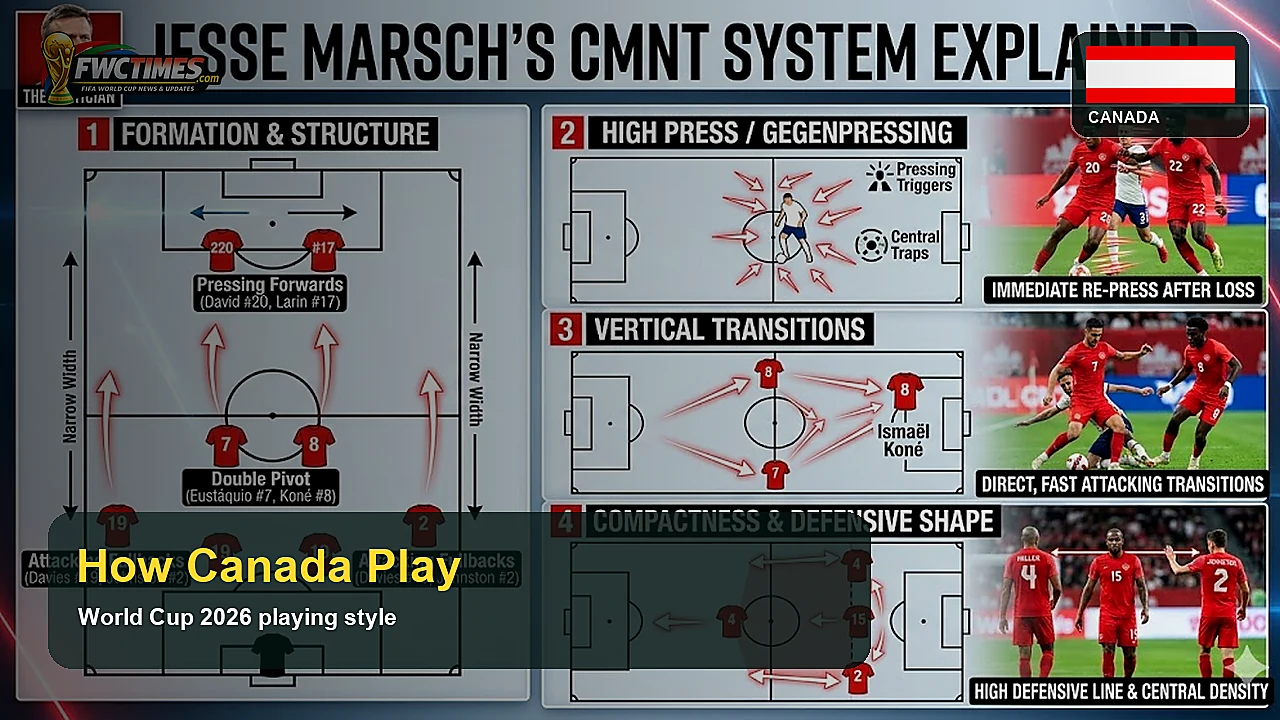
The Canada playing style World Cup 2026 approach runs on a high-octane pressing system designed by head coach Jesse Marsch. Marsch has introduced a ferocious tactical identity known as Maplepressing, transforming the team into a proactive transition unit. As a co-host, Canada qualified automatically for the tournament, using high-profile friendlies and squad expansion to build chemistry. This tactical structure focuses on winning the ball high up the pitch and launching rapid vertical attacks.
The physical load of the expanded 48-team schedule places extreme demands on Marsch’s high-pressing style. Canada will play their Group B matches on home soil in Toronto and Vancouver, benefiting from local support but facing challenging travel distances. As a result, Marsch has built a deep roster, recruiting dual-national talents to sustain their intense running volume across matches. This squad depth is essential for maintaining their aggressive pressing triggers.
The history of the tournament shows that Canada is a developing football power, making only their third World Cup appearance in 2026. Marsch has established a belief in the squad, encouraging them to dictate match tempo rather than sitting back. The coaching staff has focused on defensive stability behind their aggressive press. Les Rouges enters Group B hoping to reach the knockout stages for the first time.

The Ferocious “Maplepressing” 4-4-2
Jesse Marsch has structured Canada’s defensive shape around a compact 4-4-2 system that relies on two tight banks of four. The defensive phase operates with a high backline to compress the space in midfield, keeping the units close together. This compact structure allows Canada to execute coordinated pressing waves the moment the opponent attempts to build. The high press World Cup guide explores the mechanics of this coordinated pressure.
In possession, Canada avoids horizontal possession, focusing on vertical passes that exploit spaces opened by the press. The wide midfielders tuck inside to create central passing options while the fullbacks overlap to provide width. The strikers make diagonal runs behind the defense to catch the opponent before they can organize. The 4-4-2-1 formation World Cup guide compares these shapes to show how dual-striker setups stretch defenses.
Alphonso Davies as the Dynamic Captain
Captain Alphonso Davies serves as the primary tactical catalyst and leader of Canada’s vertical system. Operating in a free-roaming left wing or advanced fullback role, Davies uses his explosive pace to transition the team forward. His dribbling ability allows Canada to break through opponent press structures and create numerical advantages. Davies provides the direct wide threat that stretches opposing lines.
Ismaël Koné offers defensive balance in the central midfield, screening the back four and initiating transitions. Koné intercepts opponent passes and distributes the ball quickly to wide outlets, keeping the tempo high. This midfield coverage allows the attacking players to commit forward without exposing the center. The possession football World Cup guide explains how central midfielders manage transition tempo.
David Leading the Front Press
Jonathan David functions as the primary pressing forward and goalscorer in Canada’s vertical attack. His tactical discipline and intelligence trigger the team’s press by isolating opposition centre-backs. David’s vertical runs stretch the opponent’s defensive line, opening pockets of space for supporting runners. His work rate is critical for forcing turnovers in dangerous areas.
The second striker drops deeper to link play, forming a diamond shape with the central midfielders during possession. This movement creates passing triangles that help Canada play through the opponent’s counter-press. The best pressing teams World Cup guide explores how front-line partnerships initiate defensive pressure.
Co-Host Automatic Qualification and Pre-Tournament Stats
Canada qualified automatically for the 2026 World Cup as co-hosts, bypassing the CONCACAF qualifying matches. Marsch utilized international friendlies to test tactical systems and build defensive discipline. Canada enters Group B alongside Bosnia and Herzegovina, Qatar, and Switzerland.
| Statistic | Value | | :— | :— | | Group Stage | Group B | | Qualification Method | Automatic (Co-Host) | | Core Formation | High-Press 4-4-2 | | Team Captain | Alphonso Davies | | Primary Striker | Jonathan David |
This context shows that Canada has focused on physical readiness and defensive organization ahead of the tournament. The squad enters their home matches with a clear understanding of Marsch’s pressing requirements. This physical preparation makes them a dangerous opponent in Group B.
Key Vulnerabilities of the Canadian System
The biggest tactical risk is the space left behind Canada’s high defensive line. Because Marsch demands a high press, the central defenders must push up to keep the team compact. If the opponent breaks the press, they can play direct passes to fast strikers running behind the defense. This vulnerability requires perfect timing from the centre-backs and proactive sweeping from the goalkeeper.
The system also faces a fatigue challenge due to the extreme physical demands of Maplepressing. If the squad suffers from injuries or fatigue during the group stage, the pressing intensity inevitably declines. The backup players must execute the pressing triggers with the same intensity as the starters. This dependency makes squad rotation a critical factor for Canada’s tournament hopes.
Expert Verdict
Canada enters the 2026 World Cup with a distinct, high-energy system that can unsettle any opponent. Marsch has created a ferocious unit that relies on collective work rate and vertical speed. The compact 4-4-2 shape and Davies’ individual quality give Canada a strong attacking platform on home soil. The key to their tournament will be balancing this aggression with defensive discipline.
If they can maintain their pressing intensity, Canada will challenge Switzerland in Group B. The match against the Swiss will be a significant test of their tactical maturity. Marsch’s structured dual-national recruitment has added the depth needed for a long tournament. Canada has the tools to progress, but they must defend the space behind their line.