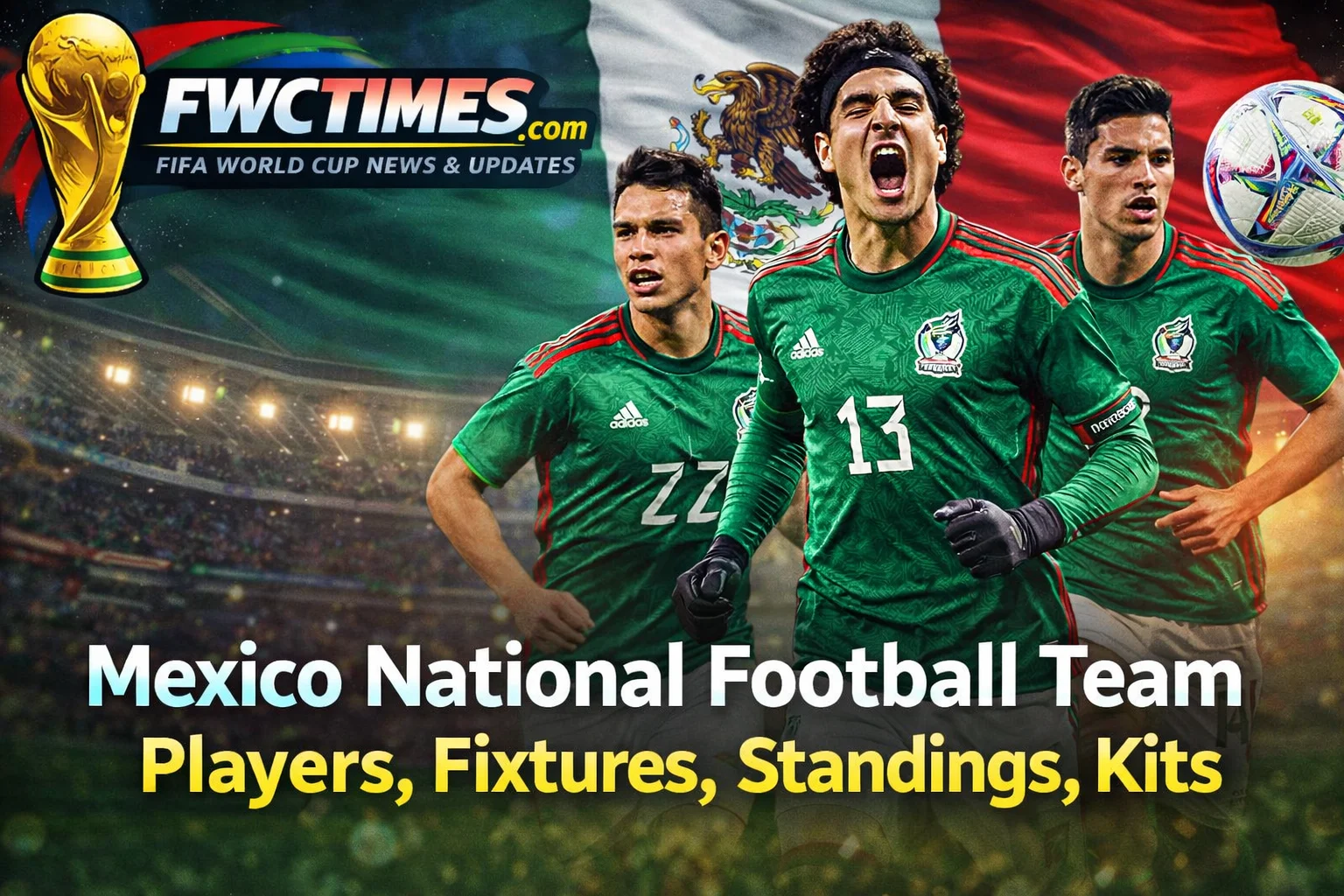
Mexico National Football Team 2026 Players, Fixtures, Standings, Kits
The Mexico national Football team enters 2026 with unusual pressure and a huge opportunity. El Tri will play a FIFA World Cup on home soil again, backed by packed stadiums, familiar conditions, and a fan base that expects results. With Javier Aguirre leading the cycle and Edson Álvarez wearing the armband, Mexico’s build-up is about getting the squad balance right and arriving sharp for June and July 2026.
Mexico are co-hosts in 2026, so preparation matters more than a typical qualification campaign. The clearest things to track are squad choices, confirmed friendlies, FIFA ranking movement, and how El Tri handle home-stadium expectations.
Mexico national Football team 2026
Mexico’s men’s national team is widely known as El Tri or El Tricolor. The team is governed by the Federación Mexicana de Fútbol (FMF), affiliated with FIFA since 1929 and a founding affiliate member of CONCACAF since 1961. Their traditional home base is Estadio Azteca, a stadium with a deep World Cup legacy and a major part of Mexico’s home advantage story.
In this cycle, the head coach is Javier Aguirre and the captain is Edson Álvarez. Historically, Andrés Guardado is listed as the most-capped player (180), and Javier Hernández is listed as the top scorer (52). Mexico’s FIFA ranking is listed as 16 as of 19 January 2026, which gives a useful benchmark for where they sit entering the final stretch of preparation.
Current Mexico national football team (El Tri) Squad / Roster
Goalkeepers
- Luis Malagón – América (GK)
- Raúl Rangel – Guadalajara (GK)
- Carlos Acevedo – Santos Laguna (GK)
Defenders
- Jesús Orozco Chiquete – Cruz Azul (CB)
- Edson Álvarez – Fenerbahçe (CB/DM)
- Israel Reyes – América (CB)
- César Montes – Lokomotiv Moscow (CB)
- Johan Vásquez – Genoa (CB)
- Kevin Álvarez – América (RB/CB)
- Bryan González – Chivas (LB/wing-back)
- Jesús Gallardo – Toluca (LB)
Midfielders
- Orbelín Pineda – ??? (Midfielder)
- Érick Sánchez – ??? (Midfielder)
- (Other midfielders like Carlos Rodríguez, Marcel Ruiz, Luis Romo, Erik Lira, etc., have featured in recent call-ups but may vary by match)
Forwards & Attackers
- Raúl Jiménez – Forward (veteran striker)
- Alexis Vega – Forward/Winger
- Santiago Giménez – Forward
- Germán Berterame – Forward
- Julián Quiñones – Forward
- Armando González – Forward (young striker)
Notes on the Squad
- This roster reflects recent call-ups and typical selections heading into 2026 based on official and reputable reporting sources.
- The precise squad for any specific fixture (friendlies vs Iceland, Panama, etc.) may vary, especially during non-FIFA dates when many Euro-based players are unavailable.
Mexico Football Fixtures 2026 Confirmed Matches
International schedules often move window by window, so the safest approach is to separate what is confirmed from what is still being planned. Mexico have used domestic-based camps at points, which is common when matches fall outside standard FIFA release windows.
| Time window | Match type | Opponent | Venue / city | What it’s for | Status |
|---|---|---|---|---|---|
| January 2026 | Friendlies | Panama, Bolivia | Camp-based matches | Depth checks and domestic form | Played/used in preparation |
| Late February 2026 | Friendly | Iceland | Querétaro (Estadio Corregidora referenced) | Testing options in a non-standard window | Announced/confirmed in planning |
| June–July 2026 | World Cup | Group stage + knockouts | Mexico/USA/Canada | Tournament performance | Tournament dates set |
Mexico standings 2026
Because Mexico are hosts, the usual qualifying points table is not the main story. For 2026, standings is better understood in three practical ways:
- FIFA ranking movement, because it reflects results and consistency over time
- Momentum from regional competitions, where Mexico have recent titles listed
- Group-stage performance once the World Cup begins, where points and goal difference decide the path
Mexico’s honours list highlights strong regional success, including multiple Gold Cup/CONCACAF Championship titles and a Nations League title listed for 2025. That history raises expectations, but it also shows why fans judge 2026 by knockout progress, not only performances.
How Mexico can manage the World Cup group stage pressure
Home tournaments are emotional. Mexico can benefit from the energy, but they also must avoid chaotic moments that open matches up. The keys are simple:
- Start fast without losing structure
- Protect the center when the crowd urges constant attacking
- Stay calm after conceding, because home pressure can amplify mistakes
A realistic points mindset
In group football, three matches decide everything. The most reliable approach is to treat each match as a separate job:
- Match 1: set your baseline with structure and confidence
- Match 2: adjust based on what worked and what did not
- Match 3: manage risks based on the table situation
Mexico Host cities 2026 and Stadiums
Mexico will stage matches across three major venues. Even for fans who are not traveling, these stadiums help you understand how Mexico’s home advantage might show up in real matches.
Mexico City and Estadio Azteca
Estadio Azteca is Mexico’s iconic home stadium and a central part of the 2026 story. It carries history and a unique match feel, and it is positioned as the stage for major moments. Playing there can lift Mexico, but it also demands control, because big occasions can create early nerves.
Guadalajara and Estadio Akron
Guadalajara’s Estadio Akron is presented as one of the key venues in Mexico. It is often described with strong atmosphere, modern design, and a crowd that can push a team forward. For Mexico, it is another home setting where fast starts matter, because the energy can swing a game quickly.
Monterrey and Estadio BBVA
Monterrey’s Estadio BBVA is repeatedly described as modern and built for major events. It is part of Mexico’s hosting identity, and it adds variety to the conditions across the country. From a football point of view, it is also a venue where intensity can rise, because the crowd is close and the environment feels big-game.
Mexico home and away kit 2026
Kits matter in Mexico because they are part of identity, not just design. The cycle discussion repeatedly points to adidas as the supplier, with designs that pull from heritage and symbolism.
Home kit themes
Mexico’s home look is described around a traditional green base, with cultural patterns referenced as inspiration. The goal is clear: look like Mexico, feel like Mexico, and give supporters a shirt that connects to the country’s football story.
Away kit themes
Away concepts are described as more experimental, often built around lighter tones with deep accent colors and cultural motifs. The practical side is still important: comfort in summer conditions, lightweight feel, and consistency across player versions and fan versions.
A simple buying tip for supporters: if authenticity matters, watch for official federation launch language and match-worn usage in the final friendlies. That is usually when the main tournament look becomes clear.
FAQs
Edson Álvarez is listed as Mexico’s captain for the 2026 cycle, and his role is central to midfield balance and leadership.
Javier Aguirre is listed as the head coach. His job is to shape a clear structure and make tough roster decisions under home-tournament pressure.
The information provided points to January 2026 preparation matches (including Panama and Bolivia) and an announced February 2026 friendly against Iceland in Querétaro. Beyond that, schedules are best tracked window by window.
The host venues discussed are Estadio Azteca in Mexico City, Estadio Akron in Guadalajara, and Estadio BBVA in Monterrey.
Focus on roles and combinations: the goalkeeper choice, center-back pairing, the midfield partnership around Edson Álvarez, and which forwards provide consistent finishing.
Conclusion
Mexico’s 2026 story is simple to follow if you track the right signals: squad roles, confirmed fixtures, real standings measures like ranking and momentum, and how El Tri use home venues to their advantage. With Javier Aguirre in charge and a clear leadership core, the takeaway is this: Mexico do not need hype, they need clarity, balance, and repeatable performance before June 2026.