FIFA World Cup 2026 Group Stage Matches, Teams, Schedule, Bracket, and Format Guide
The FIFA World Cup 2026 group stage matches are the tournament’s first and most important test. Every team gets three games to define its story, build belief, and chase a place in the knockout rounds. This opening stage feels bigger than ever because 48 teams are involved, and the new format creates more pressure from the first kickoff.
The 2026 edition is set across North America, with Canada, Mexico, and the United States co-hosting in a historic three-nation collaboration. Fans will see a tournament built for scale, with more matches, more nations, and more moments that can change quickly. Some qualification places remain undecided because playoff games are still to be completed, which keeps the team list and a few group spots open for late drama.
FIFA World Cup 2026 format
The structure is designed to expand participation while keeping the competition sharp. FIFA’s setup keeps the familiar rhythm of group play but adds a wider pathway to the knockouts. That one change shifts how teams approach every match, because third place can still matter.
Group stage structure
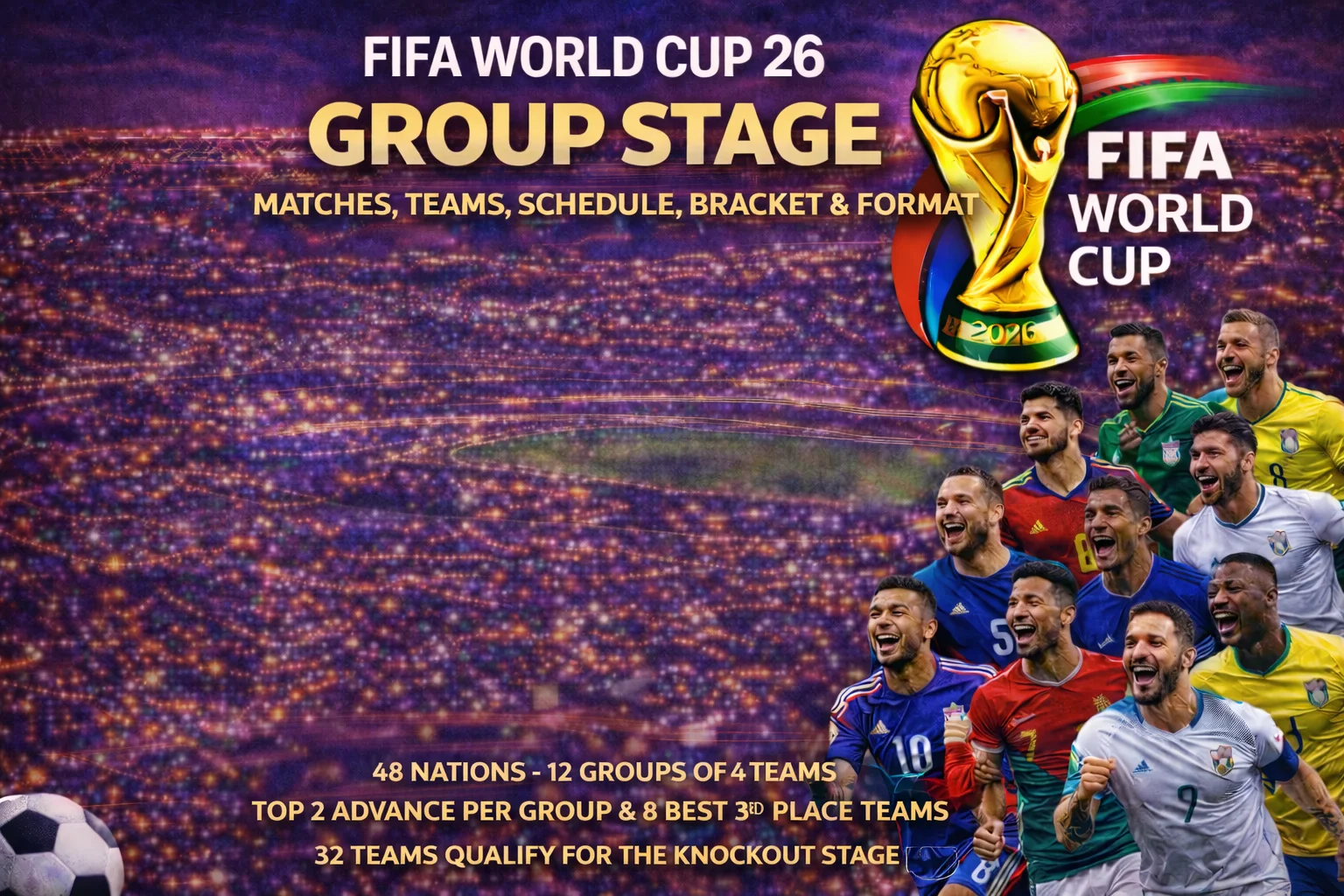
In 2026, 48 teams compete in the group stage. They are divided into 12 groups of four teams each, labeled Group A through Group L. Each team plays three matches in a round-robin format, meaning every team plays each group opponent once.
The points system stays familiar:
| Result | Points |
|---|---|
| Win | 3 |
| Draw | 1 |
| Loss | 0 |
This format gives every team a balanced chance to progress. It also makes squad management important, because travel and recovery matter across three matches.
Group stage tiebreakers that can decide everything
Ties on points are common in group football, so tiebreakers matter. When teams are level, the process starts with head-to-head results between the tied teams. From there, it moves through goal difference and goals scored in those head-to-head games. Fair play criteria can also come into play when margins stay tight.
The practical takeaway is simple: beating a direct rival can be more valuable than chasing a large scoreline elsewhere, because head-to-head outcomes can shape the final standings.
How teams advance from the group stage to the Round of 32
The biggest format change is what happens after the group stage. Instead of a smaller knockout field, the tournament moves into a Round of 32.
Advancement rules
After each team plays three group matches, 32 teams move to the knockout stage:
- The top two teams in each of the 12 groups qualify automatically, which makes 24 teams.
- The eight best third-placed teams across all groups also advance, completing the 32-team lineup.
This adds a new layer of tension. A team in third place can still qualify, but only if it performs well enough compared to third-place teams in other groups. That creates a second race running alongside every group table.
Best third-placed teams
Because eight third-placed teams qualify, “good third place” becomes a real target. These rankings are based on group-stage results, so points come first. When teams are tied, goal difference and goals scored become key. Discipline and fair-play factors can matter too if the numbers stay level.
This is why late goals in Matchday 3 feel massive. Even teams not chasing first or second can still fight for the third-place table.
FIFA World Cup 2026 teams and groups A to L
The group phase includes a mix of established powers and rising teams, with several positions reserved for playoff winners. With qualifiers still wrapping up, some spots remain undecided, which adds uncertainty and excitement.
Below is the group lineup presented in a clear, fan-friendly table, using the same team and placeholder structure provided.
| Group | Teams |
|---|---|
| Group A | Mexico, South Africa, South Korea, UEFA Path D winner |
| Group B | Canada, Switzerland, Qatar, UEFA Path A winner |
| Group C | Brazil, Morocco, Scotland, Haiti |
| Group D | United States, Paraguay, Australia, UEFA Path C winner |
| Group E | Germany, Curaçao, Ivory Coast, Ecuador |
| Group F | Netherlands, Japan, Tunisia, UEFA Path B winner |
| Group G | Belgium, Egypt, Iran, New Zealand |
| Group H | Spain, Cape Verde, Saudi Arabia, Uruguay |
| Group I | France, Senegal, Norway, Intercontinental Path 2 winner |
| Group J | Argentina, Algeria, Austria, Jordan |
| Group K | Portugal, Uzbekistan, Colombia, Intercontinental Path 1 winner |
| Group L | England, Croatia, Ghana, Panama |
What makes the group stage matchups feel different in 2026
The group stage is not just about winning the group. It is about controlling margins. A single goal can affect third-place qualification, influence bracket placement, and change who a team faces next. That is why the opening stage feels tactical, even early in the tournament.
FIFA World Cup 2026 group stage schedule and matchday dates
The tournament runs from June 11 to July 19, 2026. The group stage begins on Thursday, June 11, 2026, and the group phase runs through June 27, 2026.
Many fans plan the tournament by matchdays, because it makes the flow easier to follow:
| Stage | Date range (2026) | What happens |
|---|---|---|
| Group stage Matchday 1 | June 11–17 | Opening games for all 12 groups |
| Group stage Matchday 2 | June 18–23 | Second matches, tables start to settle |
| Group stage Matchday 3 | June 24–27 | Final group games, standings and third-place race |
| Round of 32 | June 28–July 3 | Knockouts begin for 32 qualifiers |
Why Matchday 3 is the peak of the group stage
Matchday 3 is where the math becomes real. Teams know exactly what they need. The “best third-placed teams” race gets louder because goals swing the ranking quickly. It is also the moment when tactics change fast, because teams respond to live standings rather than long-term plans.
Opening fixtures and early schedule snapshot
The tournament opens on June 11, 2026. The first match features Mexico at Estadio Azteca in Mexico City. The opening day also includes another Group A match in Guadalajara. The next day includes Canada’s opener in Toronto and the United States playing in Los Angeles.
| Date | Match | Group | Venue | Time (ET) |
|---|---|---|---|---|
| June 11 | Mexico vs South Africa | A | Mexico City | 3:00 PM |
| June 11 | South Korea vs UEFA Path D winner | A | Guadalajara | 10:00 PM |
| June 12 | Canada vs UEFA Path A winner | B | Toronto | TBD |
| June 12 | United States vs Paraguay | D | Los Angeles | TBD |
| June 13 | Argentina vs Algeria | J | Vancouver | TBD |
This structure creates a rhythm: early days introduce teams and styles, then the tournament accelerates into packed matchdays as groups approach their final games.
How points and tables shape group stage strategy
The group stage is short. Three matches are not many. That is why every decision matters, from opening lineups to late substitutions.
The basic scoring rules every fan should track
Teams earn points like this:
- Win: 3 points
- Draw: 1 point
- Loss: 0 points
Teams are ranked by total points. If points are level, tiebreakers come into play, starting with head-to-head results between the tied teams.
The third-place ranking table is just as important
In 2026, you should follow two tables at the same time:
- The group table, to track first and second place
- The third-place ranking table, to see which teams are chasing the eight extra spots
A team in third can still qualify. That changes how fans read final-day games, because a third-place team might celebrate even without finishing in the top two.
FIFA World Cup 2026 bracket path after the group stage
Once the group stage ends, the knockout rounds begin with the Round of 32. From there, it becomes a single-elimination tournament with extra time and penalties if needed.
Knockout round progression
The pathway after the group stage follows this structure:
- Round of 32
- Round of 16
- Quarterfinals
- Semifinals
- Third-place match
- Final
The final is set for July 19, 2026, in New York/New Jersey at MetLife Stadium. The third-place match takes place the day before.
Why Round of 32 matchups are not always fully fixed early
Group winners and runners-up have defined entry points into the bracket. Third-place qualifiers are slotted based on which groups those third-place teams come from. Because the eight best third-placed teams can come from many different groups, the bracket uses a mapping system that links certain group winners to certain third-place group combinations.
This keeps the group finale suspenseful. A third-place team’s destination can shift quickly based on late goals and final rankings.
Host cities and venues for the FIFA World Cup 2026 group stage
The tournament spans 16 stadiums across three countries, combining modern venues with iconic football locations. The United States includes stadiums such as SoFi Stadium in Los Angeles and AT&T Stadium in Dallas. Mexico includes Estadio Azteca and Estadio Monterrey. Canada includes BC Place in Vancouver and BMO Field in Toronto.
This spread makes the event feel like a continent-wide festival, with different cities bringing their own atmosphere to the group stage matchdays.
Group-by-group outlook for the group stage matches
The group stage is where styles collide. Some groups look built for tempo and transitions. Others look like tactical chess matches where one goal changes everything. Below is a simple, human view of each group’s storylines, without forcing predictions.
Group A outlook
Mexico carries regional energy and a powerful home atmosphere. South Korea adds speed and pressing. South Africa brings pace and physical edge. The UEFA Path D winner could change the balance fast.
Group B outlook
Canada has a chance to ride momentum early. Switzerland brings structure and tournament discipline. Qatar adds a different style and game rhythm. The UEFA Path A winner introduces uncertainty until the last qualifying decisions.
Group C outlook
Brazil and Morocco blend flair and organization. Scotland can make games tight and emotional. Haiti adds a fearless underdog angle, where one result can flip the group.
Group D outlook
The United States and Australia suggest a physical group with fast transitions. Paraguay can frustrate opponents with compact play. The UEFA Path C winner creates a moving target for match prep.
Group E outlook
Germany’s control meets Ecuador’s athletic intensity. Ivory Coast brings strength and direct threat. Curaçao adds an underdog story that can turn into a headline.
Group F outlook
Netherlands and Japan often bring high tempo, movement, and smart pressing patterns. Tunisia can be hard to break down. The UEFA Path B winner could decide who tops the group.
Group G outlook
Belgium, Egypt, Iran, and New Zealand is a mix of styles and approaches. If points stay tight, goal difference could become a major factor.
Group H outlook
Spain’s possession identity meets Uruguay’s efficiency and bite. Saudi Arabia can punish mistakes. Cape Verde adds danger because teams underestimate them at their own risk.
Group I outlook
France and Senegal bring depth and athletic power. Norway can be direct and ruthless. The Intercontinental Path 2 winner adds a wildcard that can shift the whole table.
Group J outlook
Argentina headlines the group with star power. Algeria and Austria can take points from anyone. Jordan’s organization can keep matches close and stressful.
Group K outlook
Portugal meets Colombia in a potential headline matchup. Uzbekistan can surprise. The Intercontinental Path 1 winner makes the group feel unfinished until the final qualification outcome.
Group L outlook
England, Croatia, Ghana, and Panama reads like a knockout bracket inside a group. Croatia’s control and Ghana’s athleticism make this a must-follow set of matches.
Recent updates and qualifiers recap
As 2026 approaches, playoff battles are still shaping a few final positions. UEFA playoff paths in March decide some remaining teams, and intercontinental matchups add more uncertainty. This late movement keeps fans focused on qualification news because the final group shape depends on those results.
There is also steady talk around “groups of death,” and fans are tracking player fitness and coaching shifts as the tournament nears. Ticket demand is high, with interest spread across the host countries and global supporters planning travel.
How to follow FIFA World Cup 2026 group stage matches like a smarter fan
The format is easy to understand, but the details can surprise people when third place comes into play. A few habits make the group stage clearer.
Track two races at the same time
Follow your group table and the third-place ranking table. This prevents confusion when a team in third place is still alive and pushing for one more goal.
Watch goal difference swings late
When points are tied, goal difference often becomes the separator. That is why the final minutes of Matchday 3 can look chaotic. Teams may attack even when the group result looks settled, because the third-place table is still moving.
Expect rotation and unexpected heroes
Three matches, travel, and recovery make squad depth matter. Coaches rotate more, and bench players can become matchday heroes.
FAQs
They begin on Thursday, June 11, 2026.
The top two teams in each group qualify, plus eight of the 12 third-placed teams also advance to complete the Round of 32.
Each team plays three group matches because each group contains four teams in a round-robin format.
Head-to-head results between tied teams come first, then head-to-head goal difference, then head-to-head goals scored. Fair play factors can also apply.
Because the tournament expanded to 48 teams, the Round of 32 creates a complete knockout bracket after the group stage.