
BMO Field Capacity and Layout Guide

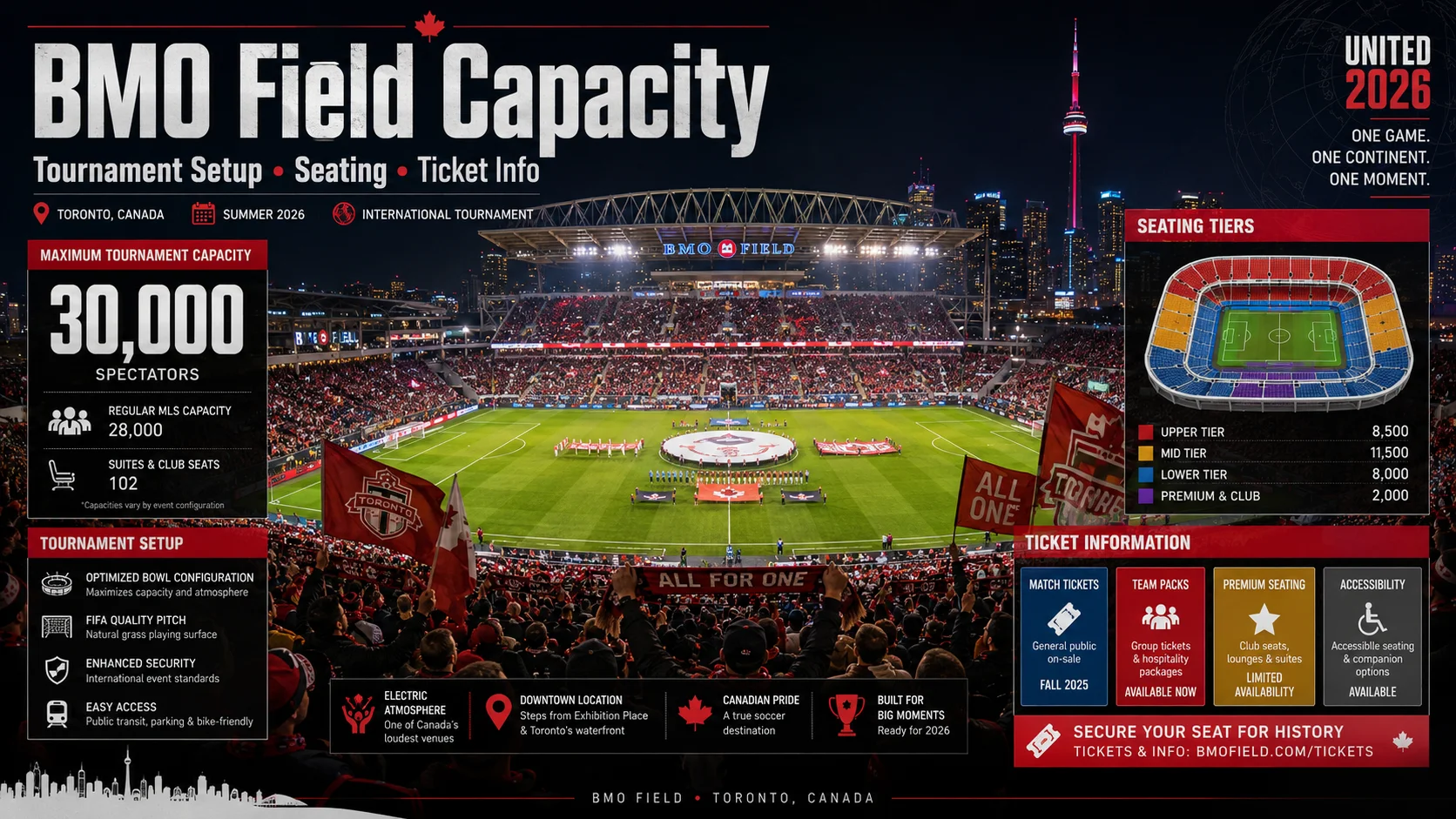
BMO Field capacity for World Cup 2026 is about 45,000 after Toronto Stadium’s temporary seating expansion. The number matters because Toronto hosts six matches, including Canada’s opening match and one Round of 32 fixture. Fans should treat capacity as a ticket-planning clue, not a guarantee of availability.
FIFA says the upgraded venue increased capacity to approximately 45,000 through temporary seating. Normal soccer capacity sits around 30,000, so the tournament setup creates a much larger matchday footprint. The extra seats support FIFA requirements, hospitality spaces, broadcast needs, and the larger security operation around Exhibition Place.
| Configuration | Capacity |
|---|---|
| FIFA World Cup 2026 Tournament | Approximately 45,000 |
| Standard Stadium Capacity | About 30,000 for soccer |
| Record Attendance | 36,045, Toronto FC v Seattle Sounders, MLS Cup 2016 |
| Temporary Seats Added | Temporary expansion to reach about 45,000 |
| Accessible Seating | yet to be confirmed |
BMO Field Capacity for FIFA World Cup 2026
BMO Field capacity Overview
BMO Field capacity rises to about 45,000 for World Cup 2026. FIFA’s March 2026 update says Toronto Stadium completed major upgrades and expanded through temporary seating. The work also included a new pitch, dugout areas, player facilities, hospitality spaces, and broadcast upgrades. Those changes make the venue tournament-ready without turning every improvement into permanent seating.
The stadium will stage five group matches and one Round of 32 match. Canada’s June 12 opener should create the strongest local ticket demand at the venue. Later group matches can still draw heavy demand if traveling fan bases arrive in large numbers. The Round of 32 adds knockout urgency, with teams confirmed only after the group stage.
Standard vs Tournament Capacity at BMO Field
BMO Field normally holds about 30,000 fans for soccer. Toronto FC’s renovation notes say the earlier expansion raised seating capacity to 30,000, with temporary seating possible for larger events. World Cup 2026 pushes that idea further, adding temporary tournament capacity around the existing soccer-specific bowl. The result is a bigger stadium footprint than fans see for regular club matches.
Temporary seats do not make normal BMO Field matchdays a 45,000-seat event. FIFA’s tournament setup is tied to the World Cup operating plan. Seats, circulation, media requirements, and security zones can all change normal fan movement. Use the BMO Field seating map before comparing standard sections with tournament ticket categories.
Ticket Demand and Sellout Likelihood
At about 45,000 seats per match, Toronto still has the smallest World Cup 2026 capacity among the host venues cited by current venue guides. That smaller supply matters for Canada’s opening match, because local demand and traveling support meet in one stadium. Fans should use the FIFA World Cup 2026 ticket guide before judging resale offers or unofficial listings. Ticket categories and availability can change by sales phase.
The Round of 32 match may also tighten late demand. Fans will not know the teams until group results settle, so neutral buyers and supporters can move quickly. Group-stage matches without Canada may offer a different demand pattern, yet limited venue size still matters. Use the World Cup 2026 schedule to compare dates before booking.
Capacity Comparison: How BMO Field Compares
BMO Field is smaller than the NFL and large multi-purpose venues used across the tournament. Current venue coverage lists Toronto Stadium as the smallest World Cup 2026 host venue. That does not make it less useful for fans, because the soccer-specific design keeps many seats closer to the pitch. It does mean each match has fewer available seats than larger venues in the United States or Mexico.
Accessibility and Dedicated Seating
Frequently Asked Questions
Frequently Asked Questions
Frequently Asked Questions
Frequently Asked Questions
Frequently Asked Questions
Frequently Asked Questions
What is the official BMO Field capacity for World Cup 2026?
FIFA lists the official BMO Field capacity for the tournament in its venue specifications. The tournament configuration may differ from the standard domestic capacity. Fans should use the FIFA figure when planning their ticket purchase.
How does World Cup capacity differ from the standard capacity?
FIFA tournaments require additional space for camera platforms, media operations, and security zones. These areas reduce the seats available to the general public. The tournament seating map from FIFA provides the most accurate fan-facing figure.
How does ticket demand vary by match at this stadium?
Group-stage matches featuring popular nations sell out fastest. Knockout matches attract neutral buyers on top of the original supporter base. Fans should prepare backup ticket categories in case first-choice seats are unavailable.
How do fans travel to BMO Field on matchday?
Taking GO Transit Lakeshore West to Exhibition GO Station is the most reliable matchday travel option. Services increase in frequency on match days across the tournament schedule. Fans driving to the venue must pre-book official parking well in advance.
Conclusion
BMO Field capacity for World Cup 2026 is about 45,000, with temporary seating supporting six Toronto matches. The venue hosts Canada’s opener, five group games total, and one Round of 32 match. Smaller supply compared with larger tournament venues makes early ticket planning important.
Check the full stadium guide, official ticket channels, and fixture dates before committing to a seat. Capacity tells you the rough scale, but demand depends on the match, the teams, and the sales phase. Treat Toronto Stadium as a compact high-demand venue.
