
Rose Bowl Stadium Capacity and Layout Guide

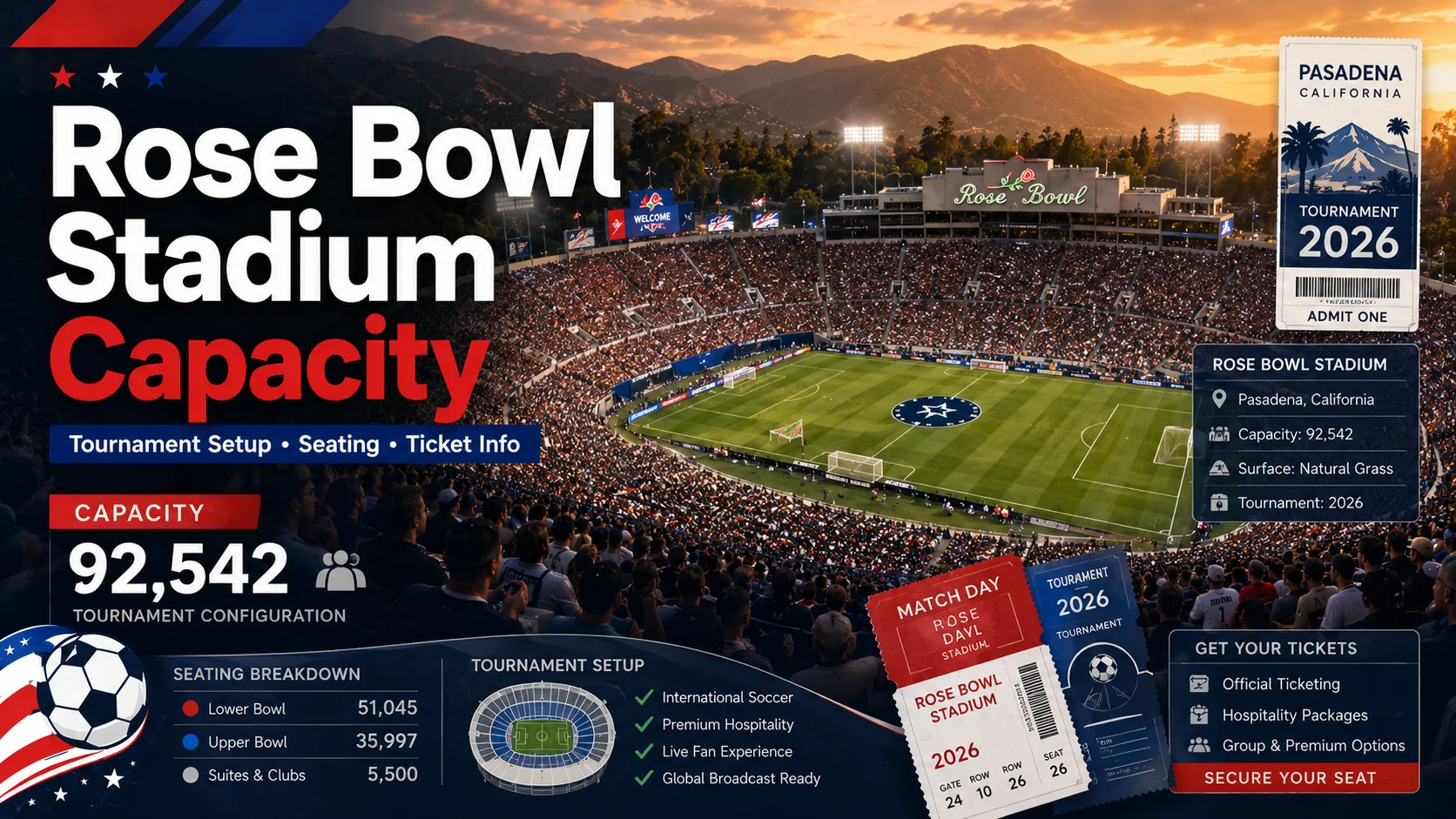
Rose Bowl Stadium capacity is best understood as a range shaped by event setup, seating use, and ticket configuration. Recent college football listings commonly show 88,565 seats, while other venue databases list higher figures for broader stadium configurations. Fans should treat capacity as event-specific before buying tickets for Pasadena events.
The venue’s World Cup history also creates confusion for 2026 searches. Rose Bowl Stadium hosted the 1994 men’s final and the 1999 women’s final, but it is not a FIFA World Cup 2026 match venue. Los Angeles 2026 matches are scheduled for Los Angeles Stadium in Inglewood.
Rose Bowl Stadium Capacity Overview
Rose Bowl Stadium sits among the largest college football venues in the United States. Public capacity references do not all match because the stadium has changed through renovations, seat-use decisions, premium areas, and event layouts. A practical fan guide should explain the difference instead of pretending one number covers every event.
Current football capacity is commonly listed at 88,565 in recent college football datasets. Some stadium guides still cite 92,542, while other references show figures near 89,702. Those differences reflect configuration, reporting date, and whether a source counts all possible seating or a specific football setup.
| Capacity Reference | Listed Number | How Fans Should Read It |
|---|---|---|
| Recent college football listing | 88,565 | Useful for UCLA football and modern football planning |
| Large stadium guide listing | 92,542 | Often reflects broader venue seating references |
| All-seated public reference | 89,702 | Another common modern capacity figure |
| Event-specific capacity | yet to be confirmed | Depends on ticket manifest, media, and operations |
Why Rose Bowl Capacity Numbers Vary
The Rose Bowl opened in 1922 and has been expanded, modified, and renovated across many eras. Older layouts held more than many modern events can use. Later seating changes, premium areas, accessibility requirements, and operational needs reduced or reshaped sellable capacity.
Capacity also changes by event type. A football game uses a different operating plan than a soccer match, a concert, or a special tournament event. Broadcast platforms, security buffers, team areas, stage builds, and hospitality zones can remove seats from public sale.
Rose Bowl Stadium capacity for soccer
Soccer capacity at Rose Bowl Stadium depends on the competition and pitch setup. Major soccer events may need broadcast positions, team benches, media compounds, and security zones that affect available seats. The stadium can still handle huge crowds, but the final ticket number belongs to the event organizer.
Fans should also separate history from current tournament planning. The Rose Bowl’s soccer legacy is real because it staged two World Cup finals. Still, 2026 World Cup ticket capacity in Los Angeles belongs to the Inglewood venue, not Pasadena.
Tournament Setup and Ticket Planning
| Setup Factor | Capacity Impact | Ticket Buyer Note |
|---|---|---|
| Broadcast positions | Can block or remove seat areas | Check sight-line warnings |
| Team and competition zones | Can reserve lower-bowl areas | Availability changes by event |
| Hospitality spaces | Can convert regular inventory | Premium tickets may sell separately |
| Concert stages | Can remove one end or add floor seats | Use the event-specific chart |
| Accessibility layouts | Can reshape companion seating | Confirm before purchase |
Capacity by Event Type
| Event Type | Typical Capacity Logic | What To Check |
|---|---|---|
| UCLA football | Modern football seating reference | Section map and gate assignment |
| Rose Bowl Game | Large football event setup | Ticket manifest and shuttle plan |
| Soccer match | Field setup with media and team zones | Official competition seating chart |
| Concert | Stage build changes inventory | Artist-specific seat map |
| Private or special event | Custom layout | Organizer details |
World Cup 2026 Capacity Note
Ticket Info and Seat Selection Tips
Transport should also guide seat choice. The Rose Bowl can move crowds slowly after full-capacity events, so your gate and parking or shuttle plan matter. Use our Rose Bowl Stadium seating map and Rose Bowl Stadium transit guide before buying tickets.
Frequently Asked Questions
Frequently Asked Questions
Frequently Asked Questions
Frequently Asked Questions
Frequently Asked Questions
Frequently Asked Questions
What is the official Rose Bowl Stadium capacity for World Cup 2026?
FIFA lists the official Rose Bowl Stadium capacity for the tournament in its venue specifications. The tournament configuration may differ from the standard domestic capacity. Fans should use the FIFA figure when planning their ticket purchase.
How does World Cup capacity differ from the standard capacity?
FIFA tournaments require additional space for camera platforms, media operations, and security zones. These areas reduce the seats available to the general public. The tournament seating map from FIFA provides the most accurate fan-facing figure.
How does ticket demand vary by match at this stadium?
Group-stage matches featuring popular nations sell out fastest. Knockout matches attract neutral buyers on top of the original supporter base. Fans should prepare backup ticket categories in case first-choice seats are unavailable.
How do fans travel to Rose Bowl Stadium on matchday?
Taking Metro A Line to Memorial Park Station is the most reliable matchday travel option. Services increase in frequency on match days across the tournament schedule. Fans driving to the venue must pre-book official parking well in advance.
Conclusion
Rose Bowl Stadium capacity is not one fixed number for every fan situation. Recent football references commonly use 88,565, while other public listings show different capacities because the stadium changes by setup. Pasadena event buyers should use the event-specific seating chart, and World Cup 2026 buyers should use Los Angeles Stadium information instead.
