Complete NRG Stadium Guide

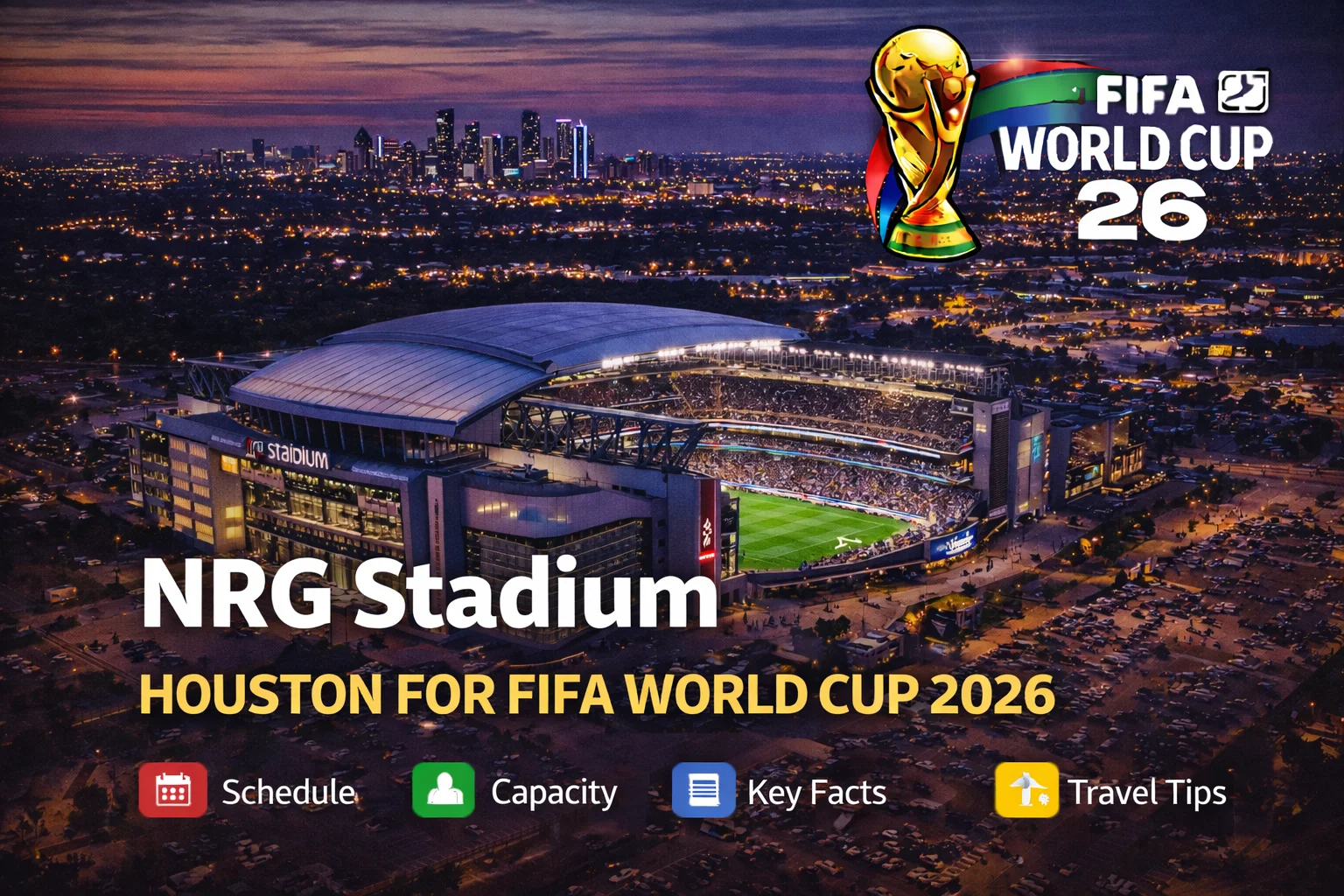
NRG Stadium is set to be one of the headline venues of the FIFA World Cup 2026, bringing the tournament’s energy straight to Houston. As the excitement builds across North America, this modern arena stands ready to host seven matches, including group-stage fixtures and two knockout games. During the tournament, you may also see it branded as Houston Stadium, which is common for major international events.
If you are planning a trip, timing match tickets, or simply want to understand the venue better, this guide brings everything together in one place. You will find the full Houston match schedule, capacity details, a clear stadium history, fun facts worth sharing, and practical travel tips that help your matchday run smoothly. Most importantly, it is written to help fans from everywhere feel prepared and confident.
NRG Stadium at a glance for the World Cup
NRG Stadium sits inside the larger NRG Park complex, which also includes other event spaces and exhibition halls. It is best known as the home of the NFL’s Houston Texans, yet it was built to handle far more than football. The World Cup brings big crowds and global attention, the stadium’s size, crowd flow, and flexible design are major advantages.
| Feature | Detail |
|---|---|
| World Cup event name | Houston Stadium |
| Opened | 2002 |
| Original name | Reliant Stadium |
| Renamed | 2014 (NRG Stadium) |
| Roof | Retractable roof |
| Standard capacity | 72,220 |
| Expanded capacity | Around 80,000 for major occasions |
| Luxury suites | 198 |
| World Cup matches | 7 total (5 group stage, 2 knockout) |
| Record crowd noted | Over 80,000 (concert in 2019) |
Exploring NRG Stadium as a FIFA World Cup venue
NRG Stadium is one of the host venues across the tournament’s three countries, and it is a major stop on the United States schedule. It will welcome international crowds to Texas and deliver seven matchdays of World Cup atmosphere.
Just as importantly, its retractable roof offers a practical edge during the summer tournament window. Houston can be hot and humid, and weather can shift quickly. Because the roof can open or close in about seven minutes, the venue can respond fast and keep the match experience comfortable.
In addition, the stadium was designed for smooth movement. With multiple entry points and wide concourses, it is built to manage large surges before kickoff and at halftime. That matters when tens of thousands of fans arrive within the same short window.
NRG Stadium layout, seating levels, and what to expect
NRG Stadium’s design focuses on sightlines and fan comfort, which is why it consistently handles major events. Even so, choosing the right level can shape your match experience, especially for soccer.
Lower bowl seating breakdown
Lower bowl sections bring you closer to the pitch and the players. You feel the pace, the tackles, and the emotion more directly. Lower entries can also stack quickly at security, so arriving early is a smart move.
Club level seating breakdown
Club levels offer premium amenities, including lounges and upgraded concessions. For many fans, the biggest benefit is how the space can feel more managed during busy moments. If you want a more comfortable halftime experience, club areas can help.
Upper tier seating breakdown
Upper tiers deliver panoramic views that can make the game easier to read. You can track team shape, passing lanes, and movement off the ball more clearly. The overall stadium atmosphere often feels huge from up high, especially during big moments.
NRG Stadium capacity for World Cup matches
For standard sporting events, NRG Stadium holds 72,220 fans. For major occasions, it can expand to around 80,000 with configuration changes. This flexibility helps the venue scale for different event demands, including global tournaments.
During the World Cup, seating and stadium operations will follow FIFA event rules and matchday requirements. In addition, match operations will be planned to manage very large international crowds, especially for high-demand fixtures.
NRG Stadium World Cup 2026 match schedule in Houston
Houston will host seven matches at NRG Stadium: five group-stage games plus two knockout-round fixtures. The slate includes global powerhouses and opponents still to be confirmed through qualification pathways, which is normal at this stage.
Full Houston match timetable
| Date | Match | Stage | Kickoff Time (Local) |
|---|---|---|---|
| June 14, 2026 | Germany vs Curaçao | Group E | 1:00 PM |
| June 17, 2026 | Portugal vs Congo DR/Jamaica/New Caledonia | Group K | 12:00 PM |
| June 20, 2026 | Netherlands vs Ukraine/Sweden/Poland/Albania | Group F | 1:00 PM |
| June 23, 2026 | Portugal vs Uzbekistan | Group K | 1:00 PM |
| June 26, 2026 | Cabo Verde vs Saudi Arabia | Group H | 8:00 PM |
| June 29, 2026 | Round of 32 (TBD) | Knockout | TBD |
| July 4, 2026 | Round of 16 (TBD) | Knockout | TBD |
This schedule includes group-stage matchups and two knockout dates that will define who moves closer to the trophy. It also features Portugal twice, which is one reason Houston’s matches have drawn heavy attention.
Match timing notes that affect your whole day
Several Houston matches are listed around midday local time, which changes how you plan everything. You will want to eat earlier, travel earlier, and expect heavier transit demand before noon. At the same time, the heat and humidity can feel stronger during the middle of the day, so hydration becomes part of your match plan.
Demand and ticket interest in early 2026
As of early 2026, ticket demand has surged, with over 20 million requests globally. Houston’s games are among the most sought-after, which signals how big this venue’s World Cup moment will be. Because of that, planning early helps with both travel choices and matchday logistics.
NRG Stadium history: from Reliant to a global tournament stage
NRG Stadium’s story began with construction starting in 2000, leading to an opening in 2002. It originally opened as Reliant Stadium, and it replaced the iconic Astrodome to meet modern event needs. The project cost around 352 million dollars and involved public-private funding.
In March 2014, the stadium was renamed NRG Stadium after a naming rights agreement. Since then, upgrades have included high-definition video boards and improved accessibility, helping it keep pace with modern expectations.
Major milestones that shaped the venue’s reputation
NRG Stadium earned national attention early by hosting Super Bowl XXXVIII in 2004. Later, it hosted Super Bowl LI in 2017, remembered for a dramatic overtime finish. Beyond football, the stadium is closely tied to the Houston Livestock Show and Rodeo, which draws massive annual crowds and turns the venue into a cultural showcase.
In addition, the stadium is built for flexibility. It covers 1.9 million square feet and was designed to handle many event formats at scale.
Playing surface notes for the World Cup
The stadium uses a permanent, modern synthetic turf surface for many events. yet, for the 2026 World Cup, the playing surface will be converted to natural grass to meet FIFA standards. That change is a key behind-the-scenes step toward a soccer-first match experience.
Fun facts and unique features worth knowing
NRG Stadium has plenty of details that make it more than just another large arena. These are the kinds of facts fans love to share on matchday.
Retractable roof and engineering highlights
The roof can open or close in about seven minutes, which is an impressive feat of engineering for a venue of this size. Supporting it are two massive supertrusses, each measuring 960 feet long, helping define the stadium’s iconic structure.
Size, suites, and versatility
The playing surface spans about 97,000 square feet and can be converted for different sports and event types. In addition, the stadium includes 198 luxury suites, built for premium viewing and major-event hosting.
Record moments and crowd energy
A 2019 concert drew more than 80,000 attendees, setting a noted attendance high. At the same time, rodeo events regularly transform the stadium into a completely different world, blending livestock shows with major performances. That versatility is part of why the venue is trusted for global events. You can check also AT&T Stadium.
Essential travel tips for visiting NRG Stadium in 2026
Houston is large and spread out, so matchday gets easier when you plan your base area and transportation early. Summer conditions can also be intense, with heat and humidity shaping your comfort outside the stadium.
Best ways to get to the venue
The METRORail Red Line is a top option because it goes directly to Stadium Park station near NRG Park. This helps you avoid heavy traffic around Interstate 610, which can become crowded on major event days.
Rideshare is another option, yet demand surges after matches. If you choose it, plan for crowded pickup zones and slower exits once the final whistle blows.
Driving is possible, but it comes with stress. Pre-booking parking is described as mandatory due to limits, and pricing can exceed $50 per event. If you drive, arrive early and plan your exit route before kickoff.
Where to stay for the best balance of access and atmosphere
Hotels and rentals along the rail line make matchdays simpler. Many fans look at the Medical Center area or Downtown because both connect well and offer plenty to do.
You can also choose neighborhoods based on the vibe you want:
- Downtown for restaurants, bars, and late-night energy
- Museum District for a greener, more cultural feel
- Montrose and the Heights for local dining and boutique shopping
- EaDo for a lively setting tied to fan activities
Because demand is expected to be high, booking early can make a big difference in both price and availability.
Weather, crowds, and what to bring
Houston’s World Cup window falls in hot, humid months, with average highs in the mid-90s°F (35°C). Pack lightweight clothing, use sun protection, and prioritize hydration. Hydration stations are available, yet bringing a refillable bottle can still be helpful.
Also, build extra time for security. Large matches bring long entry lines, and arriving early reduces stress and gives you time to enjoy the pre-match atmosphere.
Stadium rules, safety, and etiquette basics
Plan around a clear bag policy and size limits. Cashless payments may be required, so be ready to tap or use mobile pay. Emergency services are on-site, which helps support a safe matchday environment.
Fan experiences beyond the stadium
The World Cup feeling in Houston is expected to stretch well beyond the gates. The city already has a strong soccer base, powered by Houston Dynamo FC and Houston Dash. That local support helps create an energetic crowd that understands the sport.
FIFA Fan Festival energy and watch-party culture
Houston plans to integrate the official FIFA Fan Festival into East Downtown (EaDo), aiming for a “Football Fiesta” atmosphere that reflects the city’s strong Hispanic influences. Expect big screens, international food, live entertainment, and interactive football activities spread across the district.
For match viewing without a ticket, places like Pitch 25 and classic soccer pubs such as The Phoenix on Westheimer are highlighted as lively hubs. In addition, bars like The Hay Merchant are also mentioned as strong options for soaking up the atmosphere.
Food and downtime planning
Near the venue, you can explore Tex-Mex or barbecue spots, and food trucks often show up in fan zones. Downtown also offers diverse dining choices, which can round out the trip between matchdays.
Matchday checklist for a smoother NRG Stadium experience
| When | What to do |
|---|---|
| 7–14 days before | Confirm ticket details, match time, and stadium rules. |
| 48 hours before | Lock your transit plan and save maps and key addresses. |
| Match morning | Eat earlier for noon kickoffs, hydrate, and leave with extra time. |
| Arrival | Expect security lines and plan your entry gate. |
| Post-match | Let crowds thin, then head to rail or your planned pickup point. |
FAQs
Final thoughts
NRG Stadium is built for huge moments, and the 2026 World Cup will be one of its biggest yet. With seven matches, a flexible roof, a massive seating bowl, and a proven history of hosting world-class events, Houston’s tournament stage is ready. If you plan transport, weather, and timing with care, you will spend less time worrying and more time enjoying the football, the city, and the once-in-a-lifetime World Cup atmosphere.