
Estadio Azteca Capacity and Layout Guide

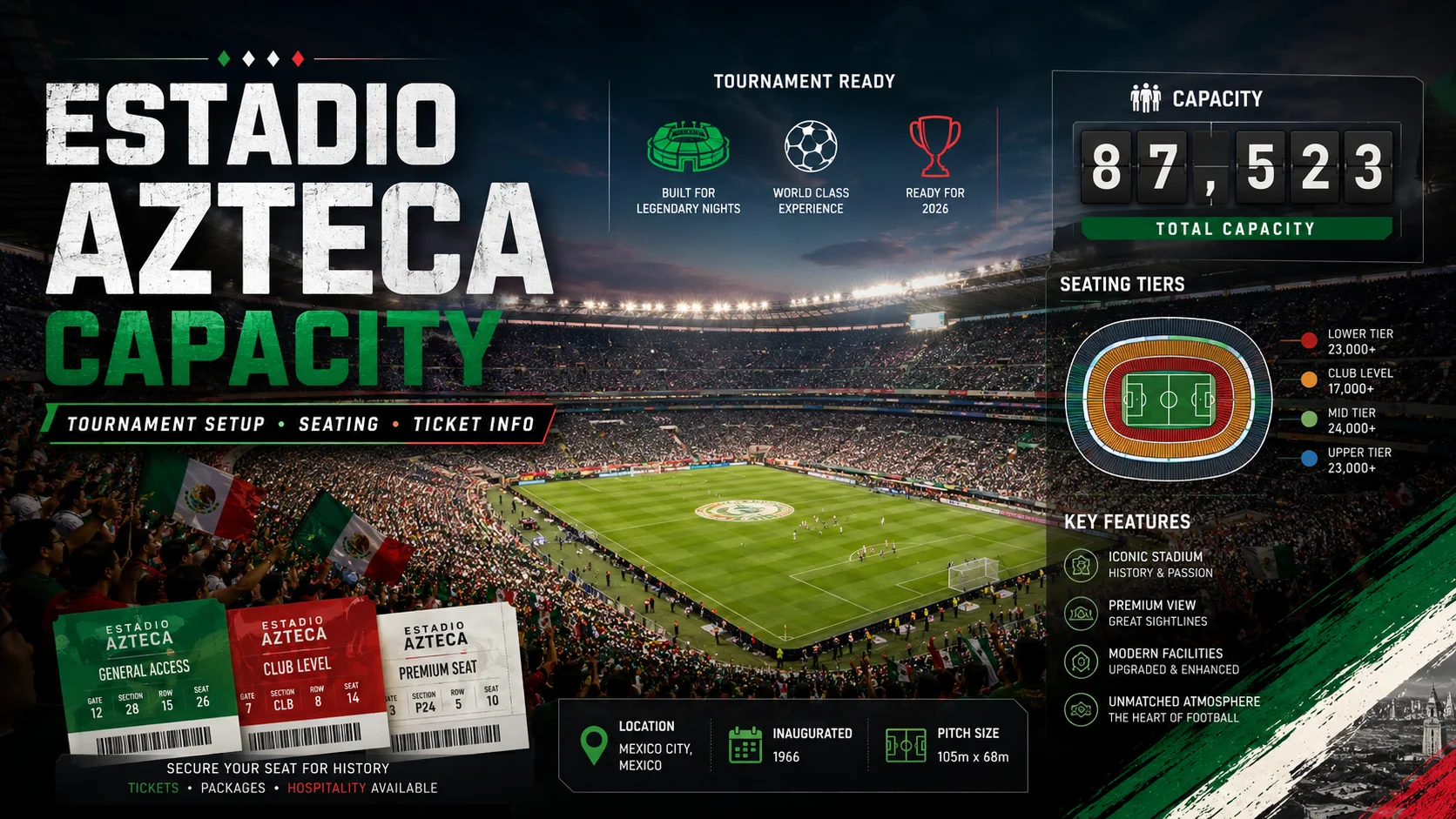
Estadio Azteca capacity for FIFA World Cup 2026 is listed at 72,766. That tournament number matters because ticket supply, seat categories, media areas, security space, and accessibility platforms all sit inside the final matchday setup.
The full Estadio Azteca World Cup 2026 guide covers the venue history, schedule, and location basics. This capacity guide focuses on the confirmed FIFA figure, standard stadium size, record attendance, and practical ticket planning.
FIFA uses the tournament name Mexico City Stadium and lists the address at Calzada de Tlalpan 3465 in Santa Ursula Coapa. The same venue hosts five matches, including the opening match and two knockout fixtures, so capacity will shape demand across several different match profiles.
| Configuration | Capacity |
|---|---|
| FIFA World Cup 2026 tournament setup | 72,766 |
| Standard stadium capacity | About 87,000 |
| Record attendance | 132,274, Julio Cesar Chavez vs Greg Haugen, 1993 |
| Temporary seats added | N/A |
| Accessible seating | yet to be confirmed |
Estadio Azteca capacity
Estadio Azteca capacity Overview
FIFA’s current tournament capacity for Mexico City Stadium is 72,766, with the note that net capacity can change because of ongoing configuration. That figure is the number fans should use when thinking about World Cup ticket supply.
The tournament setup does not simply copy the normal football layout. World Cup operations require camera platforms, media seats, hospitality inventory, team areas, security routes, accessibility spaces, and broadcast infrastructure that can reduce public inventory.
Estadio Azteca will stage Mexico’s opening match on June 11, another Mexico group game on June 24, a third group match, one Round of 32 match, and one Round of 16 match. Since those fixtures span group and knockout rounds, demand will not feel the same on every date.
Standard vs Tournament Capacity at Estadio Azteca
Standard public capacity listings place Estadio Azteca at about 87,000 after its latest renovation period. StadiumDB lists the current capacity at 87,000 and notes renovation work from 2024 to 2026.
The FIFA number is lower because World Cup net capacity counts the event-ready layout, not the largest possible stadium crowd. That difference matters when fans compare old Azteca crowds with available ticket inventory for 2026.
The venue once held more than 100,000 spectators, but modern seating, safety standards, premium areas, and tournament operations have changed the count. Fans should treat 72,766 as the official planning figure for World Cup 2026.
Ticket Demand and Sellout Likelihood
Each Mexico City Stadium match has a large seat base, yet the opening match should carry the highest pressure. Mexico will start the tournament there, and opening ceremonies often attract visitors beyond normal match-going supporters.
The June 24 Mexico group match should also draw heavy demand because the host nation returns to the capital. The Round of 32 and Round of 16 fixtures should depend on teams, bracket path, and travel demand once the tournament field settles.
Fans should use the FIFA World Cup 2026 ticket guide before comparing price categories or resale claims. Capacity does not guarantee availability, and official channels remain the safer route for high-demand matches.
Capacity Comparison – How Estadio Azteca Ranks
Using FIFA’s listed 2026 stadium capacities, Estadio Azteca ranks among the largest venues in the tournament. New York New Jersey Stadium leads the list at 78,576, while Mexico City Stadium follows with 72,766.
That puts Estadio Azteca ahead of Dallas Stadium at 70,122, Los Angeles Stadium at 69,650, and San Francisco Bay Area Stadium at 69,391. The difference gives Mexico City one of the biggest matchday crowds in the 16-venue footprint.
Fans comparing all 16 FIFA World Cup 2026 stadiums should separate total capacity from ticket access. A larger venue can still feel harder to enter when the host nation plays or a knockout matchup draws global demand.
Accessibility and Dedicated Seating
Match Schedule Impact on Capacity Demand
Frequently Asked Questions
Frequently Asked Questions
Frequently Asked Questions
Frequently Asked Questions
Frequently Asked Questions
Frequently Asked Questions
What is the official Estadio Azteca capacity for World Cup 2026?
FIFA lists the official Estadio Azteca capacity for the tournament in its venue specifications. The tournament configuration may differ from the standard domestic capacity. Fans should use the FIFA figure when planning their ticket purchase.
How does World Cup capacity differ from the standard capacity?
FIFA tournaments require additional space for camera platforms, media operations, and security zones. These areas reduce the seats available to the general public. The tournament seating map from FIFA provides the most accurate fan-facing figure.
How does ticket demand vary by match at this stadium?
Group-stage matches featuring popular nations sell out fastest. Knockout matches attract neutral buyers on top of the original supporter base. Fans should prepare backup ticket categories in case first-choice seats are unavailable.
How do fans travel to Estadio Azteca on matchday?
Taking Xochimilco Light Rail to Estadio Azteca Station is the most reliable matchday travel option. Services increase in frequency on match days across the tournament schedule. Fans driving to the venue must pre-book official parking well in advance.
Conclusion
Estadio Azteca capacity is confirmed at 72,766 for the FIFA World Cup 2026 tournament setup. That number will frame ticket demand for five Mexico City matches, including the opening match, a Round of 32 fixture, and a Round of 16 fixture.
Fans should plan around the official FIFA capacity, not historic Azteca crowd records. Check ticket category details, seat location, accessibility needs, and match stage before committing to any purchase.
