Most FIFA World Cup Goals by a Midfielder in History

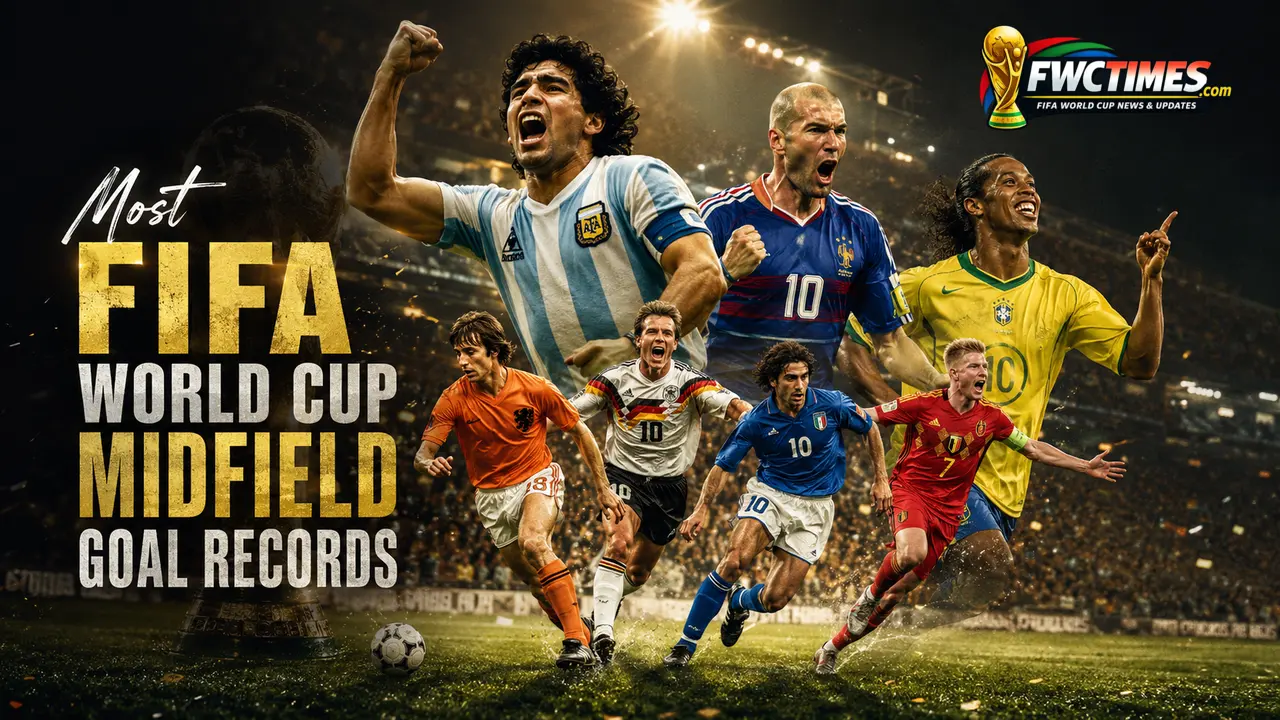
Strikers usually dominate the goalscoring charts in tournament football. Midfielders also make crucial contributions from deeper positions. This article covers the most FIFA World Cup goals by a midfielder in history to honor these versatile players. Technical skill and stamina define these midfield goalscorers.Teófilo Cubillas of Peru holds the record for the most FIFA World Cup goals by a midfielder, scoring ten times. He achieved this tally across three different tournaments.
Ranking the Most FIFA World Cup Goals by a Midfielder
Identifying midfielders in historical statistics can be challenging due to changing team setups. Some attacking midfielders played almost as strikers. The most prolific goalscoring midfielders in tournament history are presented.
| Rank | Player | Country | Goals | Matches |
|---|---|---|---|---|
| 1 | Teófilo Cubillas | Peru | 10 | 13 |
| 2 | Pelé | Brazil | 12 | 14 |
| 3 | Zinedine Zidane | France | 5 | 12 |
| 3 | Johan Neeskens | Netherlands | 5 | 12 |
| 3 | Paul Breitner | Germany | 5 | 14 |
| 6 | Michel Platini | France | 5 | 14 |
The list highlights players who combined playmaking with goalscoring. They were vital for their teams' tactical setups. They scored crucial goals in knockout matches. Modern midfielders study their play to improve their game.Midfielders must possess exceptional shooting technique. They often arrive late in the penalty area to exploit space. Opposing defenders find it difficult to track their runs. The stats show their immense value.Each player on this list brought unique qualities. Some were set-piece experts who scored free-kicks. Others were box-to-box runners who dominated physical battles. They are remembered as icons of the sport.
Teófilo Cubillas Peruvian Legend
Teófilo Cubillas is widely considered the greatest Peruvian player in history. He scored ten goals in thirteen matches. He scored five goals in 1970 and five goals in 1978.His playing style combined passing ability with clinical shooting. He was famous for his free-kick technique and runs from midfield. He was a complete attacking midfielder who led his team with distinction. Cubillas remains a national hero in Peru.His goals were crucial to Peru reaching the quarter-finals twice. He excelled at shooting from distance. Strikers created space for his late runs into the box. Cubillas set a record that remains unbroken for midfielders.He was highly consistent across two decades of play. His free-kicks were studied by opponents. He played with a joy that defined South American football. Cubillas remains an inspiration for young playmakers.His performances in 1970 established his international reputation. He was named the best young player of that tournament. His dedication to Peruvian football remains legendary. Cubillas is a true sports icon.
Pelé Attacking Playmaker Role
Pelé is often categorized as a forward. Still, he played a creative role in 1970 that resembled an attacking midfielder. He scored twelve goals across four tournaments. He was the main creative force for Brazil.His vision allowed him to create goals for teammates while scoring himself. He played in deeper areas to start attacks. His total of twelve goals puts him high on this discussional list. He remains a symbol of football excellence.His performance in the 1970 final was legendary. He scored a header and made two assists. He showed that a creative player can dominate matches from any position. Pelé remains a reference point for all playmakers.He combined physical strength with technical dominance. He knew when to drive forward and when to pass. The 1970 Brazilian team was built around his vision. Pelé remains a legend of the sport.His playmaking abilities were as valuable as his goals. He could read the game faster than anyone else. His passes were always perfectly timed. Pelé remains the greatest playmaker in history.
Zinedine Zidane Midfield Master
Zinedine Zidane scored five goals during his career for France. His most famous goals came in the 1998 final on home soil. He scored two headers to secure the title against Brazil.His coach
Didier Deschampsplayed alongside him in midfield. Zidane also scored in the 2006 final against Italy. He showed that midfielders can decide matches on the biggest stage.His style was defined by control and vision. He was the tactical leader of the French team for a decade. His ability to perform in finals cemented his legacy. Zidane remains one of the finest midfielders in history.He played with elegant composure under intense pressure. His movements on the ball were highly coordinated. Zidane led France to European and global triumphs during his career. He is a historic French player.His performance against Brazil in 2006 was a masterpiece. He controlled the entire pitch with his passing. His skills are studied by midfielders worldwide. Zidane remains a global football legend.
Breitner and Neeskens Total Football Icons
Paul Breitner of Germany and Johan Neeskens of the Netherlands scored five goals each. They played key roles during the 1970s. Both players competed in the famous 1974 final.Neeskens was the penalty taker for the Dutch team. Breitner scored the equalizer for Germany in that final. Both players combined defensive work with attacking runs. They showed that midfielders must be complete players.They were key to the tactical systems of their teams. Their energy allowed them to cover the pitch. They set a high standard for modern box-to-box midfielders. Their goals contribute to their legendary status.Neeskens played with high intensity and physical commitment. Breitner was famous for his tactical intelligence. Both players were leaders on the pitch. They represent the peak of 1970s midfield play.Their work rate was exceptional in every match. They could win tackles and immediately start attacks. Their tactical versatility was a major asset. They remain models of Total Football.
Michel Platini French Playmaker
Michel Platini scored five goals for France in World Cup history. He was the creative symbol of the team in the 1980s. He led France to the semi-finals in 1982 and 1986.He was famous for his passing range and set-piece delivery. He scored crucial goals against West Germany and Brazil. Platini showed that attacking midfielders can carry their teams. He remains a legend of French football.His vision allowed him to dominate matches from a central position. He captained his country with confidence. Platini's goals contribute to his reputation as one of the finest playmakers. He is highly respected.His style was elegant and intelligent. He could score goals from any position around the box. French football reached new levels under his leadership. Platini remains an iconic figure.
Midfielders to Watch in 2026
The upcoming tournament will feature outstanding creative players. Active midfielders will look to rise up this ranking. They possess the shooting range to score from distance.South American nations like
Ecuadorwill rely on their midfield goalscorers. The expanded format will feature forty-eight teams. This setup will provide more matches for players. The journey to the
FIFA World Cup 2026will be exciting.Midfielders must cover a lot of ground in modern systems. They must contribute to defense while attacking. The tactical demands are higher than ever before. We will see who stands out in North America.Tactical setups will emphasize midfield control. Teams will prepare extensively to neutralize creative players. Takers must find space to influence matches. The competition will be thrilling.
Frequently Asked Questions
Who has the most goals by a midfielder in World Cup history?
Teófilo Cubillas of Peru holds the record for the most goals by a midfielder in World Cup history, scoring 10 goals in 13 matches. He scored five goals in both the 1970 and 1978 tournaments.
Did Zinedine Zidane score in a World Cup final?
Yes, Zinedine Zidane scored three goals in World Cup finals. He scored twice in the 1998 final against Brazil and once in the 2006 final against Italy.
How many goals did Pelé score at the World Cup?
Pelé scored 12 goals in 14 appearances at the World Cup. He scored in four different editions of the tournament between 1958 and 1970.
Who is the top midfielder scorer for Germany?
Paul Breitner is one of Germany’s top midfielder scorers at the World Cup with 5 goals. He scored in both the 1974 and 1982 finals.
Conclusion
Midfielders will always play a key role in deciding matches on the pitch. The ranking of the most FIFA World Cup goals by a midfielder highlights legends who combined creative duties with clinical finishing. The next tournament in North America will surely bring new midfield stories.Stay tuned to FWCTimes.com for the latest FIFA World Cup 2026 updates.Read Also:
Germany World Cup Stats, Goals, Titles and All-Time Records