Women’s World Cup 2027 Extra-Time Rules Explained

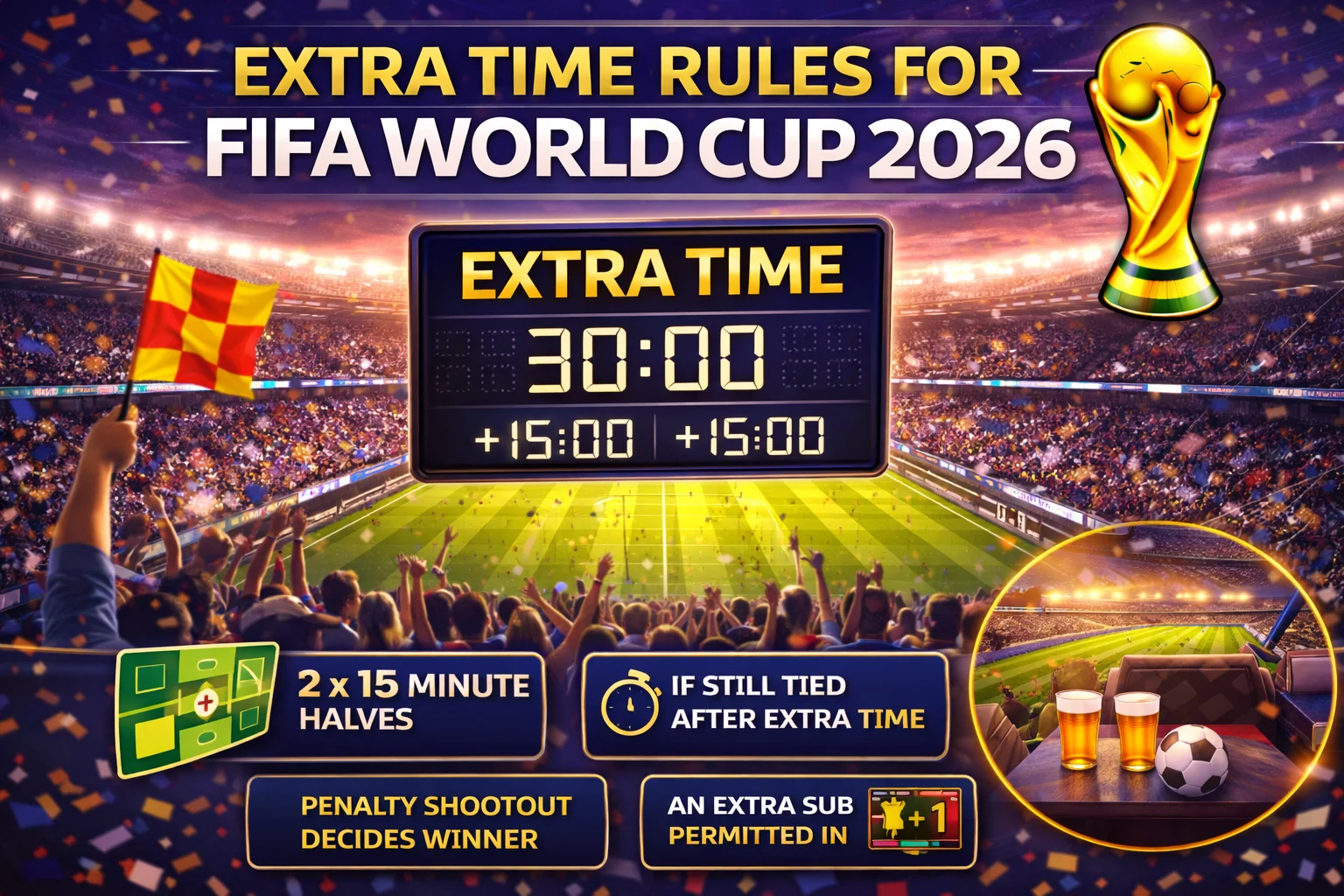
A Women’s World Cup knockout match that is level after normal time can be decided with two equal periods of extra time, each no longer than 15 minutes, followed by a penalty shoot-out if the score remains tied. Those are the procedures permitted by the current IFAB Laws of the Game. The final FIFA Women’s World Cup Brazil 2027 competition regulations will determine exactly how they apply to the tournament.
Extra-time rules at a glance
| Stage | Current rule |
|---|---|
| Normal time | Two 45-minute halves plus time added by the referee |
| Extra time | Two equal periods, each no longer than 15 minutes |
| Golden goal | Not one of the procedures permitted by the current Laws |
| Still level | Penalty shoot-out, if required by the competition rules |
| Extra substitution | Only if the competition regulations permit it |
The primary source is IFAB Law 10: Determining the Outcome of a Match. It allows competition rules to use two equal extra-time periods of no more than 15 minutes and a penalty shoot-out to decide a drawn match.
Do teams play the full 30 minutes?
When a competition uses the maximum permitted extra-time length, teams play two 15-minute periods. A goal does not end the match immediately. The current Laws do not include the former golden-goal or silver-goal procedures, so play continues until the extra-time periods and any time added by the referee are complete.
The referee can add time for substitutions, injuries, disciplinary sanctions, time-wasting and other permitted stoppages. IFAB also permits a short drinks break of no more than one minute at the interval between the two extra-time periods. See IFAB Law 7 for the timing rules.
What happens if the score is still tied?
If the competition rules require a winner and the match remains level after extra time, a penalty shoot-out can follow. Each team takes up to five kicks alternately. The shoot-out can end before all ten kicks if one team can no longer catch the other. If the teams remain level after five kicks each, they continue with one kick per team until one side leads after an equal number of attempts.
Are extra substitutions automatic?
No. IFAB Law 3 says the competition rules must state whether a team may use one additional substitute when a match goes to extra time. It is therefore inaccurate to promise an extra substitution before checking the tournament’s own regulations.
Substitutions made between the end of normal time and the start of extra time, or at the interval in extra time, do not use an additional substitution opportunity. The total number of players that may be replaced still depends on the applicable competition rules.
Group stage versus knockout matches
Extra time is only relevant when a competition needs a winner from a drawn match. Group-stage fixtures can finish level because teams are ranked across several matches. Knockout fixtures need a team to advance, so the competition regulations specify the deciding procedure.
FIFA confirms that the 2027 tournament will take place in Brazil from 24 June to 25 July, with 32 teams playing 64 matches. The tournament page is available on FIFA.com. Readers should check the final Brazil 2027 competition regulations once FIFA publishes them, because those regulations—not a generic guide—control tournament-specific substitutions, match-deciding procedures and administrative details.
Frequently asked questions
How long is extra time?
The current Laws allow two equal periods of no more than 15 minutes each. A competition may set shorter equal periods, although major senior tournaments normally use the full 30 minutes.
Does the first goal win?
No. Golden goal is not part of the current permitted match-deciding procedures. The scheduled extra-time periods are completed.
Is there a break between the two extra-time halves?
IFAB permits a short drinks break of no more than one minute at the interval in extra time.
Does every team receive a sixth substitution?
Not automatically. An additional substitute is available only when the competition rules expressly allow it.
How does the penalty shoot-out work?
The teams take kicks alternately. Each team can take five, subject to an early finish when the other team cannot catch up. If the score remains level, the shoot-out continues one kick per side until one team leads after the same number of kicks.
Last checked: 26 July 2026 against the current IFAB Laws. Recheck FIFA’s Brazil 2027 competition regulations when the final document is published.