FIFA Mandates Cooling Breaks for World Cup 2026 Amid Extreme Heat Warnings

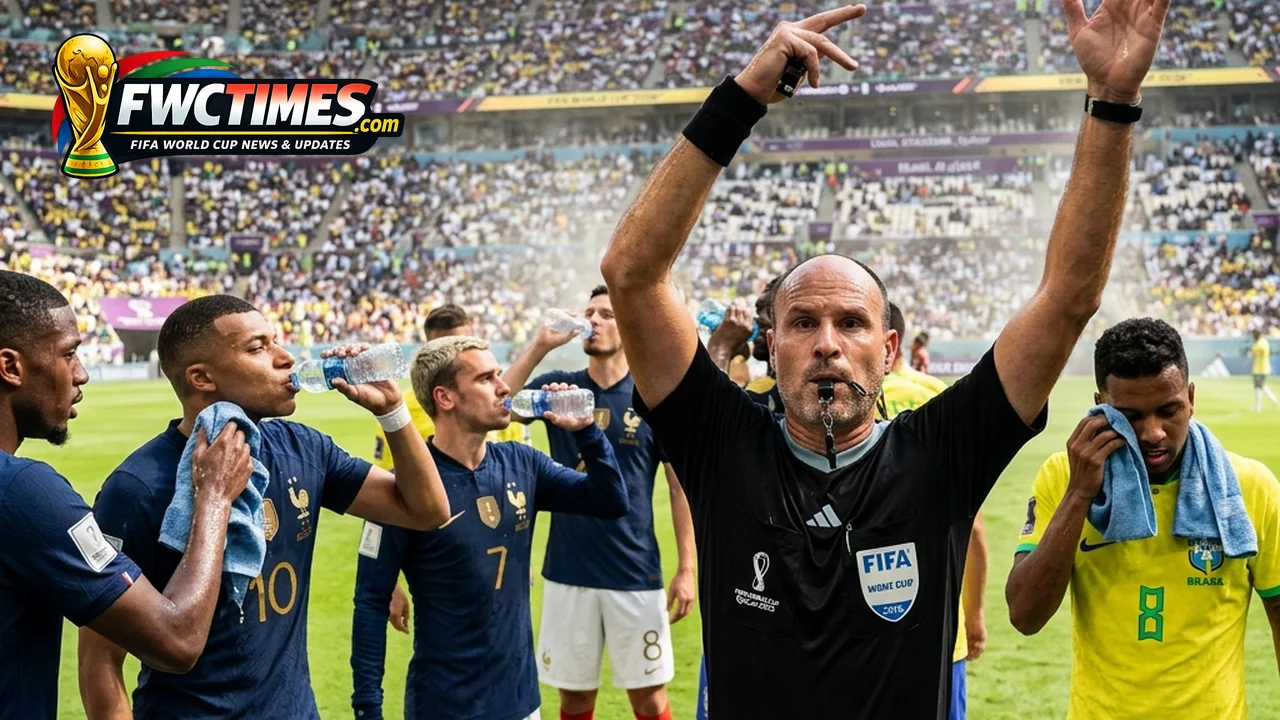
FIFA has officially mandated the implementation of mandatory cooling breaks for all 104 matches of the FIFA World Cup 2026, following a critical report from climate scientists regarding extreme heat risks. The decision, announced on May 15, comes as host cities such as Miami, Houston, and Dallas prepare for record-breaking summer temperatures. Under the new protocol, match officials are required to pause play for three minutes at the 30th and 75th minute of each match if the Wet Bulb Globe Temperature (WBGT) exceeds 32°C (89.6°F). This proactive measure is part of FIFA’s broader commitment to player safety and health during the expanded 48-team World Cup 2026 format, which features a significantly higher volume of afternoon fixtures.
The mandate follows a comprehensive study by World Weather Attribution (WWA), which warned that approximately one in four matches during the tournament could be played under grueling heat conditions. While many of the 16 host venues, such as the Miami Stadium (Hard Rock Stadium), are equipped with advanced shading and ventilation systems, the sheer physical demand of the tournament necessitates standardized recovery intervals. FIFA’s medical committee has emphasized that these breaks are essential to prevent heat-related illnesses and ensure that the quality of play remains high throughout the 90 minutes. The protocol also includes the provision of chilled water and cooling towels for players and officials during the three-minute intervals.
WBGT Thresholds and Implementation Protocols
The Wet Bulb Globe Temperature (WBGT) is a composite index used to estimate the effect of temperature, humidity, wind speed, and solar radiation on humans. FIFA match commissioners will monitor these levels in real-time using localized weather stations installed at every tournament venue. If the WBGT threshold is met 60 minutes before kickoff, the mandatory cooling break protocol is automatically triggered. Officials have been instructed that the three-minute clock begins the moment the ball goes out of play nearest to the 30-minute mark. These breaks will be added to the stoppage time at the end of each half, ensuring that the net playing time is not compromised.
In addition to the standardized breaks, FIFA has granted referees the discretion to implement additional “hydration intervals” if they perceive localized signs of heat fatigue among players. This discretionary power is seen as a vital safeguard for matches played in non-air-conditioned venues during the peak of the North American summer. FIFA’s “Heat Management Plan” also includes the strategic scheduling of high-risk matches for later evening kickoff times where possible, although the global broadcast requirements mean that some afternoon games are unavoidable. The May 15 announcement ensures that all 48 participating nations have a standardized framework to incorporate into their final physical conditioning programs.
Impact on Tactical Preparation and Match Flow
Coaching staffs across the globe are already adjusting their tactical preparations to account for the mandatory cooling breaks. The ability to regroup and provide tactical instructions at the 30th and 75th minute introduces a new strategic element to the game, similar to “timeouts” in other professional sports. Analysts expect teams to utilize these breaks to adjust their pressing intensity and manage player workload more effectively. “The cooling breaks change the rhythm of the match; it’s no longer a continuous 45-minute block of intensity,” noted one high-performance coach. This shift may favor teams with deeper rosters and better tactical flexibility, as coaches can make real-time adjustments without waiting for the halftime interval.
The technical staff for each national team has been provided with the full WBGT historical data for their specific group stage venues. Teams based in high-heat hubs like Houston or Monterrey are focusing on “heat-acclimatization” protocols during their final training camps. FIFA has also authorized the use of wearable core-temperature monitors during training sessions to help medical teams identify players who are more susceptible to heat stress. This data-driven approach to player safety reflects the professionalization of sports medicine in the lead-up to the most technologically advanced World Cup in history.
Stadium Technology and Shading Solutions
While the cooling breaks provide immediate relief, FIFA is also utilizing advanced stadium technology to mitigate the effects of the summer sun. Venues like the Atlanta Stadium and MetLife Stadium have implemented temporary shading solutions for the fan zones and concourses, while several newer arenas feature sophisticated airflow designs that lower pitch-level temperatures by up to 5°C. FIFA’s sustainability team has also ensured that the cooling systems used in air-conditioned venues are powered by renewable energy sources, aligning the tournament’s safety protocols with its environmental goals.
As the tournament approaches, the focus remains on balancing the spectacle of the world’s largest sporting event with the non-negotiable safety of the athletes. Follow the latest updates on tournament regulations, medical protocols, and team preparations in our FIFA World Cup news section. The 2026 World Cup is set to become a benchmark for how major sporting events manage the challenges of a changing global climate, with the cooling break mandate serving as a primary pillar of this strategy.
Frequently Asked Questions
Frequently Asked Questions
The implementation of mandatory cooling breaks ensures that the FIFA World Cup 2026 remains a safe and elite-level competition, prioritizing the health of the world’s best footballers in the face of environmental challenges.
Stay tuned to FWCTimes.com for the latest FIFA World Cup 2026 updates.
Read Also: Canada World Cup 2026 Roster Reveal Date Set — Jesse Marsch Primetime Special Announced