Nagelsmann Delays Germany Squad Announcement to May 21 — Neuer Comeback in Play

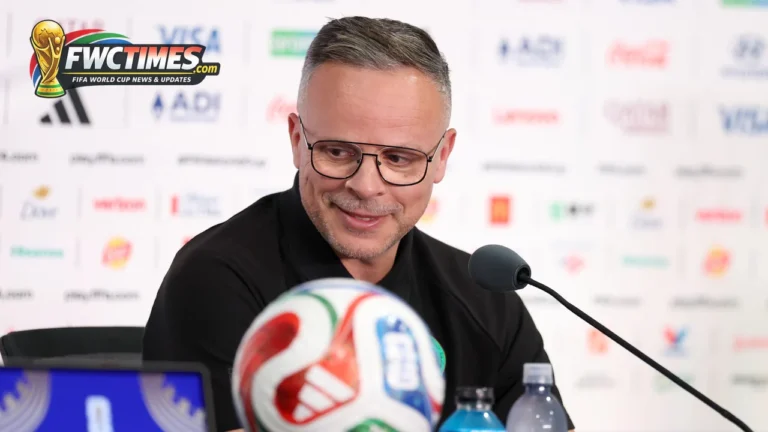
Julian Nagelsmann delayed Germany‘s FIFA World Cup 2026 squad announcement by nine days, setting the new date as May 21. The original plan placed the announcement on May 12, but Nagelsmann pushed it back to allow injured players additional time to prove fitness. The Bundesliga season ended on May 16 and the DFB-Pokal final between Bayern Munich and VfB Stuttgart falls on May 23, both factors that influenced the later date. Germany submitted a 55-man preliminary squad to FIFA weeks ago, covering every position with multiple options. Nagelsmann told reporters he has roughly 20 players firmly in mind, with the final six spots still contested.
The most debated topic surrounding the announcement is Manuel Neuer. The 40-year-old goalkeeper announced his retirement from the national team after UEFA Euro 2024, yet his name appeared in the 55-man preliminary list. Nagelsmann held direct talks with Neuer about a potential return as the starting goalkeeper for the FIFA World Cup 2026. A decision is expected before May 21. Neuer’s current form at Bayern Munich, where he kept eleven clean sheets in the Bundesliga this season, makes the case for his return difficult to dismiss on performance grounds alone.
Germany’s Group E Draw — Ivory Coast, Ecuador, and Curaçao
Germany face Ivory Coast, Ecuador, and Curaçao in Group E. The draw placed Germany as the heaviest favourites in their group, with no side capable of matching their depth across the squad. Curaçao, who previously dismissed Advocaat as coach before a potential return was floated, represent the group’s least experienced side at a major tournament. Ecuador bring a physical, organized defensive approach built around Enner Valencia’s experience. Ivory Coast carry the most dangerous attacking threat in the group, with a frontline capable of punishing any lapse in German defensive concentration.
Germany’s three group matches span three different host cities. They open on June 14 against Curaçao in Houston at Shell Energy Stadium. The Ivory Coast clash follows on June 20 in Toronto at BMO Field. Germany close the group stage on June 25 against Ecuador at MetLife Stadium in East Rutherford, New Jersey. The New Jersey fixture carries the most weight — it is Germany’s final group match and determines which position they finish in. If Germany top Group E, they face the runner-up from Group F in the Round of 32 on July 4 or 5.
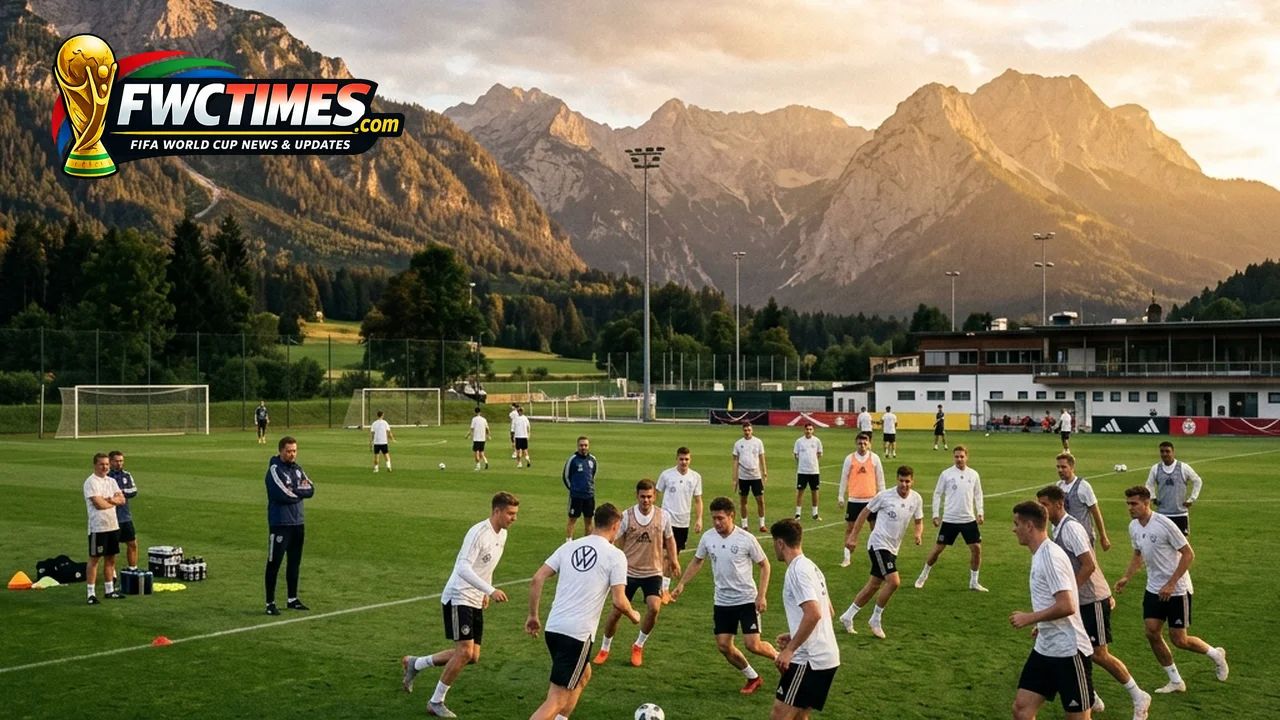
The Ivory Coast fixture in Toronto creates a specific tactical challenge. Coted’Ivoire’s wide attackers exploit half-spaces, and BMO Field’s temporary stands create a noise environment that disrupts communication at the back. Germany held detailed dossiers on all three opponents during Nagelsmann’s preparation camps in April. The team’s training base for the tournament is confirmed as Herzogenaurach in Germany until May 27, after which they fly to their North American base. FIFA confirmed Germany’s dedicated pre-tournament base camp location as yet to be confirmed for the North American phase.
The Neuer Question — Retirement Reversed?
Neuer retired from international football after Germany’s elimination at Euro 2024 under Nagelsmann. His return would mark the first time a German goalkeeper reversed a national team retirement to play in a World Cup. Nagelsmann cited Neuer’s exceptional club form and leadership experience as the justification for reopening the discussion. The alternative starting options include Marc-André ter Stegen, who returned from a long-term knee injury in early 2026, and Alexander Nübel, who established himself as a consistent performer at Stuttgart this season. Ter Stegen’s fitness is the other major question Nagelsmann must resolve before May 21.
A Neuer selection would carry enormous symbolic weight. He captained Germany to the 2014 World Cup title and defined an era of sweeper-keeper football. His inclusion would likely mean Nübel drops to second choice and ter Stegen takes the third goalkeeper spot — an arrangement that several German football figures have publicly questioned. The German Football Association has not commented on the goalkeeper situation beyond confirming the May 21 announcement date. Neuer himself remained silent on the speculation through mid-May.
Nagelsmann’s Key Selection Battles
Beyond the goalkeeper situation, Nagelsmann faces genuine competition across several outfield positions. Joshua Kimmich operates as first-choice right-back but can also anchor the double pivot in midfield. Florian Wirtz and Jamal Musiala form the creative core of the attacking midfield and both are certainties in the squad. Kai Havertz leads the striker options, with Nick Woltemade pushing for a place after a breakout season. Antonio Rüdiger anchors the central defence alongside Nico Schlotterbeck. The left-back position remains genuinely open between David Raum and the Bayern Munich option.
Leon Goretzka’s selection adds another competitive midfield layer. Goretzka played a consistent second half of the Bundesliga season after returning from a knee issue in January. Aleksandar Pavlović, who impressed in the Euro 2024 qualifying campaign, also pushes for inclusion in the deeper midfield positions. Nagelsmann’s preferred 4-2-3-1 system demands two technically capable defensive midfielders, and the competition for those two spots involves at least four players. The announcement on May 21 resolves six weeks of speculation across the German football community. Germany begin their pre-tournament camp in Herzogenaurach on May 27 with the full 26-man group assembled.
Germany’s World Cup 2026 Ambitions
Germany enter the tournament as one of six nations carrying genuine title ambitions alongside France, Brazil, Argentina, Spain, and England. The 2026 edition expands to 48 teams, giving Germany a more forgiving path through the group stage. Even a second-place finish in Group E advances Germany to the Round of 32. The expanded format means Germany would face elimination only from the Round of 32 onward — a scenario that reduces the pressure on the opening matches considerably compared to previous editions.
Nagelsmann built a young, high-energy squad at Euro 2024 that reached the quarterfinals before losing to Spain. The 2026 version of that squad is a year older and benefits from a full additional season of experience at the highest club level. Wirtz’s development at Bayer Leverkusen and Musiala’s continued growth at Bayern Munich represent the two highest-quality players in the squad. France sit in Group I on the opposite side of the bracket, meaning a potential Germany-France semifinal would only arrive at the July 18 stage. Brazil in Group D also sit in the same half of the bracket as Germany, making a potential meeting from the quarterfinals onward the most anticipated scenario in the draw.
Germany last won the World Cup in 2014 in Brazil. The 2018 group stage exit in Russia remains the low point of recent history. The 2022 group stage elimination in Qatar deepened the pressure on German football to restore its global standing. Nagelsmann’s appointment in September 2023 represented a reset toward younger talent and a more aggressive, possession-heavy identity. The May 21 squad announcement reveals exactly how far that rebuild has progressed — and whether a 40-year-old goalkeeper joins it for one final tournament. Follow all squad news and group updates in our FIFA World Cup news section.
Frequently Asked Questions
Frequently Asked Questions
Germany’s full 26-man squad and Neuer’s final decision become clear on May 21 — six days before the Herzogenaurach training camp opens.
Stay tuned to FWCTimes.com for the latest FIFA World Cup 2026 updates.
Read Also: France World Cup 2026 Squad Named — Camavinga Out, Mateta In