FIFA World Cup 2026 Stadium List With Capacity

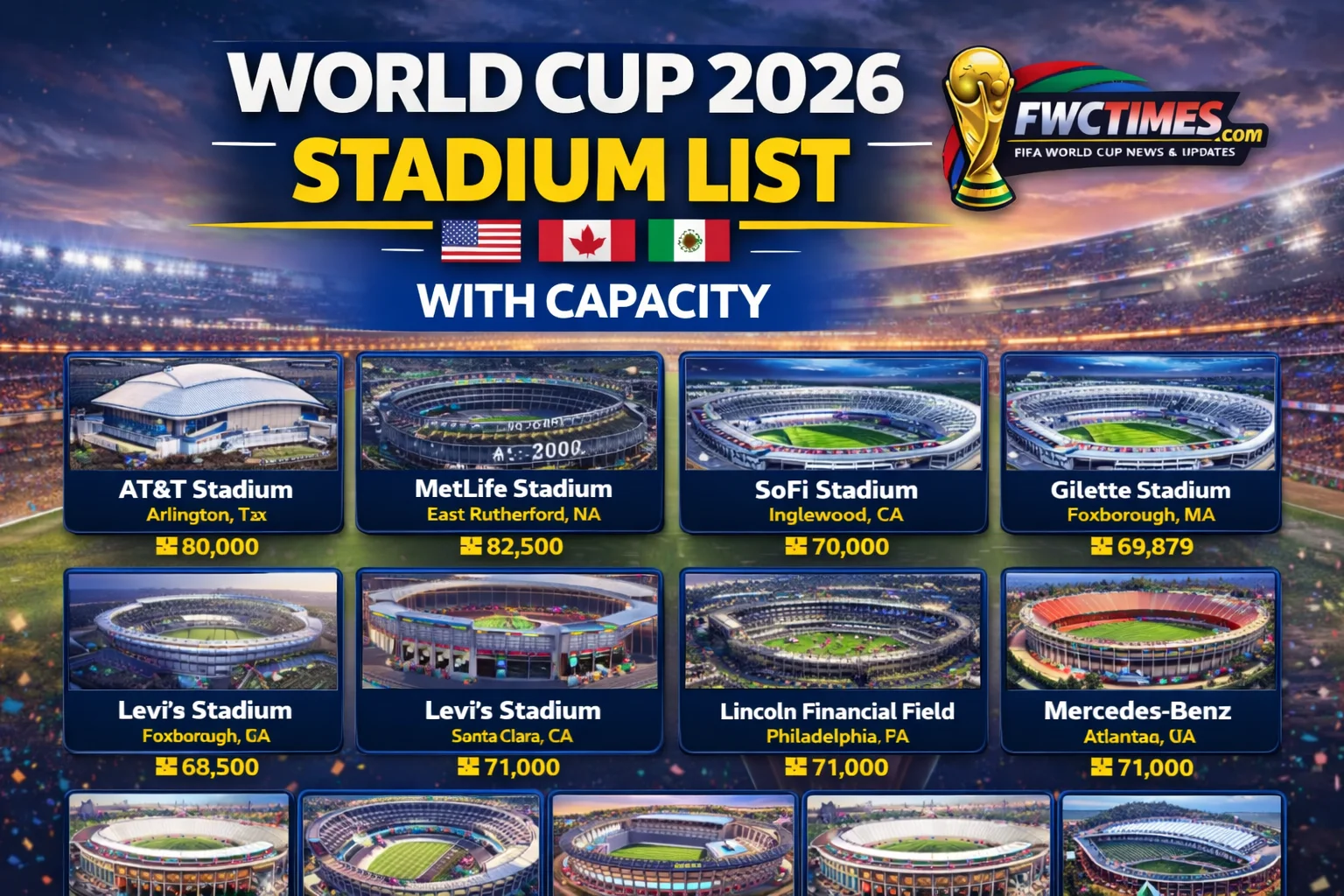
The FIFA world cup 2026 stadium list is one of the first things fans check when planning matches, travel routes, and budgets. With 16 venues across the USA, Canada, and Mexico, capacity matters because it shapes ticket demand, hotel pressure, and matchday costs in each city.
Quick answer: The 2026 tournament uses 16 stadiums across three countries, with capacities ranging from about 45,000 to 94,000. Bigger venues can mean more seats, but demand and match type still decide pricing and availability.
FIFA World Cup 2026 stadium list with capacity
Capacities below are the event-style estimates used for tournament planning. They can shift slightly once FIFA overlays are installed, including media zones, security perimeters, and temporary seating.
| Official tournament name | Sponsor/common name | City, country | Capacity (estimate) | Key match notes |
|---|---|---|---|---|
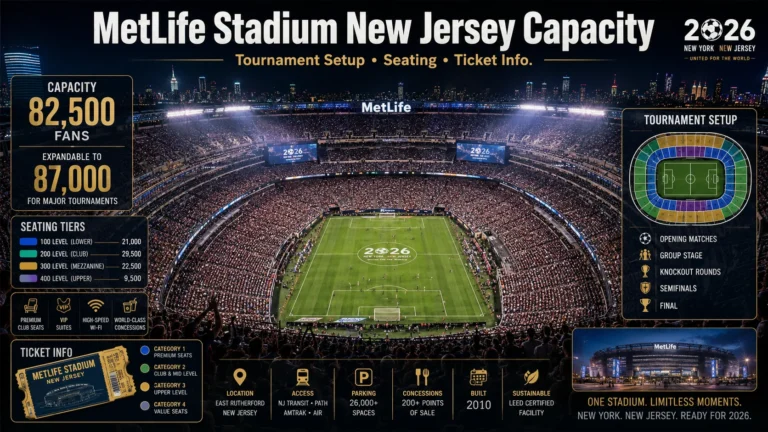
| New York New Jersey Stadium | MetLife Stadium | East Rutherford, USA | 82,500 | Final |
| Dallas Stadium | AT&T Stadium | Arlington, USA | 94,000 | Semi-final |
| Mexico City Stadium | Estadio Azteca | Mexico City, Mexico | 83,000 | Opening match |
| Atlanta Stadium | Mercedes-Benz Stadium | Atlanta, USA | 75,000 | Semi-final |
| Kansas City Stadium | Arrowhead Stadium | Kansas City, USA | 73,000 | Quarter-final |
| Houston Stadium | NRG Stadium | Houston, USA | 72,000 | Round of 16 |
| San Francisco Bay Area Stadium | Levi’s Stadium | Santa Clara, USA | 71,000 | Group stage |
| Los Angeles Stadium | SoFi Stadium | Inglewood, USA | 70,000 | Quarter-final |
| Philadelphia Stadium | Lincoln Financial Field | Philadelphia, USA | 69,000 | Round of 16 |
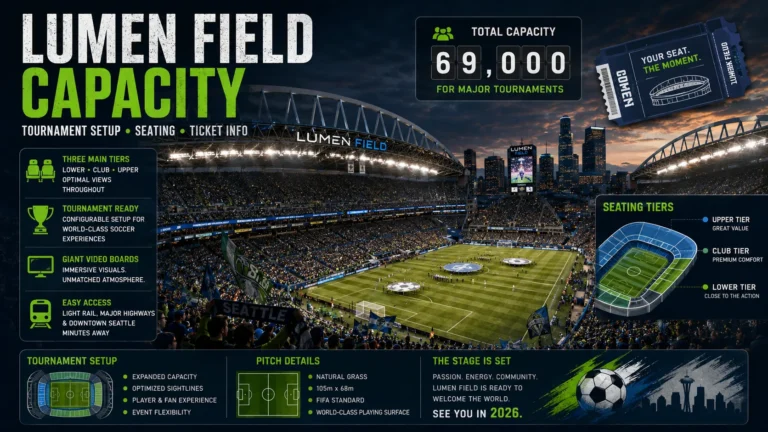
| Seattle Stadium | Lumen Field | Seattle, USA | 69,000 | Round of 16 |
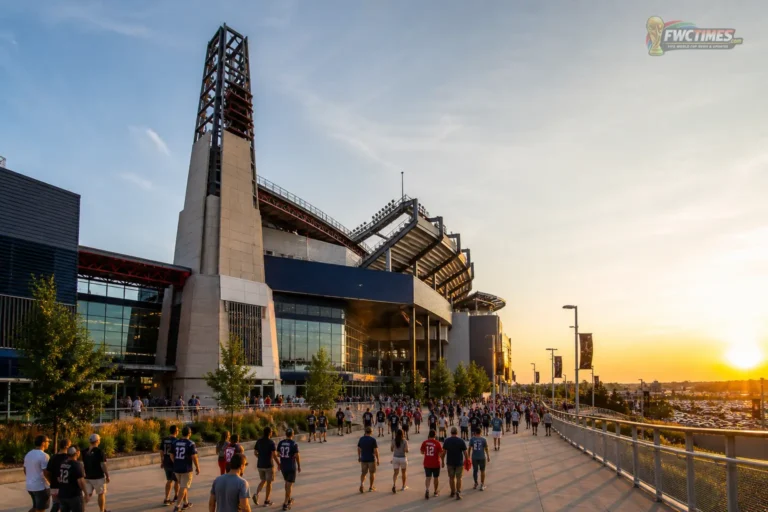
| Boston Stadium | Gillette Stadium | Foxborough, USA | 65,000 | Quarter-final |
| Miami Stadium | Hard Rock Stadium | Miami Gardens, USA | 65,000 | Third-place match |
| BC Place Vancouver | BC Place | Vancouver, Canada | 54,000 | Round of 16 |
| Estadio Monterrey | Estadio BBVA | Guadalupe, Mexico | 53,500 | Round of 32 |
| Estadio Guadalajara | Estadio Akron | Zapopan, Mexico | 48,000 | Group stage |
| Toronto Stadium | BMO Field | Toronto, Canada | 45,000 | Round of 32 |
How stadium capacity impacts tickets and matchday costs
Capacity hints at how many seats may be available, but it does not guarantee cheaper tickets. A final in an 82,500-seat stadium can still be harder to access than a group match in a smaller venue, because demand is the real driver.
For fans building a FIFA World Cup 2026 trip budget, think of capacity as one input in your World Cup 2026 ticket prices estimate. Bigger stadiums may release more inventory across categories, while smaller ones can feel tight even for early group matches.
A practical way to read capacity as a fan
Use this quick rule: capacity helps you predict crowd volume, not price certainty.
- If you want the highest seat volume: Dallas, Mexico City, New York/New Jersey, and Atlanta are your best targets.
- If you want loud, intense atmospheres in mid-size giants: Kansas City, Houston, Seattle, Philadelphia, and the Bay Area often draw big-event energy.
- If you want compact, high-demand markets: Toronto and Guadalajara can sell quickly because supply is lower.
Regional clusters that can lower travel expenses
One of the easiest ways to control your cost to attend World Cup 2026 USA Canada Mexico is to avoid crisscrossing the continent too often. The schedule approach described for group-stage planning uses regional clusters, so teams and fans can reduce long-haul travel early on.
A simple strategy choose one cluster as your base, then add one nearby city as your backup.
West cluster planning
Vancouver, Seattle, the San Francisco Bay Area, and Los Angeles sit in a travel-friendly run if you plan flights and rail/road connections smartly. This can reduce transportation cost World Cup 2026 compared to bouncing between coasts.
Central cluster planning
Guadalajara, Mexico City, Monterrey, Houston, Dallas, and Kansas City offer a strong central route. If you are targeting Mexico matches plus a USA knockout, this cluster can be a realistic path without too many expensive flight legs.
East cluster planning
Atlanta, Miami, Toronto, Boston, Philadelphia, and New York/New Jersey can work well for fans who want major airport options and a wide range of hotels. This is also useful if you are aiming for late-round matches, since the biggest showcase games are described as ending in the east.
Travel expenses breakdown by stadium city
When fans search accommodation cost World Cup 2026 host cities, they usually want a clear picture of what drives price spikes. Stadium cities with global tourism pull and limited hotel stock close to the venue can jump quickly once match allocations become clearer.
Here’s a simple way to build your World Cup 2026 travel expenses breakdown without guessing exact numbers:
Accommodation and hotel pricing pressure
- Expect hotel prices during FIFA World Cup 2026 to rise most around high-profile match cities and tight-capacity venues.
- Book refundable lodging early if possible, then adjust after match locations are confirmed for your team.
- If your top city is expensive, consider staying farther out and budgeting more for local transport.
Flights and arrival timing
World Cup 2026 airfare trends usually follow the same pattern: prices rise around peak dates and popular airports. To manage flight prices to World Cup 2026 cities, plan to arrive one day earlier than your match if you can. That buffer protects you from delays and lets you handle stadium entry routines calmly.
Daily spending and matchday totals
Daily expenses World Cup 2026 travel often come down to three things: food, local transport, and last-minute purchases. A realistic plan includes:
- food and dining cost World Cup 2026 as a daily line item, not a leftover
- local transport cost USA Canada Mexico 2026 for stadium trips and fan zones
- a small “matchday spending estimate FIFA 2026” for snacks, water, and commute surprises
FIFA World Cup 2026 Stadium naming rules and why it matters for navigation
During the tournament, sponsor-heavy names may not appear in official materials. You may see event-style labels like “Dallas Stadium” or “New York New Jersey Stadium.”
For fans, this matters because map searches and ride-share drop-offs often use the common stadium name. When you plan your route, save both names in your notes so you can switch quickly.
Venue readiness notes fans should follow
As planning moves closer to kickoff, stadium readiness becomes more about operations than construction. Most USA venues are existing NFL stadiums, so the work is often about tournament setup, pitch standards, and access planning.
There have also been notes about renovation timelines for Mexico City’s stadium. If you are booking early, keep your plan flexible and watch for official updates that confirm operational testing, reopening events, and final stadium access rules.
Budget-friendly planning checklist for match trips
If you want a low budget World Cup 2026 travel plan, build it around flexibility.
Budget travel guide FIFA 2026 essentials
- Pick two nearby host cities, not five far-apart ones.
- Hold refundable stays early to reduce accommodation shock later.
- Track match assignments by city and venue, not only your team name.
- Include travel insurance and basic fees in your World Cup 2026 visa and travel insurance cost line item if it applies to your passport and route.
- Compare fan travel packages cost versus DIY booking if you prefer predictable totals.
This approach can also help you compare luxury vs budget World Cup 2026 cost comparison choices, because you can upgrade one part of the trip without breaking the whole plan.
FAQs
Conclusion
The best way to use this stadium guide is to match capacity with smart travel planning. Start with the world cup 2026 stadium list, choose a regional base, and build a flexible budget that covers tickets, lodging, transport, and matchday spending. If you plan around clusters and backup cities, you give yourself more options when demand spikes.