Didier Deschamps – France Coach Profile for World Cup 2026

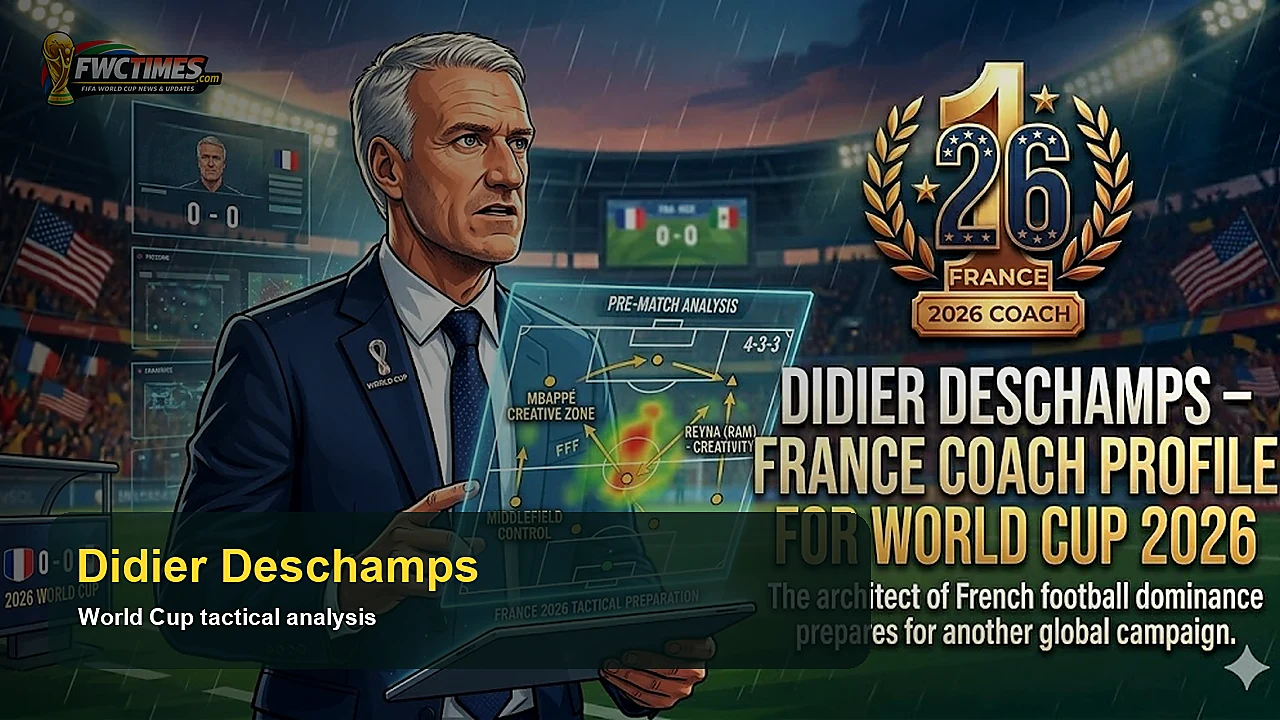
Didier Deschamps France 2026 matters because coaching details can decide tight tournament matches. France enter FIFA World Cup 2026 with a clear tactical question around Didier Deschamps, squad balance, and game management.
Deschamps has led France since 2012, won the 2018 World Cup, and reached the 2022 final. His last tournament adds a clear tactical and emotional edge.
Overview of Didier Deschamps France 2026
His France teams rarely chase style points. They protect the centre, use elite transition players, and make opponents defend space behind the back line.
That pragmatism suits knockout football. France can win without dominating possession because their forwards turn small openings into major chances.
International coaching rewards clarity because managers get limited training time. The best teams repeat a few core habits until players trust them under pressure.
The tactical value comes from how quickly the players can repeat those habits. A coach may have strong ideas, but World Cup games reward the clearest instructions first.
How Didier Deschamps Builds the Team
Deschamps usually starts with structure before freedom. The midfield protects the defense, while the front line gets license to attack early.
The staff must also manage minutes across a larger tournament. Rotation, substitution timing, and set-piece planning can protect the team when travel and heat become factors.
Training time will shape how much detail the staff can add. The safest plan is usually a clear base shape, two pressing triggers, and one reliable route to goal.
Didier Deschamps France 2026 Defensive Structure
France defend with compact distances and powerful recovery runners. Centre backs can hold a higher line when midfield pressure is strong.
The holding midfielder has to close the space in front of the centre backs. If that player gets pulled wide, opponents can receive between the lines.
Full backs cannot attack without cover. The nearest midfielder must slide across, while the far-side winger narrows to protect the second post.
Didier Deschamps France 2026 Attacking Patterns
The attack often runs through Kylian Mbappe’s speed, wide isolation, and fast switches. France can also slow the ball when they need to manage the score.
Transitions matter as much as possession. The first pass after a regain decides whether the team attacks a broken defense or slows the game.
Set pieces add another route. Tournament sides need corners, free kicks, and second-phase attacks because open-play chances can dry up in knockout matches.
Key Players and Tactical Roles
Mbappe, Antoine Griezmann, Aurelien Tchouameni, Eduardo Camavinga, and William Saliba define the plan. Their roles give France control without losing explosion.
Griezmann remains important because he links midfield and attack. He can help France change tempo without changing formation.
| Role | Main Job | Tournament Demand |
|---|---|---|
| Base structure | Flexible 4-2-3-1 or 4-3-3 | Protect transition lanes around Mbappe attacks |
| Pressing plan | Selective pressing rather than constant pressure | Needs timing more than constant running |
| Attacking route | Fast breaks, left-side threat, and switches | Must create chances without losing rest defense |
| Risk area | Long spells without possession rhythm | Opponents will target this weakness in knockout games |
Strengths of This Approach
France’s biggest strength is match-winning speed. One regain can become a clear chance within seconds.
The approach fits tournament football when players understand their jobs. Clear roles reduce panic after mistakes and help substitutes enter the match quickly.
It also gives the coach a base for game-state changes. The team can press after falling behind or protect zones after taking the lead.
Weaknesses and Vulnerabilities
The weakness is chance volume. If opponents deny transition space, France may need more patient creation.
The second risk is emotional tempo. Knockout matches can tempt teams into chasing early, and that can open the midfield too soon.
Squad depth will decide how long the plan holds. If two key players lose rhythm or fitness, the coach may need a simpler shape.
How It Could Play Out at World Cup 2026
Deschamps’ farewell run should sharpen focus. France know how to survive awkward knockout games.
The expanded format gives strong teams more room to recover from one poor half. It also asks coaches to handle more opponents and more tactical styles.
The tactical comparison runs through Spain, Argentina
Match Management Detail
Didier Deschamps also needs simple rules for late-game control. Players must know when to press, when to drop, and when to slow restarts. That clarity matters once fatigue changes the match.
Substitutes should enter with the same zone duties as the starters. A fresh midfielder can protect the centre, while a winger can reset the pressing line. As a result, the team can change energy without losing structure.
Set pieces give the coach another route in tight matches. Delivery, screening runs, and second-ball positions need clear ownership. Those details can protect a lead or rescue a slow attacking spell.
The strongest tournament managers keep choices simple for players. They reduce confusion before the pressure rises. That makes the tactical plan easier to repeat across short rest windows.
The coaching staff should also rehearse short rest scenarios. Clear recovery plans help players repeat tactical roles across the tournament.
That extra preparation also reduces rushed choices. Players can spend more energy on execution and less on uncertainty.
Frequently Asked Questions
Who is Didier Deschamps coaching at World Cup 2026?
Didier Deschamps is linked with France in this World Cup 2026 tactical profile. He has confirmed the 2026 World Cup will be his final tournament as France coach.
What is Didier Deschamps’s main tactical idea?
His main idea is defensive security, selective pressing, and fast attacks through elite forwards.
Which players matter most in this system?
Mbappe, Griezmann, Tchouameni, Camavinga, and Saliba matter because they shape France’s transition game.
Can France go deep at World Cup 2026?
France can go very deep because the squad has tournament experience, athletic depth, and a coach who knows knockout management.
Conclusion
Deschamps gives France a proven tournament floor and a dangerous knockout ceiling.
His final challenge is turning elite transition power into one more complete World Cup run.
Read more: Mauricio Pochettino – USA Coach Profile and Tactics for 2026