4-2-3-1 Formation at the 2026 World Cup

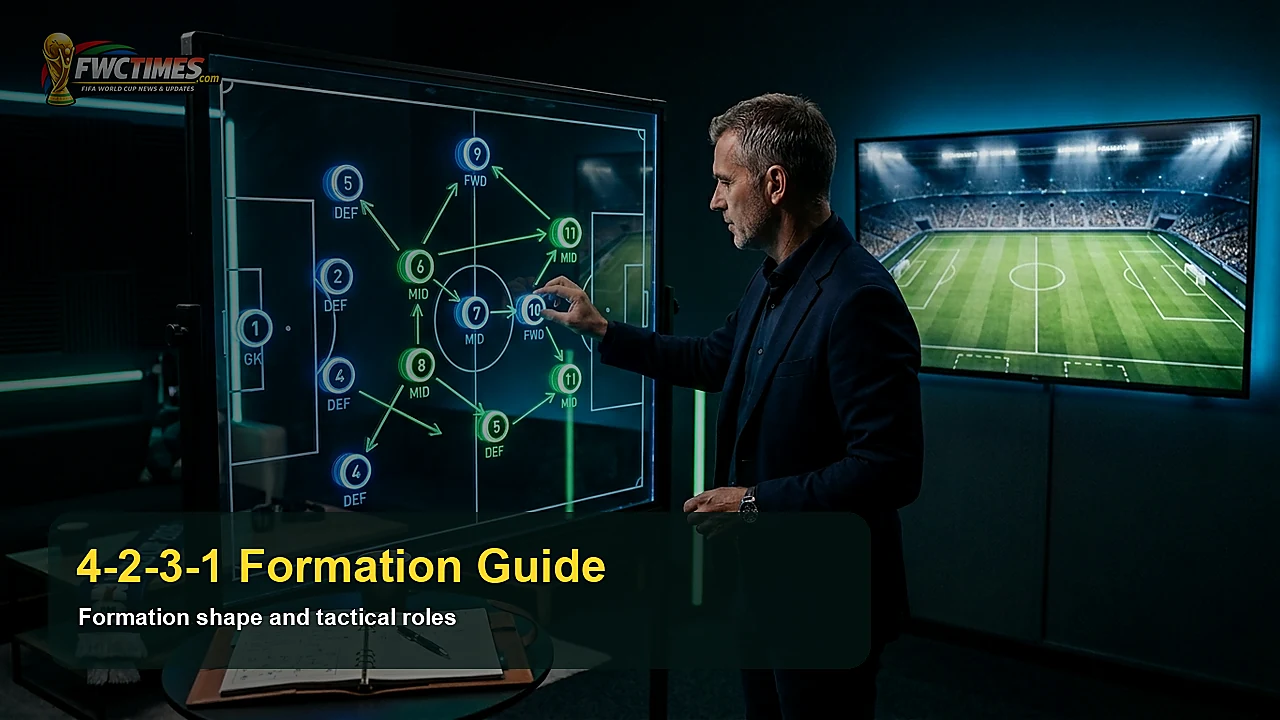
The 4-2-3-1 formation stands as the most popular tactical baseline at the 2026 FIFA World Cup. Coaches select this shape because it offers a perfect balance between defensive stability and attacking flexibility in transition. In fact, the double pivot provides immediate cover against counterattacks, while the attacking midfield three supports the lone striker. This system allows squads to adapt to changing match situations without requiring tactical substitutions.
The physical demands of a 104-match tournament highlight the value of this balanced setup. In a 48-team tournament, managing player fatigue across multiple host countries is a primary concern. The 4-2-3-1 shape distributes defensive duties evenly, reducing the physical strain on individual players. As a result, squads can sustain their performance levels deep into the knockout rounds.
The system is highly intuitive, making it easy to teach during short international preparation windows. National teams have limited training time compared to club sides. The clear roles inside this shape help players build chemistry quickly. This structural simplicity is why coaches of both favorite and underdog nations rely on this template.
The Structural Framework of the 4-2-3-1
The Double Pivot Anchor
The double pivot consists of two central defensive midfielders sitting in front of the back four. These two players act as the shield that intercepts opposing passes. One midfielder typically focuses on defensive positioning and physical duels. The other midfielder looks to distribute the ball and link the defense to the attacking line.
This pairing is critical for maintaining what coaches call rest defense. When the fullbacks push forward to support the attack, the double pivot remains deep. This positioning prevents the opponent from launching direct counterattacks through the centre of the pitch. On top of that, it allows the team to recycle possession safely during sustained attacking phases.
The Attacking Midfield Engine
The line of three attacking midfielders provides the primary creative spark in this system. The central attacking midfielder operates as the classic number ten, playmaking in the pockets of space behind the opponent’s midfield. This player must possess elite vision to release the striker with line-breaking passes. The wide midfielders can act as traditional wingers or cut inside as inverted forwards.
Inverted wide players are particularly effective at creating shooting angles in the half-spaces. When they cut inside, they draw the opponent’s fullbacks out of position. This movement opens up overlapping lanes for the attacking fullbacks to exploit. As a result, the team can attack with five players while keeping a secure defensive base. The possession football World Cup guide explains how these wide rotations control matches.
Why Coaches Choose the 4-2-3-1 at World Cup 2026
The primary driver is the ease of transitioning into a compact defensive block. Out of possession, the shape naturally shifts into a 4-4-2 structure. The central attacking midfielder steps up next to the striker, while the wide midfielders drop back into the midfield line. This defensive shape provides two tight banks of four that are difficult to play through.
The shape also accommodates the abundance of creative midfield talent in modern squads. Managers of teams like Germany and England use this system to fit multiple playmaker profiles into the starting lineup. For example, Julian Nagelsmann uses this structure to play Musiala and Wirtz together. The system gives these creative players the freedom to combine while keeping a stable midfield behind them.
The 4-2-3-1 also matches the trend toward aggressive pressing in tournament play. The front four can press the opponent’s back line, while the double pivot shuts down passing lanes in behind. This coordinated pressure forces the opponent to play long balls, which the defenders can easily intercept. The high press World Cup guide breaks down these pressing strategies in detail.
Tactical Limitations and Weaknesses
The system’s main vulnerability is the isolation of the lone striker. If the attacking midfield three fails to push high enough, the striker has no passing options. The forward can get lost between the opponent’s centre-backs, struggling to hold up the ball. This isolation makes the team’s build-up play predictable and easy to defend.
The space behind the double pivot is another target for opposing coaches. If both defensive midfielders step up to press, they leave a massive gap in front of the back four. Underdog teams running a 5-3-2 look to exploit this exact space on the counterattack. The 5-3-2 formation World Cup guide details how counter-attacking sides exploit these midfield gaps.
The system also demands high physical output from the fullbacks. Because the wide midfielders often cut inside, the fullbacks must cover the entire flank. They must overlap to provide width in attack, then sprint back to defend wide transitions. In the heat of the North American summer, this physical load can exhaust fullbacks by the 70th minute.
How Top Teams Adapt the Shape
Germany uses a highly fluid version of the 4-2-3-1 under Nagelsmann. Musiala and Wirtz cut inside constantly to create a box midfield build-up. This movement overloads the central areas and allows for quick combinations in tight spaces. Germany’s qualifying run, which included a 6-0 win over Slovakia, showed the power of this central overload.
Austria under Ralf Rangnick adapts the shape to run an intense counter-pressing system. They use the front four to trigger immediate pressure within three seconds of losing possession. This approach relies on the double pivot to win the second ball quickly. Austria’s system shows how the 4-2-3-1 can become a highly aggressive defensive weapon.
England under Thomas Tuchel utilizes the shape to manage their rich attacking roster. Tuchel uses a double pivot to keep defensive stability while allowing Jude Bellingham to drive forward from the ten spot. England’s perfect qualifying campaign, where they conceded zero goals in eight matches, proves the defensive strength of this setup. The 4-3-3 formation World Cup guide shows how this shape compares to other dominant systems.
Expert Verdict
The 4-2-3-1 will remain the tactical workhorse of the 2026 World Cup. Its ability to shift into a 4-4-2 block out of possession gives coaches a reliable defensive fallback. Teams like Germany and England have the squad depth to run this system at a high level across eight matches. The key to winning the tournament with this shape lies in the quality of the double pivot.
The team that balanced their midfield engine best will advance furthest. If the defensive midfielders get dragged out of position, the back four is left completely exposed. The most successful coaches will instruct one pivot to remain disciplined while the other supports the attack. This tactical restraint is what separates the title contenders from the rest of the field.