Storm Delays Could Hit 2026 World Cup Matches

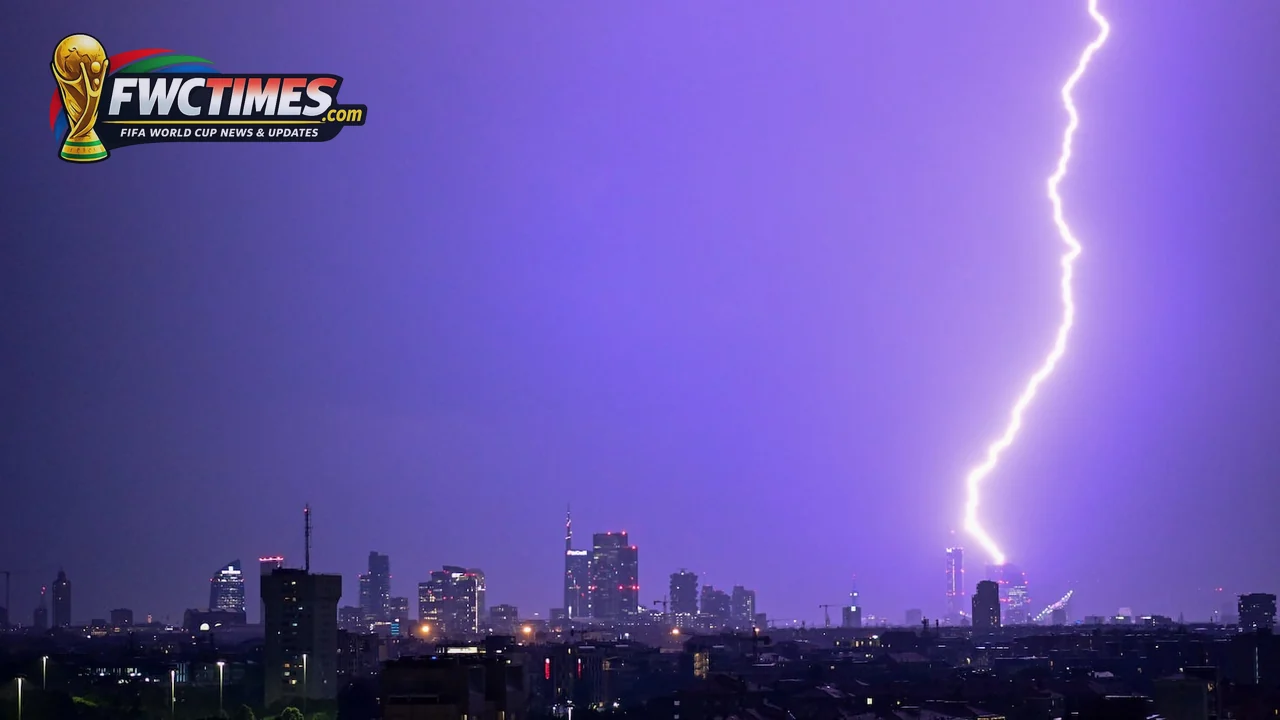
World Cup Severe Weather Protocol rules could alter matches across North America this summer. The key trigger is not heavy rain alone. FIFA must stop play when lightning is detected within eight miles of a stadium in the United States. That rule brings weather into the tournament as a real matchday variable.
The detail matters because several host venues sit in summer storm corridors. Miami Stadium and Houston Stadium already sit inside climate conversations about heat and lightning. The article also points to big open-air venues around the country, so the risk is not theoretical. Fans following the FIFA World Cup 2026 should now treat delays as part of the schedule, not as rare surprises.
The protocol also reaches beyond the first whistle. If conditions make completion impossible, the match can resume later from the exact minute it stopped. That means a World Cup game can break, carry over, and restart with only the remaining minutes left. Even Atlanta Stadium and other major venues cannot outrun that rule when local authorities take over.
Lightning Distance, Not Stadium Drama, Controls The Decision
The most striking part of the rule is the distance itself. Lightning does not need to sit over the stadium roof. If it is detected within eight miles, play must stop. That threshold is much wider than many supporters will expect.
The article ties that process to NOAA guidance in the United States. That means FIFA do not carry full discretion once the weather threshold is reached. Tournament officials can manage the staging, but local safety rules drive the stoppage itself. That lowers the chance of last-minute negotiation once the storm line enters the radius.
The rule also changes how fans should think about timing. A cloud system over another part of the city can still interrupt football in the stadium district. The article even used the example of a major New Jersey match being affected by lightning over another part of the metro area. That is a practical warning, not a dramatic one.
This also explains why broadcasters and teams need wider buffers on matchdays. Lightning risk can force warm-up changes, tunnel waits and uncertain restart windows. A schedule that looks fixed on paper can become fluid in real conditions. Tournament logistics teams will have to manage that in real time.
Heat And Storms Could Reshape How Fans Plan Host-City Matches
Weather talk around this tournament started with heat, but the storm risk may create sharper disruptions. Water breaks can slow a match, yet lightning can stop it entirely. That difference matters for transport, stadium entry windows and fan movement after the final whistle. The football problem quickly becomes a city problem.
The article also noted that there is no maximum delay limit. FIFA can assess each situation and, if needed, finish the game later from the exact minute of suspension. That creates serious planning pressure in a 104-match tournament. One late restart can knock into transport, security and the next event window.
Open-air venues such as Dallas, Miami, Boston, Kansas City and Houston now sit inside the same conversation. Some cities face more heat, while others face more storm volatility, and some face both. Fans should expect sudden changes rather than clean routines. Teams will also need benches ready for broken rhythm and long waits.
The protocol will not decide the tournament by itself, but it can shape recovery and travel on tight turnarounds. A delayed group game can ripple into training and rest for the next match. That is why coaches, broadcasters and supporters are now studying weather plans with unusual seriousness. The football schedule is only part of the schedule.
| Protocol Point | Confirmed Rule |
|---|---|
| Lightning Trigger | Play must stop if lightning is detected within eight miles of the stadium |
| Authority Basis | FIFA follows NOAA-linked local safety guidance in the United States |
| Delay Limit | No fixed maximum delay time is set |
| If Match Cannot Finish | It may resume later from the exact minute it stopped |
| Weather Factors | Heat and thunderstorms both sit inside the tournament planning picture |
This protocol changes more than TV windows. It changes when fans should enter, how long they may need to stay, and when return travel could start. In a tournament spread across long distances, those changes can stack fast. Weather now sits beside football as part of the planning file.
The teams face a similar adjustment. A delayed match can cool legs, disrupt pressing plans and alter substitutions. The side that restarts better may gain an edge that never appears in ordinary pre-match analysis. That is why these rules deserve attention before the first storms arrive.
The World Cup already asks fans to navigate distance, heat and cost. Severe weather adds a new layer with official force behind it. The eight-mile rule gives that layer a clear line. It also makes delay preparation part of basic tournament knowledge.
Frequently Asked Questions
The protocol looks simple on paper, but in June and July it could become one of the tournament’s most disruptive rules.
Stay tuned to FWCTimes.com for the latest FIFA World Cup 2026 updates.
Read Also: Canada Lose Bombito Before Bosnia Opener