
Qatar Airways Reveals World Cup 2026 Aircraft Livery

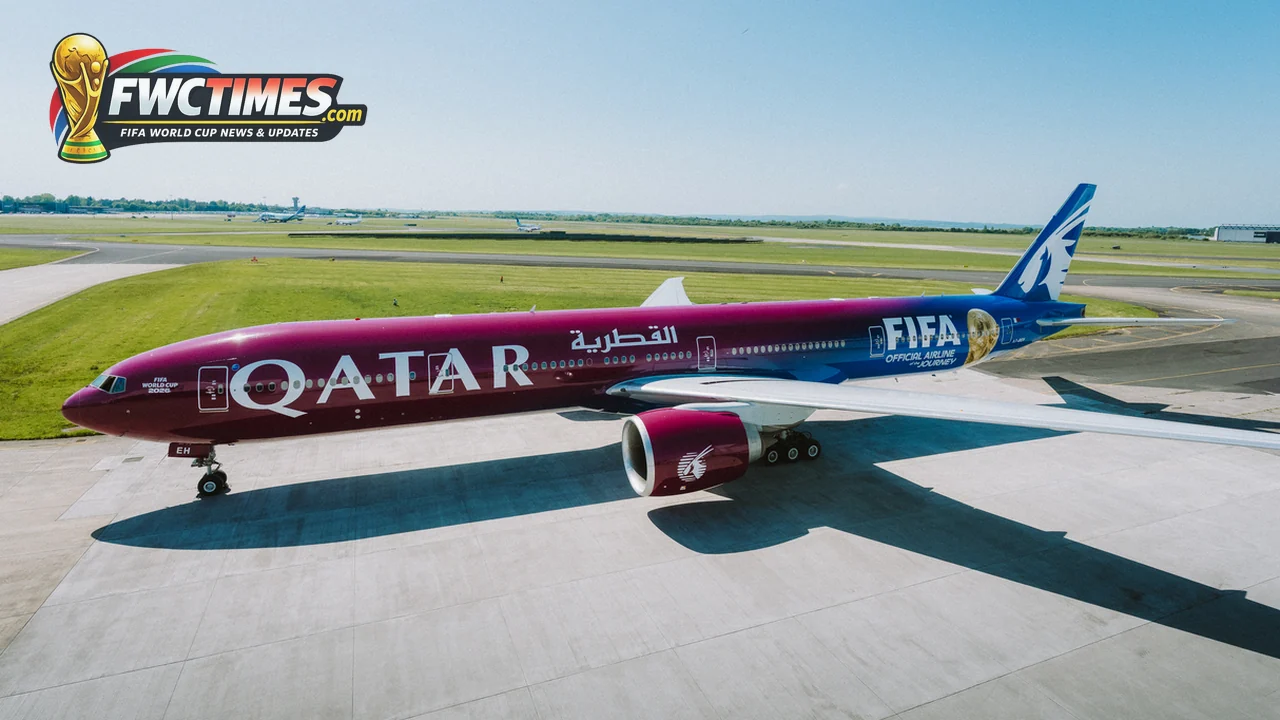
Qatar Airways has revealed a special World Cup 2026 aircraft livery and cabin design. The Boeing 777 will carry tournament branding across selected routes before the expanded finals. The airline says the aircraft will serve key destinations across Europe, the United States, and Asia. The launch turns travel visibility into part of the tournament build.
The airline remains FIFA’s Official Airline Partner, so the livery connects commercial travel with the match schedule. The design appears on the aircraft exterior and inside the cabin. Fans from Qatar and other long-haul football countries will see travel planning become more visible as 2026 approaches. The aircraft also reinforces how global the 48-team tournament has become.
A Boeing 777 Becomes A Moving Tournament Asset
The special livery uses the aircraft itself as a public-facing tournament asset. That matters because airline branding reaches fans long before they enter a stadium. The cabin design extends the same campaign into the passenger experience. It gives the airline a matchday-style touchpoint across international routes.

Qatar Airways has said the aircraft will operate to key destinations in Europe, the United States, and Asia. Exact route assignments for the livery aircraft are yet to be confirmed. The network reaches more than 160 destinations, so the aircraft can appear across several football-heavy regions. Supporters should check flight assignments closer to departure if they want to see that specific plane.
| Item | Confirmed Detail | What It Means |
|---|---|---|
| Aircraft | Boeing 777 | Wide-body jet selected for the special design |
| Partner Role | Official Airline Partner of FIFA | Campaign links directly to tournament travel |
| Cabin | Bespoke World Cup dressing | Branding continues inside the passenger space |
| Routes | Europe, United States, and Asia planned | Exact flight assignments remain yet to be confirmed |
Travel Branding Meets The 48-Team Tournament
The 2026 tournament will stretch across three host countries, so travel messaging carries extra weight. Fans will move through long-haul flights, domestic connections, and stadium cities over several weeks. Air travel does not decide matches, but it shapes the fan journey before tickets become matchday memories. That makes a branded aircraft more than a photo opportunity.
The livery also lands as fans compare routes, match dates, and stadium access. A supporter flying to Canada may also need transport details around BC Place. Another fan planning for the later rounds may track prices through the FIFA World Cup 2026 ticket hub. The aircraft campaign sits inside that wider planning period.
The strongest practical point is timing. Supporters are already building budgets around flights, hotels, tickets, and transfers. Airline visibility can push fans to lock travel earlier, especially for group-stage routes with national-team demand. Still, flight prices and aircraft assignments remain commercial decisions, so fans should treat the livery as branding rather than a guaranteed route signal.
The cabin element gives Qatar Airways another way to separate the campaign from a standard painted aircraft. Passengers may encounter tournament visuals before arrival in North America. That keeps the World Cup message present during the journey, not only at the airport gate. It also helps FIFA keep partner visibility active across regions that will not host matches.
The aircraft also shows how partner activation has moved beyond stadium signage. Airlines can reach supporters during booking, check-in, boarding, and long-haul travel. That gives FIFA and its partners repeated exposure before fans arrive in host cities. The useful fan takeaway remains practical: branded aircraft do not guarantee cheaper seats or easier transfers.
The livery also helps the airline keep tournament visibility active outside North America. Many supporters will never see a host-city billboard before they fly. A branded long-haul aircraft can reach those fans at airports in Europe, Asia, and the Gulf. That makes the campaign useful across regions with heavy football travel demand.
The cabin design matters because it brings the campaign into a controlled passenger space. Exterior paint earns attention on the ground, but cabin details stay visible through the journey. That gives the airline a longer brand moment with travellers who may be planning match trips. It also gives FIFA partner branding a travel touchpoint before stadium arrival.
Frequently Asked Questions
Qatar Airways has turned one aircraft into a visible part of the 2026 travel build. The livery will matter most when fans start connecting flight choices with match dates, stadium access, and ticket plans.
Read Also: Australia Adds Eight Players To World Cup Train-On Squad