
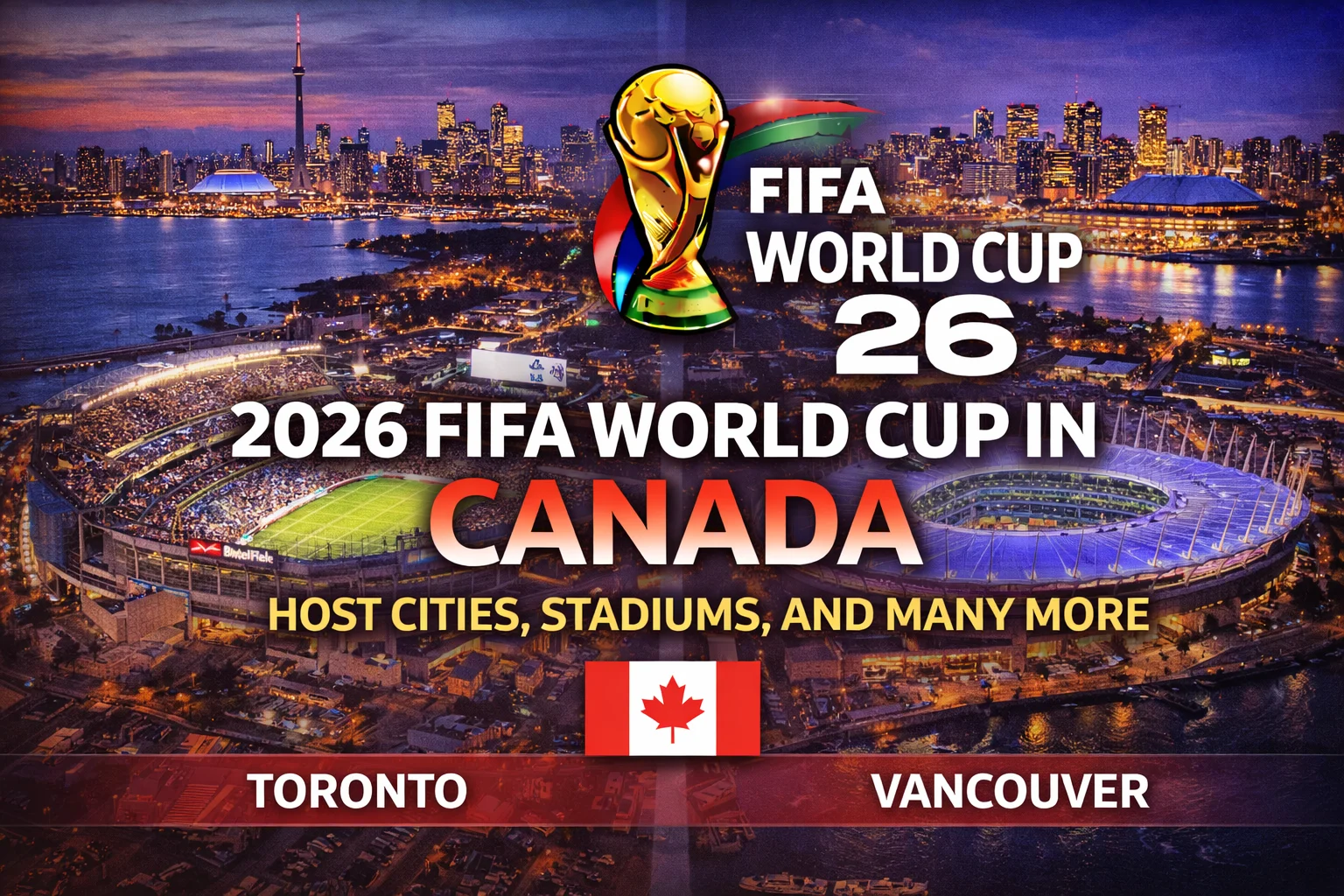
2026 FIFA World Cup in Canada, Toronto, Vancouver, Stadiums, Schedule, Tickets, Tips
The 2026 FIFA World Cup in Canada is shaping up to be a once-in-a-generation football festival for fans everywhere. Canada will co-host the tournament alongside Mexico and the United States, and the scale will feel bigger than anything before. The competition expands to 48 teams and runs from June 11 to July 19, 2026, creating weeks of nonstop matchday energy.
This edition also carries historic weight because it is the first time three countries jointly organize the World Cup. Consequently, the event spreads across North America with a packed calendar and global attention. In addition, the hosts receive automatic qualification, which means Canada will be in the tournament and will play on home soil.
Canada’s role is focused and easy to plan around. Toronto and Vancouver are the only Canadian host cities, and FIFA has confirmed Canada will stage 13 matches total, split between these two hubs. Fans can build a smart trip plan by choosing one city as a base and still seeing multiple games.
Why Canada’s 2026 hosting matters for fans worldwide
Canada is not just a ceremonial co-host in 2026. It brings proven event experience and a strong matchday atmosphere to the tournament. For instance, Canada hosted the 2015 FIFA Women’s World Cup, and the country’s big-city venues and transit systems are ready for major crowds again.
At the same time, the men’s national team enters with added motivation because it will compete as an automatic qualifier. That combination changes the feel of the tournament in Canada. You are not only attending a global event, you are also stepping into two cities where local passion will be intense, especially for Canada’s group games.
Canada’s two official host cities for World Cup 2026
Canada concentrates its World Cup experience into two locations. This simplifies travel planning, reduces guesswork, and helps fans decide where to stay for the best match access.
Toronto
Toronto is a global city known for its diverse communities, and that matters during a World Cup summer. You can expect international fan groups, global food, and nonstop city energy between matches. Additionally, Toronto is easy to reach via major airports and public transit, which helps international visitors move smoothly.
Toronto will host six matches during the tournament, including a Canada match positioned as the country’s opening game. Because Toronto is a natural travel base, many fans can plan a multi-day stay around matchday and sightseeing without needing extra long-distance travel.
Vancouver
Vancouver offers a different kind of host-city appeal. The city combines mountains, ocean views, and a walkable downtown with strong summer festival vibes. Moreover, its mild conditions in June and July can make long matchdays more comfortable for outdoor plans.
Vancouver will host seven matches, which gives it a slightly heavier schedule than Toronto. Since Vancouver sits in the western region of the tournament footprint, it can also work well for fans building a multi-city trip that pairs Canada with nearby U.S. host cities.
Canada’s World Cup 2026 stadiums and what to expect inside
Canada’s matches will be played at two venues, each prepared to meet FIFA expectations for operations, broadcast needs, and fan flow. During the tournament, both venues will use FIFA-style names.
Toronto Stadium: BMO Field
BMO Field will be temporarily branded as Toronto Stadium during the tournament. It is notable because it is a soccer-specific venue, which can create a tighter, louder match atmosphere. In addition, many reports point to a tournament build-out around 45,000 seats, often listed as 45,736, which makes it smaller than several other World Cup stadiums.
A more compact venue can mean higher ticket pressure for the biggest matchdays. Therefore, fans who want to attend Canada’s opener or a weekend fixture should plan early and follow official ticket phases closely.
Upgrades and enhancements have been part of Toronto’s preparation. These include modern event features such as improved lighting and stadium technology, along with accessibility improvements that support inclusive fan experiences.
Vancouver Stadium: BC Place
BC Place will be temporarily branded as Vancouver Stadium. It is an iconic downtown venue with a domed structure and strong major-event infrastructure. The venue is commonly listed around 54,000 to 54,500 capacity, and it offers an enclosed roof setting that can be useful when weather shifts.
Vancouver’s hosting plan includes seven matches at BC Place, which means the stadium will carry a major share of Canada’s schedule. Renovation and preparation discussions have highlighted the typical World Cup priorities such as hospitality spaces, technology, accessibility, and back-of-house operations. As a result, fans can expect a high-production matchday feel, especially for knockout rounds.
Quick reference: host cities, stadiums, and match counts
| Host city | Stadium name during tournament | Primary venue | Matches hosted in 2026 | Fan planning takeaway |
|---|---|---|---|---|
| Toronto | Toronto Stadium | BMO Field | 6 | Compact venue feel, strong transit, big-city stays |
| Vancouver | Vancouver Stadium | BC Place | 7 | More matches, downtown stadium access, summer event buzz |
2026 FIFA World Cup schedule in Canada and key match windows
The World Cup runs from mid-June into July, which is peak travel season in both Toronto and Vancouver. Because of that, flights and hotels can rise fast once ticket phases open and match plans lock in.
Canada’s venues will be active throughout the group phase and beyond. The schedule also considers travel logistics for teams and supporters, which helps manage movement across the tournament footprint.
Canada’s group-stage match dates mentioned for Canadian venues
Canada has group matches listed on these dates in the provided details:
- June 12 in Toronto: Canada vs a UEFA playoff winner in Group B
- June 18 in Vancouver: Canada vs Qatar in Group B
- June 24 in Vancouver: Switzerland vs Canada in Group B
These dates shape the core travel window for fans who want to follow Canada’s group stage on home soil. Additionally, the wider Canadian venue schedule includes other group-stage fixtures up to late June, creating multiple match opportunities beyond Canada’s games.
Knockout football in Canada: why Vancouver becomes a key hub
Vancouver’s BC Place is positioned to host both group matches and high-stakes knockout games. The details provided include Round of 32 matchdays on June 29 and June 30, and a Round of 16 game on July 3. Therefore, Vancouver can become a late-tournament base for fans who want to watch elimination football as momentum builds.
Toronto also has knockout involvement, including a Round of 32 match listed in the Canadian match window. That means both cities can deliver the do-or-die atmosphere that makes World Cup travel unforgettable.
Canada’s national team storyline and what fans can watch for
Canada enters the tournament as an automatic qualifier, and expectations will be high. Under coach Jesse Marsch, the squad is described with stars like Alphonso Davies and Jonathan David. Consequently, the home crowd energy in Toronto and Vancouver should feel intense, especially during the group stage.
Group B opponents mentioned include Switzerland, Qatar, and a playoff winner. Those matchups create a clear narrative for fans: early pressure, a packed stadium atmosphere, and a real chance to build momentum toward the knockout rounds. In addition, the preparation plan includes friendly matches and training camps leading up to June, which supports the idea that Canada wants to peak at the right time.
Infrastructure and city preparations that shape the fan experience
Canada has invested heavily in upgrades to support a major visitor surge. Toronto and Vancouver preparations include transportation networks, airport enhancements, and city operations that aim to handle large matchday crowds safely.
Transit and matchday movement
Both cities are building on strong public transit habits. Using public transit reduces congestion and helps fans arrive earlier, which matters because World Cup entry lines can be long. Moreover, arriving early lowers stress and gives you more time to find your gate, explore concourses, and settle in.
Safety, operations, and accessibility
Security planning is described with advanced technology and controlled event environments. At the same time, accessibility improvements are a consistent theme in the stadium preparations, helping more fans enjoy matchdays comfortably. Therefore, the experience is designed to be welcoming for international visitors and local supporters alike.
Economic and cultural benefits Canada expects from hosting
Hosting the World Cup brings major advantages beyond the matches themselves. Estimates described in the provided information point to a large economic boost through tourism and job creation. Additionally, the event creates cultural exchange moments that highlight Canada’s multicultural identity.
Toronto’s appeal is tied to international cuisines and city festivals. Vancouver’s cultural angle includes Pacific Northwest arts and a coastal summer atmosphere. Consequently, the World Cup becomes more than football. It turns into a countrywide showcase built around two cities, where matchdays connect with food, music, and local community energy.
Sustainability is also mentioned as part of modern event planning, including energy-efficient approaches in stadium operations. This aligns with the idea that the tournament aims for lasting benefits that continue after July 2026.
Fan guide for World Cup 2026 in Canada: tickets, travel, and matchday habits
This section is built for fans who want to plan smarter, save money, and avoid matchday surprises.
Ticket planning that matches the World Cup reality
Ticket sales are handled through FIFA’s official platform and roll out in phases. Prices vary by match stage, and demand is expected to be especially high for Canada matches and weekend fixtures. Therefore, your best strategy is to follow the official phases and plan your budget early, then pick target matches when sales windows open.
Because Canada’s venues are limited to two cities and BMO Field is more compact, match availability can feel tighter than in some larger stadium markets. In other words, early planning matters.
Smart budgeting checklist for Toronto and Vancouver
- Choose one city base first, because inter-city flights in summer can add up quickly.
- Set a daily all-in cap that includes food, transit, and attractions.
- Keep a buffer for last-minute transport changes and weather-related gear.
Travel logistics for Toronto
Toronto has multiple airport options and strong rail connectivity, which helps international and regional travelers. Once you are in the city, public transit and walking can cover many tourist areas. If you stay outside downtown, build extra time into matchday routes because crowds rise sharply before kickoff.
Travel logistics for Vancouver
Vancouver is straightforward for international arrivals, and downtown is compact. Since BC Place is downtown, many hotels and transit lines are within easy reach. If you want to save money, consider staying along a rapid transit line rather than directly beside the stadium district, especially on high-demand match weeks.
Weather comfort and wildfire smoke awareness
June and July are generally pleasant, yet planning for shifting temperatures is still smart. Layering helps, especially if you spend long hours outdoors.
Wildfire smoke and air quality have also been discussed as a planning factor. This does not mean matches will be disrupted, but it does mean travelers should pack smart and monitor updates.
Practical items that can help on smoky days:
- A well-fitting mask for transit and outdoor queues
- Eye drops for dry air irritation
- A flexible schedule so you can move sightseeing indoors
Matchday routines that make your experience smoother
Arrive earlier than you think you need. Security checks and entry lines can be long, so extra time improves your whole day. Also, keep essentials light because bag policies can be strict. A small clear bag, your ID, and a battery pack are often enough.
Finally, respect local rules and transit etiquette. Both cities run large events often, so follow signage, queue patiently, and plan your exit route after the final whistle.
Latest updates mentioned for February 2026
Qualifiers are described as nearing completion, with final spots expected to be decided by March. Infrastructure projects in Toronto and Vancouver are described as on track, with stadium work moving toward final touches.
Ticket lotteries are also described as beginning, which adds urgency for fans who want to attend matches in Canada. Consequently, the planning moment is now, especially for travelers who want strong hotel options during peak summer dates.
FAQs
Toronto and Vancouver are Canada’s host cities, staging a combined 13 matches across group and knockout stages.
BMO Field in Toronto will be branded as Toronto Stadium, and BC Place in Vancouver will be branded as Vancouver Stadium.
Canada has matches listed on June 12 in Toronto, June 18 in Vancouver, and June 24 in Vancouver.
Tickets are handled through FIFA’s official platform in phased sales, including lotteries and later general availability.
Yes. June and July are peak travel months, and demand increases as ticket phases open and match windows approach.
Final Thoughts
The 2026 FIFA World Cup in Canada brings the global game into two cities built for major moments. Toronto delivers a multicultural, high-energy base with a compact stadium feel. Vancouver adds downtown convenience, scenic summer atmosphere, and a schedule that reaches into the knockout rounds.
If you plan around the key match windows, follow official ticket phases, and book travel smart, you can build a World Cup experience that feels smooth and unforgettable. Moreover, with Canada hosting 13 matches across Toronto and Vancouver, fans have a rare chance to enjoy the tournament intensity without constantly changing cities. You can check also 2026 FIFA World Cup Hosts