FIFA World Cup 2026 Group J, Schedule, Standings Rules, Teams & Predictions
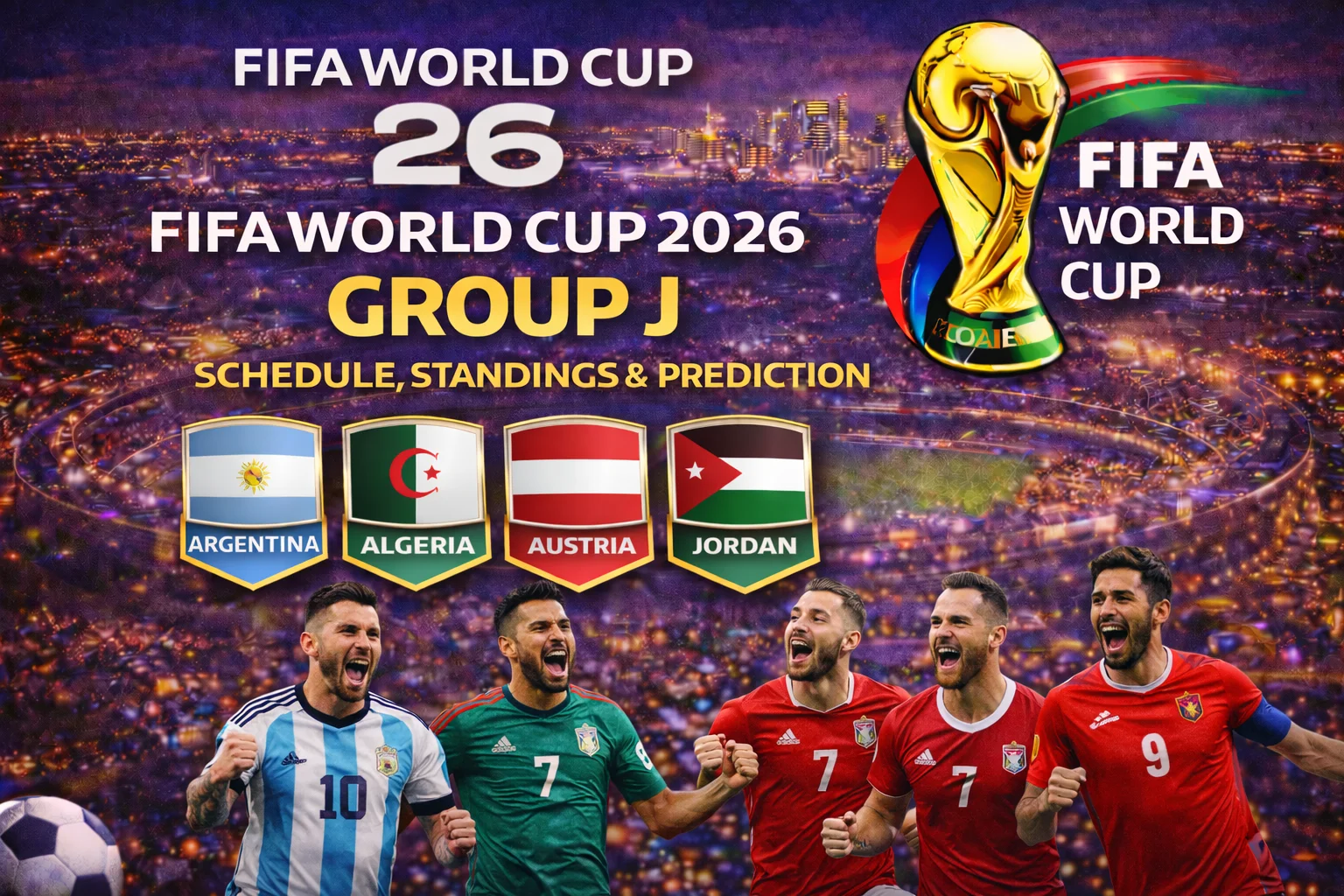
FIFA World Cup 2026 Group J sets up a group-stage story that football fans love. A defending champion profile in Argentina, a dangerous Algeria team, a structured Austria side, and a fearless Jordan squad chasing a historic statement. The mix of South America, Africa, Europe, and Asia brings different rhythms, different game plans, and different pressure points.
This is also an expanded tournament, so the group stage carries even more meaning. Teams want the top two spots, but the table can stay alive deeper into the matchdays because third place can still matter. In a short schedule window, momentum is everything. One early result can change every decision after it.
Group J teams: styles, strengths, and pressure points
Argentina
Argentina enters Group J as the headline team. They come in with tournament know-how, calm under pressure, and the ability to win matches in different ways. They can control the ball when the opponent sits deep, and they can strike quickly when space opens.
Lionel Messi remains the central figure in the story, with leadership, vision, and the ability to decide tight games. The squad also includes a strong blend of experience and youth, with Enzo Fernandez in midfield, Julian Alvarez as an attacking threat, and Cristian Romero in defense. Their shape and approach under Lionel Scaloni are built on flexibility, which is valuable in a three-game group stage.
One talking point around Argentina is adaptation. North American summer conditions can be demanding, and tournament management matters. Still, their tactical range and composure make them the favorite to finish first.
Algeria
Algeria arrives with the tools to make Group J uncomfortable for everyone. Their best versions defend in layers, stay compact, and break quickly into space when the opponent makes a mistake. That transition threat becomes even more dangerous early in tournaments when teams are still finding rhythm.
Riyad Mahrez brings creativity, dribbling, and set-piece quality. Islam Slimani offers experience and presence up front. Mohamed Amoura adds depth to the attack. Under Vladimir Petkovic, the team leans into quick moves and creative plays, with a focus on punishing loose passing.
Algeria’s challenge is consistency in big moments. In a group where second place looks like a real fight, discipline is vital. A red card or one late lapse can flip the standings quickly.
Austria
Austria often looks strongest when a match becomes tactical. They are built for structure and timing, and they can control stretches of games through disciplined positioning. Their approach under Ralf Rangnick centers on pressing cues, organized defending, and smart counter-attacks when the opening appears.
Key names include Marcel Sabitzer for midfield control and David Alaba for leadership and stability. Austria’s pathway into matches is clear: stay compact, press at the right moments, and punish teams that overcommit.
The key worry is fitness and injuries to important players, because that can reduce their sharpness in a pressing system. Even so, their organized approach makes them a strong candidate for a top-two finish.
Jordan
Jordan enters as the underdog on paper, but that can create freedom. With less external pressure, teams often play with clarity: defend well, stay close in goal difference, and hunt one moment to change the story.
Jordan’s debut presence brings emotion to Group J. Musa Al-Taamari stands out for speed on the wings and the ability to create danger in transition. Coach Hussein Ammouta is associated with a fighting spirit that suits a tournament group phase.
Jordan’s biggest task is managing experience gaps. They are facing opponents who have lived in World Cup moments before. Still, group stages are where surprises happen, especially when the underdog stays disciplined and the favorite feels the weight of expectation.
FIFA World Cup 2026 Group J schedule and fixtures
Group J matches are set from June 16 to June 27, 2026, over three matchdays. Games are hosted across venues in the United States, including Kansas City, Santa Clara, Arlington, Dallas, Los Angeles, and San Francisco in the provided match listings. Matchday 3 features simultaneous kickoffs in the group, which protects fairness and creates that classic scoreboard watch feeling.
| Date | Fixture | Venue (City) |
|---|---|---|
| June 16, 2026 | Argentina vs Algeria | Arrowhead Stadium (Kansas City) |
| June 16, 2026 | Austria vs Jordan | Levi’s Stadium (Santa Clara / San Francisco area) |
| June 22, 2026 | Argentina vs Austria | AT&T Stadium (Arlington / Dallas area) |
| June 22, 2026 | Jordan vs Algeria | Levi’s Stadium (Santa Clara) / AT&T Stadium (Dallas) |
| June 27, 2026 | Algeria vs Austria | Arrowhead Stadium (Kansas City) / SoFi Stadium (Los Angeles) |
| June 27, 2026 | Jordan vs Argentina | AT&T Stadium (Arlington) / SoFi Stadium (Los Angeles) |
Matchday 1 starts on the same date for both games, so nobody has an early table advantage. Matchday 2 becomes the swing point. Matchday 3 often turns into a calculator match, where teams manage risk based on the other result.
How Group J standings work in the 2026 format
The points system
Each team plays three matches, one against each opponent.
- 3 points for a win
- 1 point for a draw
- 0 points for a loss
This sounds simple, but the pressure builds fast in a short group. One draw can be useful. One heavy loss can be costly because goal difference matters.
Tiebreakers and why discipline matters
When teams finish level on points, group positions can come down to tiebreakers. The provided guidance highlights:
- head-to-head results
- goal difference
- goals scored
- fair play points (discipline)
That is why a late yellow card or a needless red card can matter beyond one match. It can shape the final table.
Why third place still matters
The expanded tournament adds a major twist: third-place teams can still advance as best third-placers. That changes how teams manage late match situations. A team chasing a draw might protect goal difference more carefully. A team leading by one might focus on game control instead of chasing extra goals.
Current Group J standings before kickoff
As of February 2026, no matches have been played yet. The standings begin at zero across the board.
| Position | Team | Played | Won | Drawn | Lost | Goals For | Goals Against | Goal Difference | Points |
|---|---|---|---|---|---|---|---|---|---|
| 1 | Argentina | 0 | 0 | 0 | 0 | 0 | 0 | 0 | 0 |
| 2 | Algeria | 0 | 0 | 0 | 0 | 0 | 0 | 0 | 0 |
| 3 | Austria | 0 | 0 | 0 | 0 | 0 | 0 | 0 | 0 |
| 4 | Jordan | 0 | 0 | 0 | 0 | 0 | 0 | 0 | 0 |
Once the tournament starts, updates follow each matchday and the tiebreakers begin to shape the table.
Key players to watch in FIFA World Cup 2026 Group J
Lionel Messi (Argentina)
Messi remains the face of Argentina’s story in Group J. Even at 39, his vision, decision-making, and leadership can decide close matches. His presence also changes how opponents defend, because one moment of space can become a goal or a match-winning pass.
Riyad Mahrez (Algeria)
Mahrez adds creativity and control in the final third. His dribbling can break compact shapes, and his set pieces bring danger even when Algeria has fewer chances. In tight matches, a dead-ball delivery can swing a result.
Marcel Sabitzer (Austria)
Sabitzer is a key piece for Austria’s structure. He helps control tempo, supports pressing triggers, and can threaten from distance. His fitness matters, because Austria’s game plan relies on sharp movement and high-intensity phases.
Musa Al-Taamari (Jordan)
Al-Taamari brings pace and direct threat. Jordan’s best path includes staying compact, then attacking quickly when the moment appears. That style needs a player who can carry the ball and create an upset chance.
Group J match-by-match preview: tactical themes to watch
Matchday 1: Argentina vs Algeria
This opener can set the emotional tone for the group. If Argentina scores early, they can control tempo and manage energy. If Algeria keeps it level deep into the match, pressure rises and transition chances become sharper.
What to watch:
- Algeria’s counters after midfield turnovers
- Argentina’s patience against a compact block
- set pieces, where early tournaments often produce key goals
Likely result range in the provided outlook: Argentina narrow win or a controlled draw.
Matchday 1: Austria vs Jordan
This match matters for both sides immediately. Austria may treat it like a must-win. Jordan may treat it like a chance to steal a point and protect goal difference.
What to watch:
- Austria’s pressing triggers and Jordan’s build-up choices
- the first goal, because it changes risk instantly
- late-game management, where fatigue can create mistakes
Likely result range in the provided outlook: Austria win, with a draw possible if Jordan defends smartly.
Matchday 2: Argentina vs Austria
This game looks like the group’s most tactical contest. Austria’s structure can frustrate top teams. Argentina often solves problems through timing, rotations, and individual quality.
What to watch:
- how Austria defends between the lines
- whether Argentina’s fullbacks get pinned by counters
- the rhythm of the match, because Austria likes controlled spells
Likely result range in the provided outlook: tight match, with Argentina slightly favored.
Matchday 2: Jordan vs Algeria
This can become a direct fight for third place, and it may even impact second place depending on Matchday 1 results. Algeria will want control. Jordan will look for moments.
What to watch:
- Algeria’s wide play and crossing patterns
- Jordan’s defensive transition after losing the ball
- discipline, because cards can affect tiebreakers
Likely result range in the provided outlook: Algeria win or a low-scoring draw.
Matchday 3: Algeria vs Austria
Group finales often become chess matches. If both teams sit on three or four points, this match can decide second place. If one team must win, the final minutes can turn chaotic.
What to watch:
- early caution versus late urgency
- substitutions, because legs and nerves matter
- goal difference awareness, especially with third-place comparisons
Likely result range in the provided outlook: draw or one-goal win either way.
Matchday 3: Jordan vs Argentina
Context decides everything here. If Argentina has already qualified, rotation can open a door. If Argentina still needs points for first place, they push for a professional result.
What to watch:
- motivation and rotation choices
- Jordan’s counter moments if Argentina overcommits
- the scoreboard from the other match shaping urgency
Likely result range in the provided outlook: Argentina win, but context could keep it close.
Predictions for FIFA World Cup 2026 Group J
Predictions depend on final squads, fitness, and match momentum. Still, the provided analysis points to a clear theme: Argentina is favored to top the group, and the second-place race sits between Austria and Algeria, with Jordan chasing an upset path.
Predicted final standings table
| Position | Team | Points | Predicted Record (W-D-L) | Goal Difference |
|---|---|---|---|---|
| 1 | Argentina | 9 | 3-0-0 | +6 |
| 2 | Austria | 6 | 2-0-1 | +2 |
| 3 | Algeria | 3 | 1-0-2 | -2 |
| 4 | Jordan | 0 | 0-0-3 | -6 |
The logic inside this prediction:
- Argentina has the strongest combination of control, experience, and match management.
- Austria’s structure travels well in tournaments and helps them grind points.
- Algeria can absolutely qualify, but they may need efficiency in key moments.
- Jordan’s best case is staying close in goal difference while chasing one “statement” result.
Probability-style forecast from the provided outlook
| Team | Chance to finish top 2 | Chance to finish 3rd | Chance to finish 4th |
|---|---|---|---|
| Argentina | 75% | 20% | 5% |
| Austria | 50% | 35% | 15% |
| Algeria | 40% | 40% | 20% |
| Jordan | 25% | 35% | 40% |
This aligns with the feel of the group: Argentina is the safest pick, Austria and Algeria are close, and Jordan has underdog freedom that can create danger.
Venue highlights for Group J matches
Group J is linked with major stadiums that can lift the atmosphere and increase intensity.
Arrowhead Stadium (Kansas City)
Arrowhead is known for an electric crowd and a large capacity around 76,000. Big-match energy fits a fixture like Argentina vs Algeria, where early tournament tension can turn every moment loud.
Levi’s Stadium (Santa Clara / San Francisco area)
Levi’s Stadium offers modern facilities and a strong event setup. A match like Austria vs Jordan here becomes a test of focus and game management.
AT&T Stadium (Arlington / Dallas area)
AT&T Stadium is built for huge occasions and is known for its scale, often described as “Jerry World.” In a group where goal difference and momentum matter, a major venue adds weight to every decision.
SoFi Stadium (Los Angeles)
SoFi brings a finals-caliber feel. If Group J’s last matchday results are still open, this setting can make pressure feel heavier, especially if teams need goals late. You can check aslo FIFA World Cup 2026 Group H
FAQs
Group J includes Argentina, Algeria, Austria, and Jordan.
Group J matches begin on June 16, 2026.
The top two teams advance automatically, and the third-place team can still advance as a best third-placer.
Argentina is favored to finish first in the group based on the provided predictions.
Matches are listed across Kansas City, Santa Clara, Arlington, Dallas, and Los Angeles in the provided venue details.