FIFA World Cup Golden Glove Winners List and Records

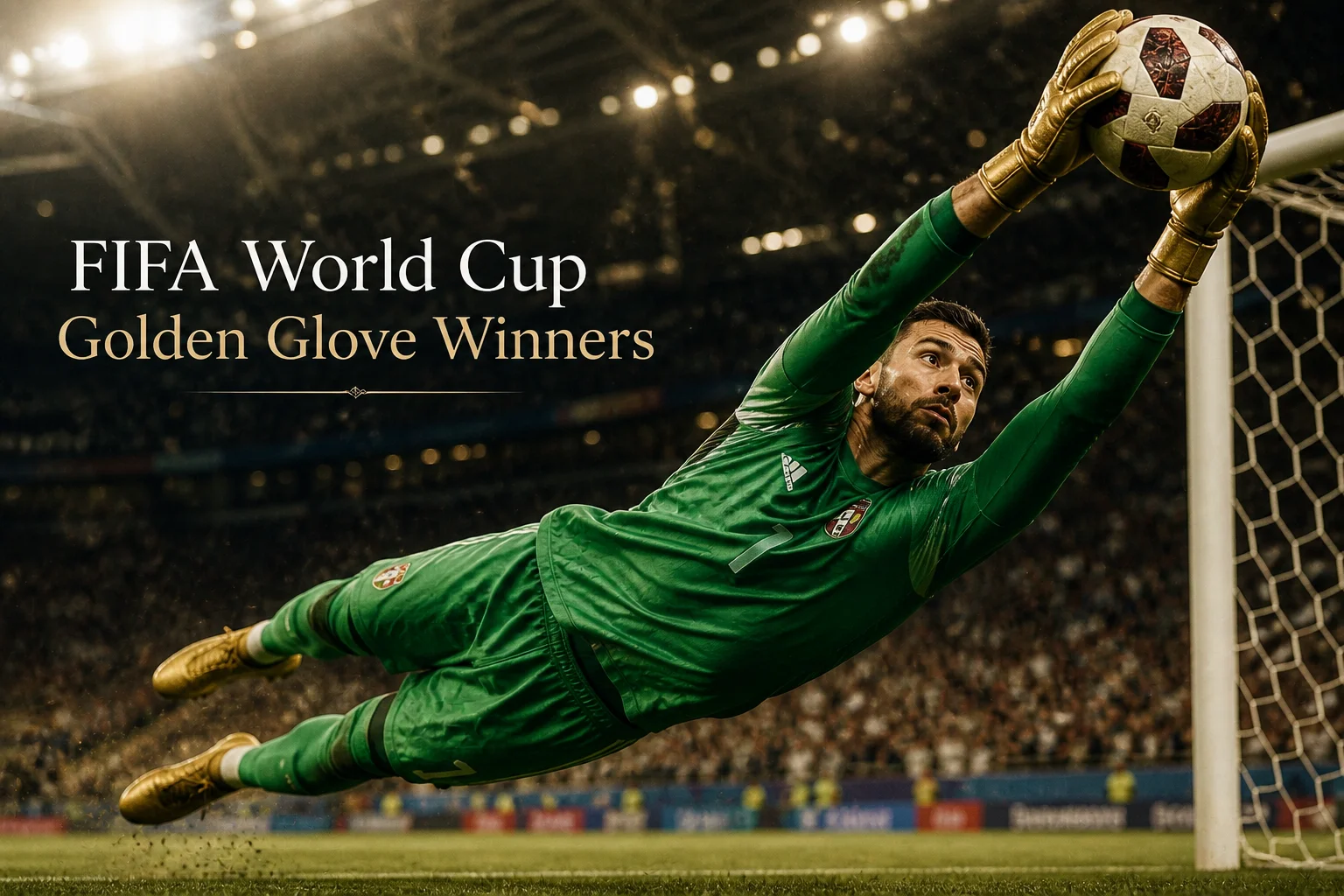
Goalkeepers play a decisive role in tournament football. This article covers the FIFA World Cup Golden Glove winners who stood out on the biggest stage. Their saves and leadership often define who lifts the trophy.The FIFA World Cup Golden Glove winners include legendary goalkeepers. They played key roles for their countries. The award was officially introduced in 1994 to honor the best keeper.
Official FIFA World Cup Golden Glove Winners
The award was originally named the Lev Yashin Award from 1994 to 2006. It was renamed the Golden Glove in 2010. The official winners of this prestigious goalkeeper honor are listed in the following section.
| Year | Goalkeeper | Country | Matches Played |
|---|---|---|---|
| 2022 | Emiliano Martínez | Argentina | 7 |
| 2018 | Thibaut Courtois | Belgium | 7 |
| 2014 | Manuel Neuer | Germany | 7 |
| 2010 | Iker Casillas | Spain | 7 |
| 2006 | Gianluigi Buffon | Italy | 7 |
| 2002 | Oliver Kahn | Germany | 7 |
| 1998 | Fabien Barthez | France | 7 |
| 1994 | Michel Preud’homme | Belgium | 6 |
Michel Preud’homme and Fabien Barthez Early Winners
Michel Preud'homme of Belgium was the inaugural winner in the United States in 1994. He made spectacular saves during the group stage. His performances established the high standard for future winners.Fabien Barthez of France won the award in 1998 on home soil. He conceded only two goals during the entire tournament as France won their first title. He combined athletic saves with excellent distribution. He remains a legend of French football.He kept five clean sheets during that historic tournament. His speed off the line was a key asset. Barthez was celebrated for his concentration and agility. He retired as one of France's most decorated goalkeepers.His partnership with defenders Laurent Blanc and Marcel Desailly was legendary. They created an unbreakable wall for opposition teams. Barthez played with immense confidence throughout the campaign. He remains a hero in France.
Oliver Kahn and Gianluigi Buffon Defensive Giants
Oliver Kahn won the award in 2002 with historic performances in goal. The German keeper conceded only one goal before the final match. He won the Golden Ball as well as the goalkeeper award.Gianluigi Buffon of Italy won the award in Germany in 2006. He conceded only two goals, which were an own goal and a penalty. His saves were crucial during Italy's successful run. He showed incredible organization in the defensive line.Buffon kept five clean sheets during the 2006 tournament. He made a legendary save in the final against Zinedine Zidane. His leadership was crucial to Italy winning their fourth title. He remains a symbol of longevity.He was a vocal leader on and off the pitch. His command of the area was near perfect. Buffon is considered by many as the greatest goalkeeper of all time. His international career spanned over two decades.
Iker Casillas Spain Captain Legend
Iker Casillas of Spain won the award in South Africa in 2010. He kept five clean sheets during the tournament. He saved a crucial penalty against Paraguay in the quarter-finals.His most famous save came in the final match. He blocked a shot from Netherlands striker Arjen Robben in a one-on-one situation. That save secured the title for Spain. He captained his country to their first world title.Casillas did not concede a single goal during the knockout stages. He showed incredible reflexes under tournament pressure. He is celebrated as one of the greatest captains in history. His trophy collection is immense.His leadership was vital for the Spanish squad. He brought calm to a high-pressure dressing room. His save against Robben is replayed constantly by fans. Casillas remains a legendary Spanish hero.
Manuel Neuer Sweeper-Keeper Revolution
Manuel Neuer of Germany won the award in Brazil in 2014. He revolutionized the position with his proactive play outside the penalty area. He acted as an extra defender for his team.His distribution started many German attacks. He made key saves in the final against Argentina. He conceded only four goals during the entire tournament. He set a new tactical benchmark for modern goalkeepers.His positioning allowed Germany to play with a high defensive line. He showed great confidence with the ball at his feet. Neuer remains a key figure in German football history. He inspires new generations of sweeper-keepers.He studied the habits of opposing forwards in detail. His performance against Algeria in 2014 was a tactical masterclass. He cleared multiple long balls far outside his box. Neuer remains a modern legend.
Thibaut Courtois Belgian Wall
Thibaut Courtois of Belgium won the award in Russia in 2018. He made twenty-seven saves, which was the highest count in that tournament. He helped Belgium secure a historic third-place finish.His best performance came against Brazil in the quarter-finals. He made multiple spectacular saves to secure a two-one victory. He showed great aerial dominance and positioning. He remains one of the top keepers in the world.His height allowed him to dominate the penalty box during set-pieces. He was a model of reliability for Belgium. Courtois has won major club trophies alongside his international success. He continues to perform at the highest level.He is famous for his reach and catching ability. He commanded the Belgian defense with confidence. His performance in 2018 established his place among the elite. Courtois continues to play at the top level.
Emiliano Martínez Argentinian Hero
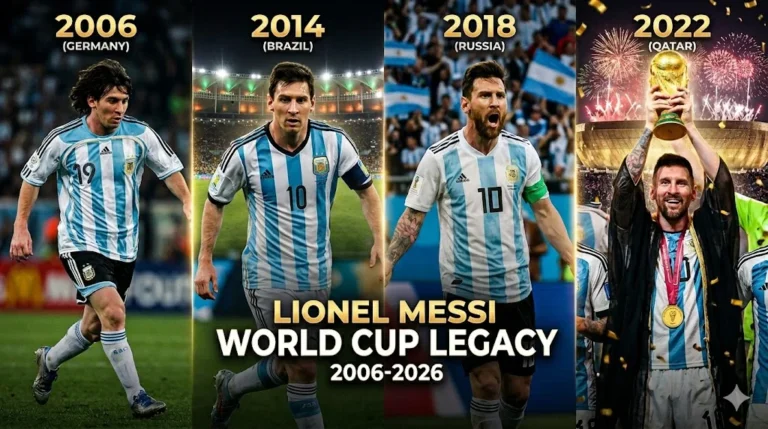
Emiliano Martínez of Argentina won the award in Qatar in 2022. He made a legendary save in the final minute of extra time against France. He then saved a penalty in the shootout.His performances in shootouts were crucial to Argentina winning the title. He was a vocal leader in the squad. His actions helped Lionel Messi secure his first World Cup title. You can check the
Lionel Messi World Cup statsfor his team's achievements.He showed great psychological dominance during penalty shootouts. His confidence inspired his teammates. Martínez became a hero in his country after Qatar. He remains a key player for Argentina.He works hard to prepare for penalty scenarios. His save against Kingsley Coman in the shootout was decisive. He has brought a competitive edge to the national team. Martínez remains an iconic figure.
Tactical Role of Goalkeepers in 2026
The upcoming tournament in North America will feature new tactical challenges. Teams will rely on their goalkeepers to distribute the ball under pressure. Sweeper-keepers will remain highly valued by modern coaches.Experienced tacticians like
Carlos Queirozand
Sebastien Desabrewill prepare their keepers. Shootouts will also demand high preparation. Goalkeepers will be under the spotlight at the
FIFA World Cup.Goalkeeper performance will be vital for tournament progression. The margin for error will be extremely small. Fans expect outstanding displays from the top keepers. The battle for the Golden Glove will be intense.
Frequently Asked Questions
Who determines the FIFA World Cup Golden Glove winners?
The FIFA Technical Study Group determines the winner of the Golden Glove. They evaluate the goalkeepers’ performances throughout the entire tournament to make their decision.
What was the Golden Glove award previously called?
The award was previously called the Lev Yashin Award from 1994 to 2006. It was named in honor of the legendary Soviet goalkeeper before being renamed in 2010.
Has any goalkeeper won the Golden Ball?
Yes, Oliver Kahn of Germany won the Golden Ball in 2002. He is the only goalkeeper in history to win both the Golden Glove and the Golden Ball in the same tournament.
Who won the Golden Glove in the 2022 World Cup?
Emiliano Martínez of Argentina won the Golden Glove in 2022. His dramatic saves in the final and shootouts helped Argentina secure the world title.
Conclusion
Goalkeepers will always remain the last line of defense on the football pitch. The list of FIFA World Cup Golden Glove winners features legends who defined defensive greatness. The upcoming tournament in North America will surely produce more goalkeeper heroics.Stay tuned to FWCTimes.com for the latest FIFA World Cup 2026 updates.Read Also:
FIFA World Cup Best Player Award Winners & History