Extra Time Rules For FIFA World Cup 2026
The Extra Time Rules World Cup 2026 matter most when a knockout match is tied after 90 minutes. Extra time can change tactics, substitutions, and even how teams manage risk before penalties.
There is no extra time in the group stage. Extra time is used in knockout rounds if the match is level after 90 minutes plus stoppage time, and penalties decide it if the score stays tied.
When extra time is used at the 2026 World Cup
Extra time is not a “default” part of every match. It is mainly a knockout-stage tool that forces a winner on the day.
Group stage: no extra time, draws are allowed
Group games end after 90 minutes plus stoppage time. If the score is tied, both teams take a point and the match finishes.
Knockout stage: a winner is required
From the first single-elimination round onward, matches cannot end as draws. If the score is level after 90 minutes plus stoppage time, the game goes to extra time. If it remains tied after extra time, the winner is decided by a penalty shootout.
Because the tournament is expanded and includes an added early knockout round, there can be more “win-or-go-home” games where extra time shows up.
Extra Time Rules World Cup 2026 format, timing
Extra time is simple in structure, but it feels very different in the stadium and on TV.
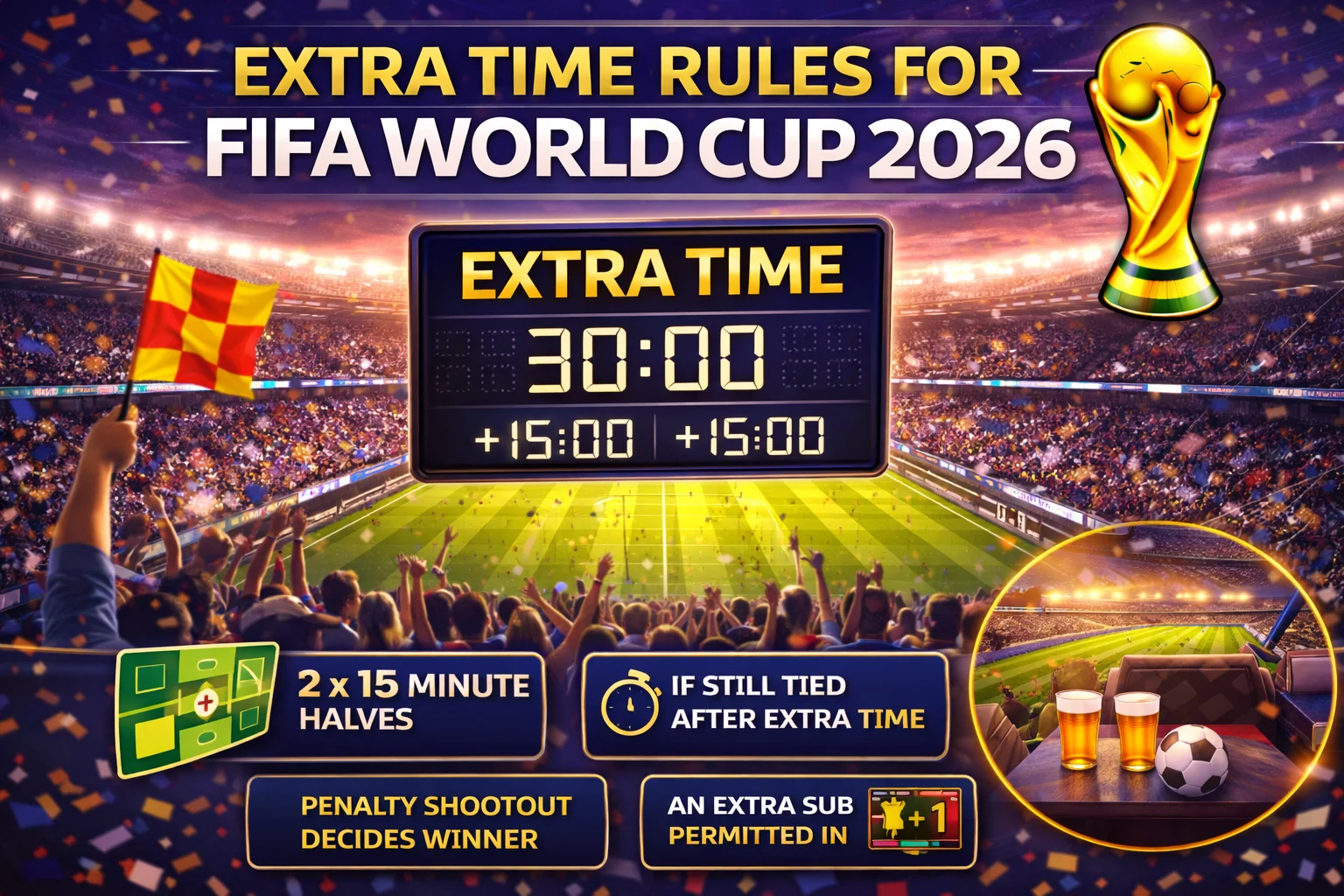
Two halves of 15 minutes (30 minutes total)
Extra time is played as two 15-minute halves. Teams switch ends after the first extra-time half, with a short break in between.
Stoppage time still applies in extra time
Extra time is not always a clean 30 minutes. Referees can add time at the end of each extra-time half for delays such as injuries, substitutions, or VAR checks. That is why a match can run longer than many fans expect.
No golden goal, no sudden victory
Modern World Cup extra time is not “first goal wins.” Teams play the full extra-time periods, even if someone scores early. This keeps comebacks possible and prevents matches ending instantly on one moment.
Extra time vs stoppage time: know the difference
Stoppage time (also called added time) happens at the end of each half to make up for time lost. Extra time is the separate 30-minute overtime period used only in knockout games.
Substitutions, hydration breaks, and VAR in extra time
Extra time is a physical test, so match management becomes a big storyline.
Substitutions can expand if the match goes to extra time
Teams usually have up to five substitutions in regulation time. If a match goes to extra time, an additional substitution can become available, bringing the total to six. Coaches often save changes for minute 90+ to add fresh legs, stabilize the midfield, or prepare for penalties.
Concussion substitutions are treated separately as a safety measure, and they do not follow the same tactical planning as normal changes.
Cooling or hydration breaks can affect the rhythm
In hot or high-risk conditions, World Cup matches may include short hydration or cooling breaks. For fans, that can mean longer match windows and more tactical resets, especially in tense knockout games that drift toward extra time.
VAR still matters in extra time
VAR can be involved in extra time the same way it is in regulation time, especially for goals, penalties, red cards, and key identity decisions. Reviews can add delays, and those delays can lead to extra-time stoppage time.
What happens when a match is tied
| Tournament stage | If level after 90 minutes | What happens next |
|---|---|---|
| Group stage | Match ends as a draw | Points shared |
| Knockout stage (Round of 32 to Final) | Extra time is played (2 x 15) | If still tied, penalty shootout |
| After extra time | Still level | Penalties: five each, then sudden death |
Penalty shootout rules after extra time
If extra time cannot separate the teams, penalties decide the winner.
Five kicks each, then sudden death
Each team takes five penalties, alternating kicks. If one team leads after five each, they win. If it is still tied, it moves to sudden death rounds, where one miss can decide the match.
Only players on the pitch can take penalties
Only players who are on the field at the end of extra time are eligible to take kicks. You cannot bring on a specialist after the final whistle.
Goalkeeper rules still apply
Goalkeepers must follow the standard procedure, and officials can enforce rules around movement and interference. If a violation impacts the kick, retakes can happen depending on the situation.
FAQs
No. Group stage matches can finish as draws after 90 minutes plus stoppage time, with points shared.
Extra time is 30 minutes total, played as two 15-minute halves, with possible added time at the end of each half.
No. Those older sudden-ending rules are not used. Teams play the full extra time.
Teams can use up to five subs in regulation, and one additional substitution can be available in extra time (total six), plus separate concussion options.
The match goes to a penalty shootout five kicks each, then sudden death if the score stays level.
Conclusion
Extra time at World Cup 2026 is a knockout-only rule designed to produce a winner. Remember the basics: group games end in draws, knockout games go to 2×15 extra time, and penalties decide it if needed. If you plan your viewing around that 120-minute possibility, you will never be caught off guard on a big knockout night.