Players Who Could Retire After World Cup 2026 List

The speculation regarding Players Who Could Retire After World Cup 2026 has intensified among fans. The expanded 48-team tournament represents the final global stage for a golden generation of stars. These veterans hope to deliver one last memorable performance for their nations. Age and physical demands make international departures inevitable after the final match.
Several iconic names have already hinted at their international retirement timelines. Fans must prepare for emotional farewells as legends step aside for younger talents. The post-tournament transition will reshape multiple national team rosters globally. Tracking their final qualification matches is a priority for supporters.
This guide highlights the key players heading toward their international farewells. We look at their career stats, ages, and retirement likelihoods. Our analysis examines how these departures will affect their respective squads.
Which players could retire after World Cup 2026?
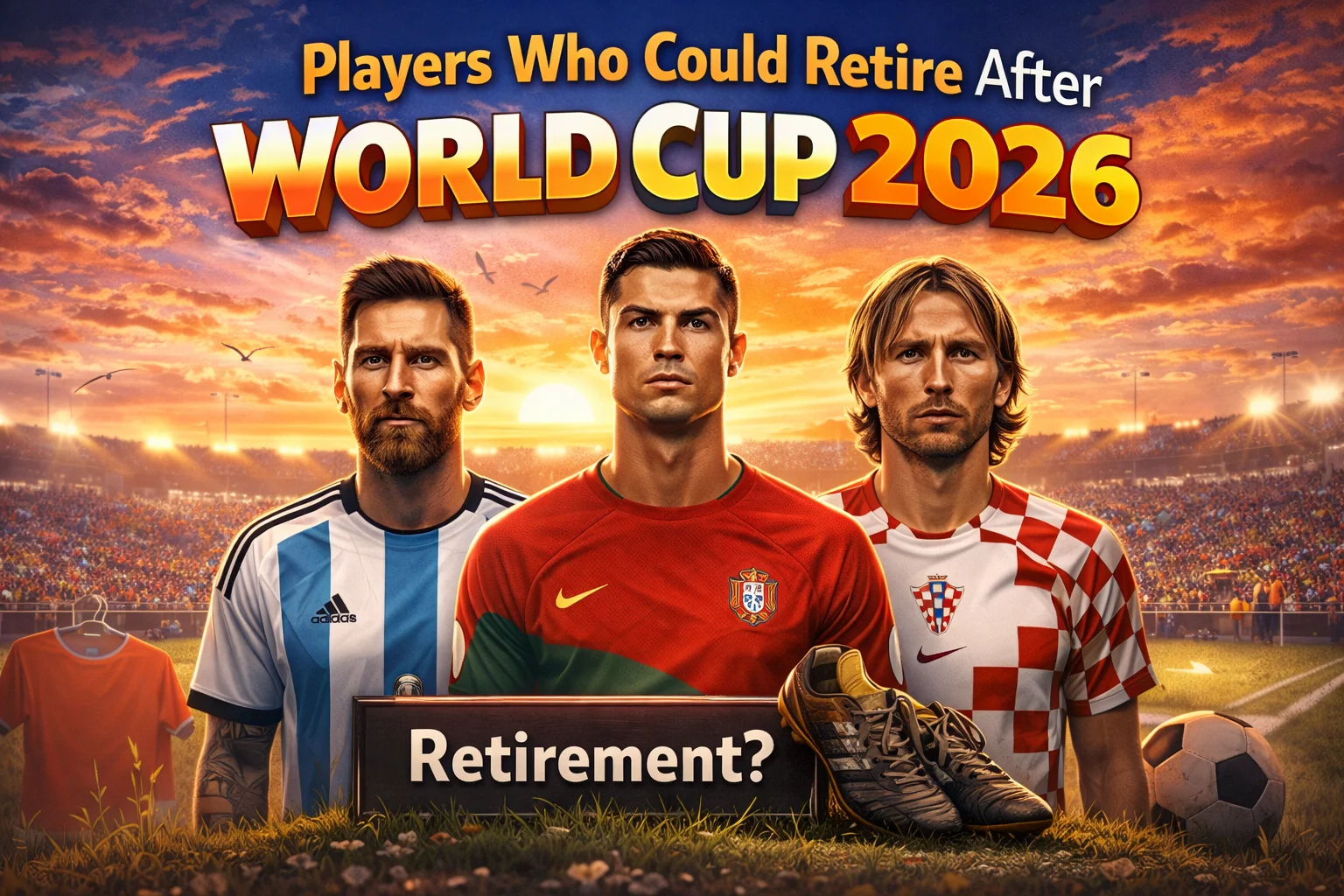
The list of Players Who Could Retire After World Cup 2026 features Lionel Messi, Cristiano Ronaldo, and Luka Modric. These legendary stars will likely finish their international careers at the tournament. Their national teams must plan for a future without their core leaders.
Fans can check the FIFA World Cup draw to see potential group matches. Track historical statistics in the most World Cup wins by country guide. Check the FIFA World Cup standings page to follow qualification results.
| Player Name | Age in 2026 | National Team | Retirement Likelihood |
|---|---|---|---|
| Cristiano Ronaldo | 41 years old | Portugal | High Likelihood |
| Lionel Messi | 39 years old | Argentina | High Likelihood |
| Luka Modrić | 40 years old | Croatia | High Likelihood |
| Robert Lewandowski | 37 years old | Poland | High Likelihood |
| Kevin De Bruyne | 35 years old | Belgium | Medium Likelihood |
Shortlist of Players Who Could Retire After World Cup 2026
Cristiano Ronaldo is expected to make his final international appearance in 2026. The Portuguese forward will be 41 years old during the tournament. He has broken almost every scoring record in international football history. His departure will mark the end of an era for Portugal.
Lionel Messi is also expected to conclude his international journey after the event. The Argentine captain will be 39 years old as he defends the crown. He led his nation to global glory in 2022. His presence remains the defining feature of the Argentina squad.
Luka Modric continues to guide Croatia with midfield brilliance and leadership. The veteran midfielder will be 40 years old in 2026. He has led Croatia to consecutive podium finishes at past tournaments. Replacing his tactical vision will be a massive challenge for his coach.
Predicting Players Who Could Retire After World Cup 2026
Robert Lewandowski remains the key striker and captain for Poland. The forward will be 37 years old during the summer games. His goalscoring record makes him Poland’s greatest player. He wants to lead his nation to a deep tournament run before retiring.
Kevin De Bruyne represents the core creative force for Belgium’s squad. The midfielder will be 35 years old in 2026. He has faced multiple injury struggles in recent seasons. He may choose to focus on club football after the tournament finishes.
Neymar remains the focal point of Brazil’s attacking hopes. The forward will be 34 years old during the tournament. Injury recovery will determine his fitness levels for the matches. He has previously discussed the mental toll of international football campaigns.
Veteran departures across other national squads
Angel Di Maria has already retired from international football before this tournament period. Other veterans like Luis Suarez and Olivier Giroud are also stepping aside. Manuel Neuer and Sergio Ramos are entering the final phases of their careers. The transition to youth is accelerating across all major squads.
Replacing these legendary figures requires long-term planning from national associations. Youth academies must produce players capable of handling high-pressure matches. The transition period can lead to inconsistent results in qualifying tables. Still, it represents a natural progression for every footballing country.
Supporters will cherish every touch from these icons during the matches. Ticket demand is high as fans seek to witness history. Seeing these legends play live is a primary goal for travel planning. Their final matches will draw record television audiences globally.
How player retirements affect the game
The departures create openings for rising stars to establish themselves. Younger players must take on leadership roles within their squads. Tactical systems may shift to suit the characteristics of new starters. The game continues to evolve as generations transition.
National team development plans must adapt to these departures. Associations will focus on nurturing young prospects to build competitive future teams. Commercial endorsements and media coverage will focus heavily on these farewells. Documentaries and tribute campaigns are planned to honor their achievements. Their legacies will inspire future generations of players. The 2026 tournament will serve as a fitting celebration of their careers.
Frequently Asked Questions
Who are the main Players Who Could Retire After World Cup 2026?
Cristiano Ronaldo, Lionel Messi, and Luka Modric are the top stars on the retirement list. They will all be near or past 40 years old during the tournament. This summer event represents their final chance to win international honors.
Will Cristiano Ronaldo play in the 2026 tournament?
Yes. Cristiano Ronaldo is working to maintain his fitness and represent Portugal in 2026. He remains an active part of their qualifying squad under coach Roberto Martinez. The tournament will be his sixth World Cup appearance.
How does international retirement differ from club retirement?
Players often retire from international duty while continuing to play for their club teams. This decision reduces their travel workload and extends their professional careers. It allows them to focus on domestic league campaigns.
Can young players easily replace these retiring legends?
Replacing legends like Lionel Messi requires time and tactical adjustments. National teams must develop new systems rather than searching for an identical replacement. The transition often involves temporary performance drops in standings.
Conclusion
The tournament in North America will mark the end of an extraordinary era. The list of Players Who Could Retire After World Cup 2026 features the greatest names. Enjoy their final performances as they prepare to take their final bows.
Read Also: Germany 2026 World Cup Home Kit Released