26 World Cup 2026 Matches Face Dangerous Heat — Miami and Kansas City at Risk

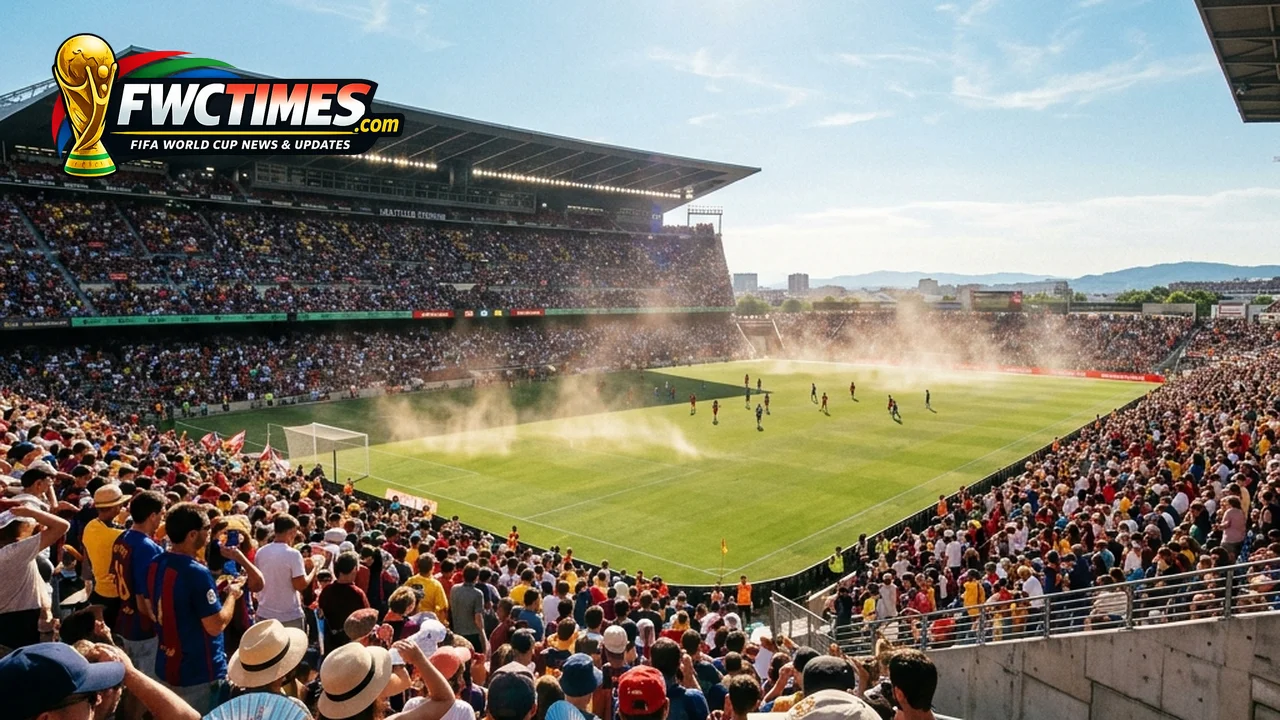
World Weather Attribution researchers warned that 26 of the 104 FIFA World Cup 2026 matches will be played in conditions exceeding the 26°C Wet Bulb Globe Temperature safety threshold. Climate scientists published the study in May 2026, measuring heat stress using temperature, humidity, wind, and solar radiation combined. Five matches are projected to reach 28°C WBGT — the level at which FIFPRO advises that postponement or delay becomes necessary. Miami, Philadelphia, and Kansas City host stadiums without air conditioning, making them the highest-risk venues in the entire tournament. The risk of dangerous heat at FIFA World Cup 2026 venues has nearly doubled compared to the 1994 edition, driven by human-induced climate change.
FIFPRO, the global players’ union, sets 26°C WBGT as the mandatory threshold for cooling breaks during matches. At 28°C WBGT, the union recommends consideration of match postponement or a delayed kickoff time. FIFA confirmed it monitors Wet Bulb Globe Temperature in real time at all venues and will apply mandatory three-minute hydration breaks in each half when thresholds are reached. The organization also stated it is prepared to adjust kickoff times where stadium infrastructure and broadcast schedules permit. Open-air stadiums in humid cities carry the greatest physiological burden for both players and spectators sitting in direct sun.
Miami, Philadelphia, and Kansas City: The Three High-Risk Venues
Hard Rock Stadium in Miami sits in one of the most humid environments on the North American tournament circuit. June and July temperatures in South Florida regularly exceed 32°C with high humidity, placing the stadium consistently near or above the FIFPRO danger threshold. The venue hosts six World Cup matches and lacks the retractable roof and cooling systems present at SoFi Stadium in Los Angeles. Lincoln Financial Field in Philadelphia faces a similar challenge, with June average temperatures regularly hitting 29°C. Kansas City’s GEHA Field at Arrowhead Stadium sits in a continental climate that can produce sudden heat spikes well into the 30s during June afternoons.
By contrast, venues like SoFi Stadium in Los Angeles, AT&T Stadium in Dallas, and MetLife Stadium in New Jersey benefit from either climate control, retractable roofs, or coastal breezes that reduce heat stress. The study identifies afternoon kickoff slots as the primary risk factor at the open-air venues. A match starting at 3:00 PM ET in Miami in late June faces the peak solar radiation window. FIFA has already indicated it will schedule high-profile group matches in Miami during evening slots where possible. Evening kickoffs at Hard Rock Stadium typically offer a 4–6°C reduction in ambient temperature compared to afternoon starts.
The WWA study found that Mexico City and Toronto face lower heat risks due to altitude and northern latitude respectively. Vancouver, Seattle, and Boston also sit within acceptable heat ranges throughout the tournament window. The geographic spread of the 16 host cities means that teams face wildly different environmental conditions across the group stage. A squad playing three matches in Miami, Kansas City, and Philadelphia faces a cumulative heat stress load far greater than one playing in Seattle, Vancouver, and Toronto. Team medical staff are integrating acclimatization protocols into their pre-tournament camps to address this variable.
How FIFA Plans to Manage Player and Fan Safety
FIFA implemented four specific heat management protocols for the 2026 tournament. First, mandatory three-minute cooling breaks occur in the 30th and 75th minute of any match where WBGT exceeds 26°C at kickoff. Second, climate-controlled player benches are installed at all 16 venues, giving substitutes and technical staff a cooler environment between active periods. Third, medical teams receive enhanced heat illness training and deploy rapid cooling equipment at pitchside. Fourth, public address systems at each stadium broadcast hydration reminders and misting station locations to spectators every fifteen minutes during high-heat matches.
Fan safety protocols extend beyond the pitch. Venue operators at Miami, Philadelphia, and Kansas City are installing additional misting stations, shaded fan zones, and free water distribution points throughout the concourse areas. The host cities are also coordinating with local emergency services to pre-position heat illness response teams at major fan gathering points. Fans attending matches at these three venues should arrive early to access shaded areas before kickoff and carry sufficient water for the duration of the match. Light-colored clothing, sunscreen, and electrolyte supplements are recommended by the tournament’s medical advisory group.
The USA Soccer Federation flagged the heat risk to FIFA during the original bid process in 2018. At the time, FIFA’s medical commission rated the North American venues as acceptable with mitigation measures in place. The WWA study suggests that climate change has moved the goalposts since that assessment. The study’s authors called for FIFA to conduct a pre-tournament review of kickoff times at the five highest-risk match slots and consider moving afternoon matches to evening windows. FIFA has not confirmed whether it will act on this specific recommendation before the tournament begins on June 11.
FIFPRO and Player Union Response
FIFPRO issued a formal statement supporting the WWA study’s findings and called on FIFA to adopt its full heat protocol framework for all 104 matches, not only those at threshold-crossing venues. The union’s medical director highlighted that players face cumulative heat fatigue across a month-long tournament schedule. A team reaching the semifinal could play seven matches across six different climate zones in thirty-five days. Each match at 26°C WBGT adds measurable physiological stress that compounds across a full tournament run. Recovery time between matches becomes the primary limiting factor for player performance and injury risk.
The England and Brazil squads have both incorporated heat acclimatization sessions into their pre-tournament camps in Florida and the United States. These sessions involve training in controlled heat environments to prepare the body’s cooling mechanisms for match conditions. Sports science research shows that ten days of heat acclimatization reduces core temperature responses and improves sweat efficiency in hot conditions. Teams investing in this preparation have a measurable advantage in matches played in Miami and Kansas City. Those arriving without acclimatization risk performance drops of up to 12% in high-WBGT conditions.
FIFPRO also raised concerns about fan welfare, noting that spectators sitting in uncovered upper tiers at open-air stadiums face heat stress comparable to players on the pitch. The union’s statement called on host cities to guarantee free water access for all ticket holders and to install shade structures at stadium entry points. Several host cities, including Miami and Kansas City, confirmed they are working on additional fan comfort infrastructure. Follow the latest player welfare and tournament logistics developments in our FIFA World Cup news section.
Frequently Asked Questions
Frequently Asked Questions
How many World Cup 2026 matches face dangerous heat conditions?
World Weather Attribution researchers identified 26 of the 104 matches as likely to exceed the 26°C WBGT safety threshold. Five matches are projected to reach 28°C WBGT, the level at which FIFPRO advises postponement or delay.
Which World Cup 2026 stadiums have no air conditioning?
Miami’s Hard Rock Stadium, Philadelphia’s Lincoln Financial Field, and Kansas City’s GEHA Field at Arrowhead Stadium do not have air conditioning or retractable roofs, making them the highest heat-risk venues in the tournament.
What is the WBGT threshold for cooling breaks at World Cup 2026?
FIFPRO set 26°C Wet Bulb Globe Temperature as the mandatory threshold for cooling breaks. FIFA will apply mandatory three-minute hydration breaks in each half of any match exceeding this level at kickoff.
What should fans do to stay safe at hot World Cup 2026 matches?
Fans attending matches in Miami, Philadelphia, and Kansas City should arrive early to secure shaded areas, carry water, wear light-colored clothing, and apply sunscreen. Free water distribution points are available throughout venue concourse areas.
Teams and fans heading to Miami, Kansas City, and Philadelphia should monitor FIFA’s official matchday heat advisories before each game.
Stay tuned to FWCTimes.com for the latest FIFA World Cup 2026 updates.
Read Also: US Drops $15,000 Visa Bond for World Cup 2026 Fans from Algeria, Senegal and More