UEFA Teams in FIFA World Cup 2026, Playoffs, Stars to Watch
The UEFA Teams in FIFA World Cup 2026 will shape many of the tournament’s biggest nights and loudest storylines. European sides arrive with depth, tactical variety, and star power in every position. This time, the expanded finals mean Europe sends more nations, yet the path still stays unforgiving.
Even after the group phase ends, the pressure never truly stops for Europe. Several strong teams miss direct qualification and must survive one-off play-off ties. One mistake, one red card, or one cold finishing night can change history.
This guide brings everything together in one place: the qualification format, the confirmed group winners, the March 2026 play-offs, and the stars expected to headline North America. It also highlights the tactical trends and underrated storylines that can decide who peaks at the right time.
How UEFA qualification works for the 2026 World Cup
UEFA has 16 spots at the FIFA World Cup 2026, a major jump from earlier editions. The route is split into two main phases, and each phase rewards consistency differently.
European qualifiers
In the group stage, countries are placed into qualifying groups and play home-and-away matches. Finishing first matters most because group winners qualify directly for the World Cup. Finishing second keeps hope alive, but it pushes teams into the play-offs.
The campaign involves UEFA member associations competing across groups. Points shape the table, with three for a win. Goal difference can decide tight races. Over months of matches, teams learn whether their identity holds up away from home, under pressure, and during fixture congestion.
The play-offs
The play-offs raise the stress level because the margins shrink fast. The play-offs include the 12 group runners-up plus four additional nations linked to Nations League performance. Those 16 teams are separated into paths and play single-match semi-finals and finals.
Only four teams survive. That means respected names can fall short, even if they looked strong for most of the campaign. Coaches face a tough reality a single plan must work immediately, and the squad must handle a knockout mindset while club seasons are still in full swing.
UEFA nations already qualified for the 2026 World Cup
Europe’s confirmed qualifiers bring a mix of traditional giants and modern risers. Some qualify comfortably with strong goal differences and a clear identity. Others need late surges, smart rotations, and calm heads in tense moments.
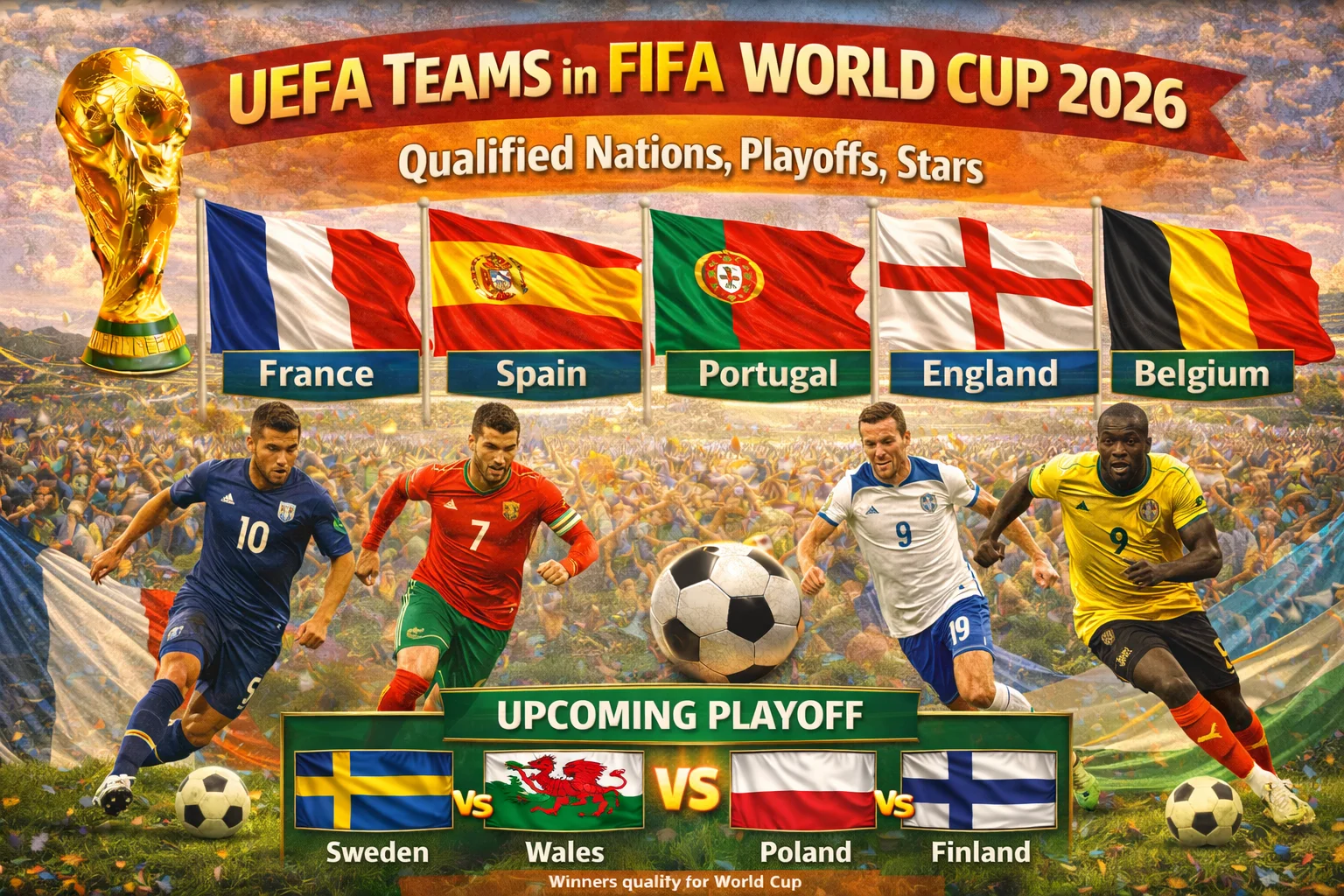
Below is the list of European teams described as already qualified through group wins.
UEFA teams already qualified (group winners)
| Qualified UEFA nation | Route to qualification | What it signals for 2026 |
|---|---|---|
| Austria | Group winner | A disciplined structure with experienced leaders and direct attacking moments |
| Belgium | Group winner | One more run for a golden generation blend, plus exciting wide attackers |
| Croatia | Group winner | Midfield control and tournament craft, even as the squad transitions |
| England | Group winner | Depth, pace, and finishing options, with huge expectations in every match |
| France | Group winner | Elite athleticism and goals from multiple lines, built for knockout football |
| Germany | Group winner | A refreshed core and high tempo phases, aiming to peak at the right time |
| Netherlands | Group winner | Defensive authority and sharp wing play, with clinical transition attacks |
| Norway | Group winner | A true star-led rise, with goals and direct play that travel well |
| Portugal | Group winner | Technical control and match winners, with strong tournament experience |
| Scotland | Group winner | A resilient unit with set-piece threat and belief from recent momentum |
| Spain | Group winner | Possession control plus new speed in wide areas and final-third movement |
| Switzerland | Group winner | Compact defending, smart game management, and consistent tournament habits |
This qualified group already hints at drama because several likely contenders are confirmed. It also shows Europe’s variety, from pressing-heavy teams to possession sides and counter-attacking specialists.
UEFA World Cup 2026 play-offs: dates, format, and why they matter
If you want drama, the European play-offs deliver it every cycle. They are single-match ties, which increases randomness and rewards preparation. A team can dominate qualifying for months and still lose in one brutal night.
The play-offs are played across two match dates in March 2026. Semi-finals happen first, then winners advance to a final a few days later. Each path produces one World Cup qualifier, so only four teams reach the tournament this way.
Key play-off dates to know
Semi-finals
March 26, 2026
Finals
March 31, 2026
Those dates matter for squad planning because clubs are deep into league seasons then. Coaches must manage minutes, fitness, and injuries while still demanding peak intensity. Teams also need emotional control, because the atmosphere around a one-off qualifier can feel like a final.
UEFA World Cup play-off paths and fixtures
The European play-off bracket is split into four paths, each with two semi-finals and one final. Because matches are single-leg, game plans may be cautious early on. Expect tactical adjustments, late substitutions, and set-piece focus, especially in tight contests.
Play-off semi-finals (March 26, 2026)
| Path | Semi-final 1 | Semi-final 2 |
|---|---|---|
| Path A | Italy vs Northern Ireland | Wales vs Bosnia and Herzegovina |
| Path B | Ukraine vs Sweden | Poland vs Albania |
| Path C | Türkiye vs Romania | Slovakia vs Kosovo |
| Path D | Denmark vs North Macedonia | Czechia vs Republic of Ireland |
Play-off finals (March 31, 2026)
| Path | Final fixture format |
|---|---|
| Path A | Winner of SF2 vs Winner of SF1 |
| Path B | Winner of SF1 vs Winner of SF2 |
| Path C | Winner of SF2 vs Winner of SF1 |
| Path D | Winner of SF2 vs Winner of SF1 |
These paths feel harsh because they include capable teams with strong fan bases. Italy’s presence shows how narrow the margin can be in Europe. Path D also looks brutal, with multiple teams that can beat anyone on a good night.
Stars to watch from qualified UEFA teams
World Cups become stories about moments, and moments often come from star players. Europe’s qualified group includes global superstars and a wave of younger match winners. The mix should make the 2026 tournament feel fast, technical, and emotionally intense.
For goals and headline moments
Kylian Mbappé (France)
He remains a game-breaking forward who can score without needing many touches. His pace changes defensive lines instantly and forces low blocks to stretch.
Harry Kane (England)
His finishing and link play make England more flexible against deep defenses. He creates lanes for runners, which matters in knockout matches.
Erling Haaland (Norway)
Norway’s qualification has his fingerprints all over it, especially through ruthless penalty-box movement. With steady service, he can live in the Golden Boot conversation.
Cristiano Ronaldo’s legacy effect (Portugal)
Even as roles shift, Portugal benefit from elite finishing standards and leadership expectations. Their attack still carries multiple players who can decide matches.
For control, balance, and structure
Luka Modrić and Croatia’s midfield culture
Croatia’s identity remains tied to calm passing under pressure and clever tempo changes. Their midfield craft helps them survive ugly matches.
Kevin De Bruyne and Belgium’s creativity
Belgium’s chance creation becomes sharper when they play with quick wide runners. A fit creator changes how dangerous they are in transition.
Spain’s new wave
Spain are still built on control, but the newer generation adds more direct dribbling and vertical runs. That balance can solve recent knockout problems.
Netherlands’ defensive leaders
The Netherlands often look stronger when their back line commands space and wins duels. A settled defense gives attackers freedom to take risks.
Tactical trends shaping UEFA teams for 2026
Europe’s leading sides are evolving quickly, and 2026 will show which styles travel best. Several teams now press in short bursts rather than nonstop waves. Others prefer controlled possession with quick switches to isolate fullbacks.
These patterns can decide who survives the group stage and who keeps winning when the bracket turns ruthless.
Compact defending with fast counters
Many European teams are comfortable without the ball, especially against stronger opponents. They defend in blocks, then explode forward through wide channels. It is a style that travels well because it does not depend on perfect rhythm.
Set pieces as a superpower
In tight tournament matches, corners and free kicks decide outcomes. Teams with strong delivery, rehearsed runs, and aerial power gain an extra weapon. One dead-ball goal can flip a group or steal a knockout win.
Squad depth and rotation
With heavy club calendars, depth becomes a competitive advantage. Nations that can replace tired legs without losing quality will go deeper. Coaches who trust the bench often arrive fresher in the late rounds.
Smart risk management
Great teams pick their moments to press and their moments to slow the game. That maturity separates quarter-finalists from champions. It is not always pretty, but it is often effective.
Underrated storylines fans should track
Big names dominate headlines, yet tournaments often turn on quieter factors. These storylines can explain why certain teams overperform and why others struggle under expectation.
Norway and Scotland
Qualification can change how a team sees itself. If early World Cup results go well, confidence grows fast and pressure shifts to the favorites. Norway, driven by star power and direct play, can feel dangerous in any one-off match. Scotland, with resilience and set-piece threat, can make games uncomfortable for opponents.
Austria and Switzerland
Organized teams love tournaments because they can prepare specific plans for single matches. If they score first, they become difficult to break down. Their identity is built on discipline, and discipline travels.
Belgium’s transition timing
Belgium’s success may depend on blending experienced leaders with younger legs. If the balance is right, they can beat anyone. If it is off by a few percent, the margins in a World Cup can punish them quickly.
Germany’s rebound narrative
Germany carry constant expectation to contend. If their refreshed core clicks, they can peak late and become dangerous quickly. A team with belief and tempo can turn one strong performance into a run.
What the UEFA field means for the World Cup 2026 title race
A World Cup often feels like a collision of continents, but Europe’s presence shapes the bracket. With 16 spots, UEFA brings more depth into the last-16 stage and beyond. That increases the chance of heavyweight knockout matchups arriving earlier than usual.
It also increases the likelihood of surprise European runs. A well-drilled side can finish second in its group and still punish a favorite. The path to the trophy can be filled with European obstacles from the first knockout round.
If you are predicting winners, look for three traits that keep showing up in tournament success: elite finishing, calm defending in chaos, and depth across the bench. The teams that combine those traits usually survive the emotional storms and the tactical traps that define a World Cup. You can check also OFC Teams in FIFA World Cup 2026.
FAQs
UEFA has 16 spots at the FIFA World Cup 2026, with 12 direct qualifiers and four play-off winners.
Austria, Belgium, Croatia, England, France, Germany, Netherlands, Norway, Portugal, Scotland, Spain, and Switzerland are listed as confirmed qualifiers.
The semi-finals are on March 26, 2026, and the finals are on March 31, 2026.
Sixteen teams are split into four paths, then play single-match semi-finals and finals. Only the four path winners qualify.
Headline names include Kylian Mbappé, Harry Kane, Erling Haaland, and Kevin De Bruyne, alongside elite creators and defenders across the qualified teams.